More Content Does Not Equal More Learning: Challenging a Common Myth in Instructional Design
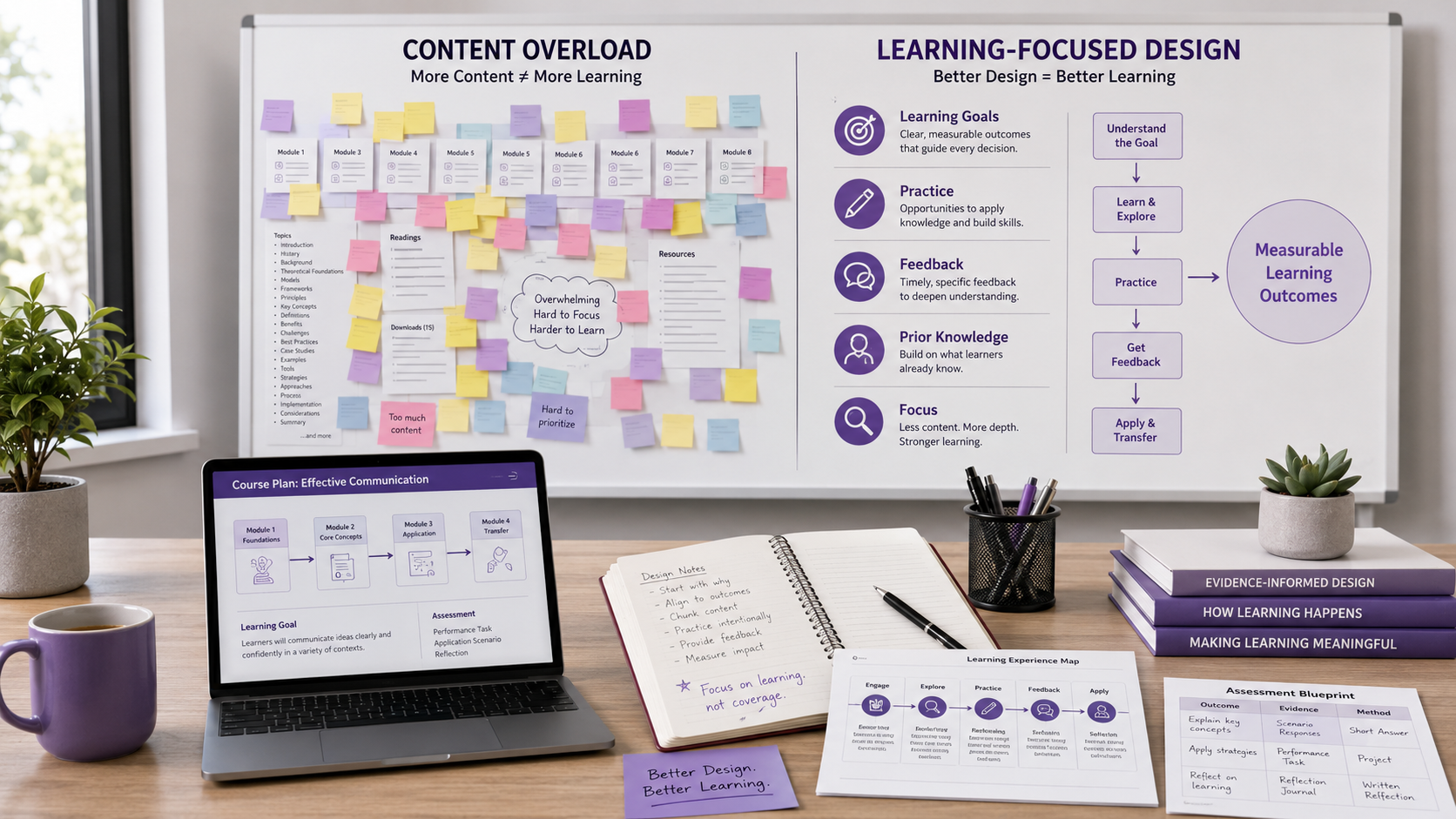
In the world of instructional design and education, a common belief persists: the more content we provide, the more learning occurs. This myth can lead educators to overload their learners with resources, believing that an abundance of information will enhance understanding. However, this approach often backfires, creating confusion rather than clarity. In this post, we'll explore why this myth has endured, the implications of content overload, and how we can design learning experiences that truly facilitate understanding.
Understanding the Myth: More Content Means More Learning
The notion that more content equates to more learning seems logical at first. We often feel compelled to provide learners with every possible resource, thinking that this will prepare them thoroughly. However, this leads to a critical misunderstanding: access to information does not equal comprehension. Learners require content that is clear, relevant, and organized around specific goals. When we bombard them with excessive information, we risk overwhelming them, leading to cognitive overload.
The Cognitive Load Theory: Why Less Can Be More
Cognitive Load Theory explains that learners have limited working memory capacity, especially when tackling new concepts. When faced with too much information, learners may struggle to sort through it all, expending energy on navigating the content rather than absorbing it. Therefore, the challenge for instructional designers is to strike a balance between providing necessary information and avoiding clutter. It's not about reducing the amount of content but rather about focusing on what is essential, organized effectively, and aligned with learning goals.
Key Takeaways
- Content clarity is vital: Learning improves when content is focused and purposeful.
- Organize content strategically: Sort information into categories such as 'need to know,' 'need to practice,' and 'nice to know.'
- Connect to practice: Ensure that learners can apply what they've learned through relevant exercises and feedback.
Moving from Coverage to Clarity
To combat the myth of content overload, instructional designers must shift their focus from simply covering material to ensuring learning clarity. Instead of asking, "How much content can I provide?" we should ask, "What do learners need to reach the goal?" This shift in perspective allows for the design of more effective learning experiences that prioritize understanding over sheer volume.
Practical Strategies for Instructional Design
- Review and refine: Look at your lessons and identify content that may be unnecessary. Ask yourself if each piece of information helps learners achieve their goals.
- Use guiding questions: Frame your content around questions that direct learners toward key concepts, fostering deeper understanding.
- Implement feedback loops: Regularly seek feedback from learners to ensure the content remains relevant and helpful.
The Myth Reset Challenge
As you reflect on your own instructional design practices, consider this challenge: identify one learning experience that feels content-heavy and assess its effectiveness. What is the primary learning goal? What content is essential? What can be simplified or removed? Making even small adjustments can significantly enhance the clarity and impact of your instructional material.
Final Thoughts
In conclusion, the belief that more content equals more learning is a myth that needs reevaluation. By prioritizing clarity, organization, and purposeful content, we can create learning experiences that truly resonate with learners. Remember, it's not about how much information you provide but how effectively you guide learners through the material. As Maya Angelou said, "Do the best you can until you know better. Then, when you know better, do better." Let's challenge our assumptions and design with intention.
🔗 Episode Links
Please check out the resources mentioned in the episode. Enjoy!
Related Episode: What is Cognitive Load Theory and Why is it Important?
Myth Reset Case File: Content Overload
🖼️ Image Disclosure: This featured image was generated with AI using ChatGPT and reviewed by the author.

Award-Winning Instructional Designer, College Professor, Consultant, and Podcast Host
Jackie Pelegrin is an award-winning instructional designer, consultant, and adjunct instructor at Grand Canyon University. Her experience spans higher education and corporate learning, and she holds an MBA and a master’s degree in Instructional Design and Technology. An Arizona native, Jackie enjoys reading, movies, games, and time with family and friends.
Instructional Design: More Than Just Making Slides