Apple Podcasts
 Spotify
 Youtube Music
 Amazon Music
 iHeartRadio
 Podcast Addict
 PocketCasts
  Podchaser
  Deezer
  PlayerFM
  Castro
  Castbox
  Goodpods
 Myth: More Content Means More Learning

Key Takeaways
- The stubborn instructional design myth that more content means more learning often creates confusion, weak retention, and low transfer instead of better understanding.
- Content overload happens due to the human fear of leaving something out, the pressure of including every resource, and subject matter experts wanting to share everything they know.
- Cognitive load theory explains that when working memory is overloaded with too many competing details, choices, and side paths, learners spend more energy sorting content than actually learning.
- Moving from content coverage to learning clarity requires asking what learners truly need to reach the goal rather than simply asking how much content can be provided.
- Sorting content into categories like need-to-know, need-to-practice, nice-to-know, and job aids helps reduce clutter without sacrificing course rigor.
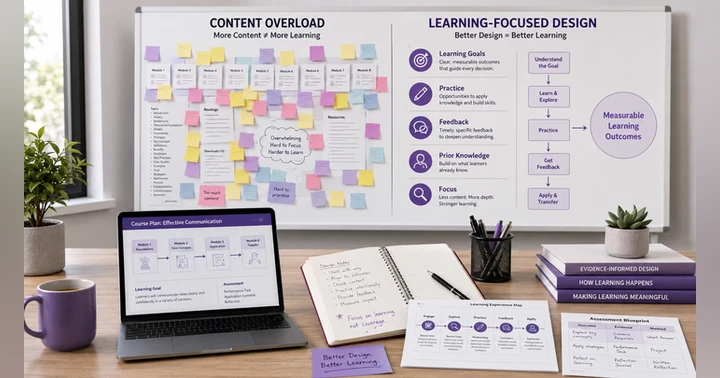
More slides do not equal more learning, and if you have ever felt pressured to “add just one more resource,” you already know how quickly a course can turn into a content dump. We take on a stubborn instructional design myth: the idea that piling on readings, videos, examples, and links automatically improves understanding. It sounds responsible, but it often creates confusion, weak retention, and low transfer because learners cannot see what matters most.
We dig into why this belief sticks around, from the very human fear of leaving something out to the way subject matter experts naturally want to share everything they know. Then we bring in cognitive load theory to explain what is happening in the learner’s working memory when we overload a module with too many competing details, choices, and side paths. The takeaway is simple: content matters, but content alone does not create learning. Clear goals, intentional structure, practice, feedback, and reflection do.
You will leave with practical design moves you can use right away, including a sorting method that separates need-to-know content from need-to-practice activities, nice-to-know enrichment, and job aids that support performance later. I also share a weekly “myth reset” challenge to help you clean up one lesson, slide deck, handout, or training experience without losing rigor.
If you want the companion myth reset case file and the earlier episode on cognitive load, check the show notes, then subscribe, share the episode with a colleague, and leave a review so more designers can find it.
🔗 Episode Links
Please check out the resources mentioned in the episode. Enjoy!
Related Episode: What is Cognitive Load Theory and Why is it Important?
Myth Reset Case File: Content Overload
Join PodMatch!
Use the link to join PodMatch, a place for hosts and guests to connect.
Disclaimer: This post contains affiliate links. If you make a purchase, I may receive a commission at no extra cost to you.
💟 Designing with Love + allows you to support the show by keeping the mic on and the ideas flowing. Click on the link above to provide your support.
☕ Buy Me a Coffee is another way you can support the show, either as a one-time gift or through a monthly subscription.
🗣️ Want to be a guest on Designing with Love? Send Jackie Pelegrin a message on PodMatch, here: Be a guest on the show
🌐 Check out the show's website here: Designing with Love
📱 Send a text to the show by clicking the Send Jackie a Text link above.
👍🏼 Please make sure to like and share this episode with others. Here's to great learning!
Frequently Asked Questions
Why does the 'more content means more learning' myth persist in instructional design?
The myth persists because adding materials feels productive, subject matter experts struggle to separate essential information from interesting trivia, and educators fear leaving important details out.
How does cognitive load theory relate to content overload in e-learning?
Learners have limited working memory when tackling new subjects, meaning that excessive information and competing details cause them to waste mental energy sorting through clutter instead of focusing on learning.
What is a practical way to sort course content to prevent learner overwhelm?
You can categorize your materials into what is essential to know, what is required to practice, what is nice to know as enrichment, and what can be spun off into job aids or reference sheets.
Does removing extra content reduce the rigor of a learning experience?
No, clarity often increases rigor because learners spend less time guessing what matters and more time actively working with the core ideas that drive the learning goals.
Welcome & Series Framework
Jackie Pelegrin
Hello, and welcome to the Designing with Love Podcast. I am your host, Jackie Pellegrin, where my goal is to bring you information, tips, and tricks as an instructional designer. Hello, instructional designers and educators. Welcome to episode 141 of the Designing with Love Podcast. Today we're continuing our series called Myths in Instructional Design in Education, where we unpack common beliefs that shape how we design, teach, train, and support learning. In the last episode, we challenged the myth that learning styles should drive design decisions. We talked about why design should be guided by evidence, goals, and learner needs instead of fixed learning style labels. In
The Myth of More Content
Jackie Pelegrin
this episode, we're looking at another common myth. More content means more learning. This myth can show up when we feel pressure to include everything learners might possibly need to know. But more information does not always lead to better understanding. Sometimes more content creates more confusion. So grab your notebook, a cup of coffee, and settle in as we explore this topic together. Before we jump in, here's how this series will work. Each episode will focus on one common myth, why it has lasted, what we know instead, and how we can make stronger design decisions moving forward. Today's myth is more content means more learning. At first, this idea can sound responsible. After all, we want learners to be prepared. We may think if I include more examples, more readings, more videos, more slides, and more resources, learners will have everything they need. And sometimes, additional content can be helpful. But the problem begins when we confuse access to information with actual learning. Learners do not learn more simply because we give them more to read, watch, or click through. They learn when content is clear, relevant, organized, connected to a goal, and supported by practice, feedback, and reflection. More content can support learning when it is purposeful, but content overload can make learning harder. So
Why Content Overload Feels Safe
Jackie Pelegrin
why has this myth lasted for so long? One reason is that content feels productive. When we add another article, another video, another slide, or another resource, it can feel like we are making the learning experience stronger. But adding more does not always mean designing better. Another reason this myth persists is that subject matter experts often know a lot. Because they understand the topic deeply, it can be hard for them to separate what is essential from what is interesting. Everything can start to feel important. This myth also persists because designers and educators may worry about leaving something out. We may think, what if learners need this later? Or what if someone asks about this? So we include more just to be safe. But when everything is included, learners may struggle to identify what matters most. If everything is emphasized, nothing is emphasized. Here's where we need to shift the conversation. The issue is not that content does not matter, content absolutely matters. The issue is that content alone does not create learning. A more accurate way to think about it is this.
Cognitive Load & Working Memory
Jackie Pelegrin
More content does not automatically lead to more learning. Learners need the right content, organized in the right way, connected to the right goal. Cognitive load theory helps us understand why this matters. I've talked about more deeply about cognitive load in a previous episode called What is Cognitive Load and Why is it important? So I won't repeat that full explanation here. I'll link that episode in the show notes if you want to revisit it. But the conversation is important. Learners have limited working memory, especially when they are learning something new. When we overload learners with too much information, too many choices, or too many competing details, they may spend more energy sorting through the content than learning from it. That does not mean we should oversimplify everything, it means we should be intentional.
Design Moves for Learning Clarity
Jackie Pelegrin
So what does this mean for us as instructional designers, educators, trainers, or learning leaders? It means we need to move from content coverage to learning clarity. Instead of asking what else should I include, we might ask, what do learners need in order to reach the goal? Instead of asking how much content can I provide, we might ask, what content will help learners understand, practice, and apply? One helpful design move is to sort content into categories. What is need to know? What is need to practice? What is nice to know? What can be provided as a job aid, optional resource, or reference? This shift can make the learning experience clearer without removing rigor. In fact, clarity often increases rigor because learners spend less time guessing what matters and more time working with the ideas that matter most. The goal is not to make learning thin. The goal is to focus on learning. Here's today's myth reset. Instead of believing more content means more learning, remember that learning improves when content is focused, organized, purposeful, and connected to practice. Learners do not need everything all at once. They need a clear path through what matters most. This week, look at one lesson, module, slide deck, handout, or training experience and ask yourself, is this content helping learners move toward the goal or is it adding unnecessary noise? That question can help us design with clarity instead of clutter. Today we challenged the myth that more content means more learning. We looked at why this belief has lasted, what it gets wrong, and how we can replace it with a clearer and more intentional design approach. Your myth reset challenge this week is to review one learning experience that may feel content heavy. Ask yourself, what is the main learning goal? What content is essential to that goal? What content do learners need to practice with? What content could become an optional resource or job aid? And what content could be removed, shortened, or moved? Then choose one improvement you can make. Maybe you shorten a slide deck, simplify a module, move extra details into a reference sheet, cut a repeated example, or replace a long explanation with a practice activity. The goal is not to remove value, the goal is to reduce clutter so learners can focus on what matters.
Myth Reset Challenge & Next Myth
Jackie Pelegrin
In the next episode, we'll continue the series by looking at another common myth. Assessments must be tests to be valid. Before I conclude this episode, here is an inspiring quote from Maya Angelou. Do the best you can until you know better. Then when you know better, do better. That quote is a helpful reminder for this myth because many of us have added more content with good intentions. But when we know that too much content can overwhelm learners, we can make better design decisions. We can focus the learning experience, reduce unnecessary clutter, and help learners spend more energy on what matters most. If this episode gave you something to think about, I'd love for you to share it with another educator, instructional designer, trainer, or learning leader who is ready to rethink what really works in learning. And don't forget to check out the companion myth reset case file for this episode. It will help you investigate the myth, review the design shift, and apply this week's challenge to your own course, lesson, module, or training experience. Thank you for joining me today as we open another case in our myths and instructional design and education series. As you move through the week, I hope this episode encourages you to pause before accepting a familiar belief as fact. Sometimes the best design decisions begin when we question what we have always assumed to be true. Until next time, keep learning, keep questioning, and keep designing with love. Thank
Share the Episode & Support
Jackie Pelegrin
you for taking some time to listen to this podcast episode today. Your support means the world to me. If you'd like to help keep the podcast going, you can share it with a friend or colleague, leave a heartfelt review, or offer a monetary contribution. Every act of support, big or small, makes a difference, and I'm truly thankful for you.