Interactivity Requires Fancy Tools: Debunking a Common Myth
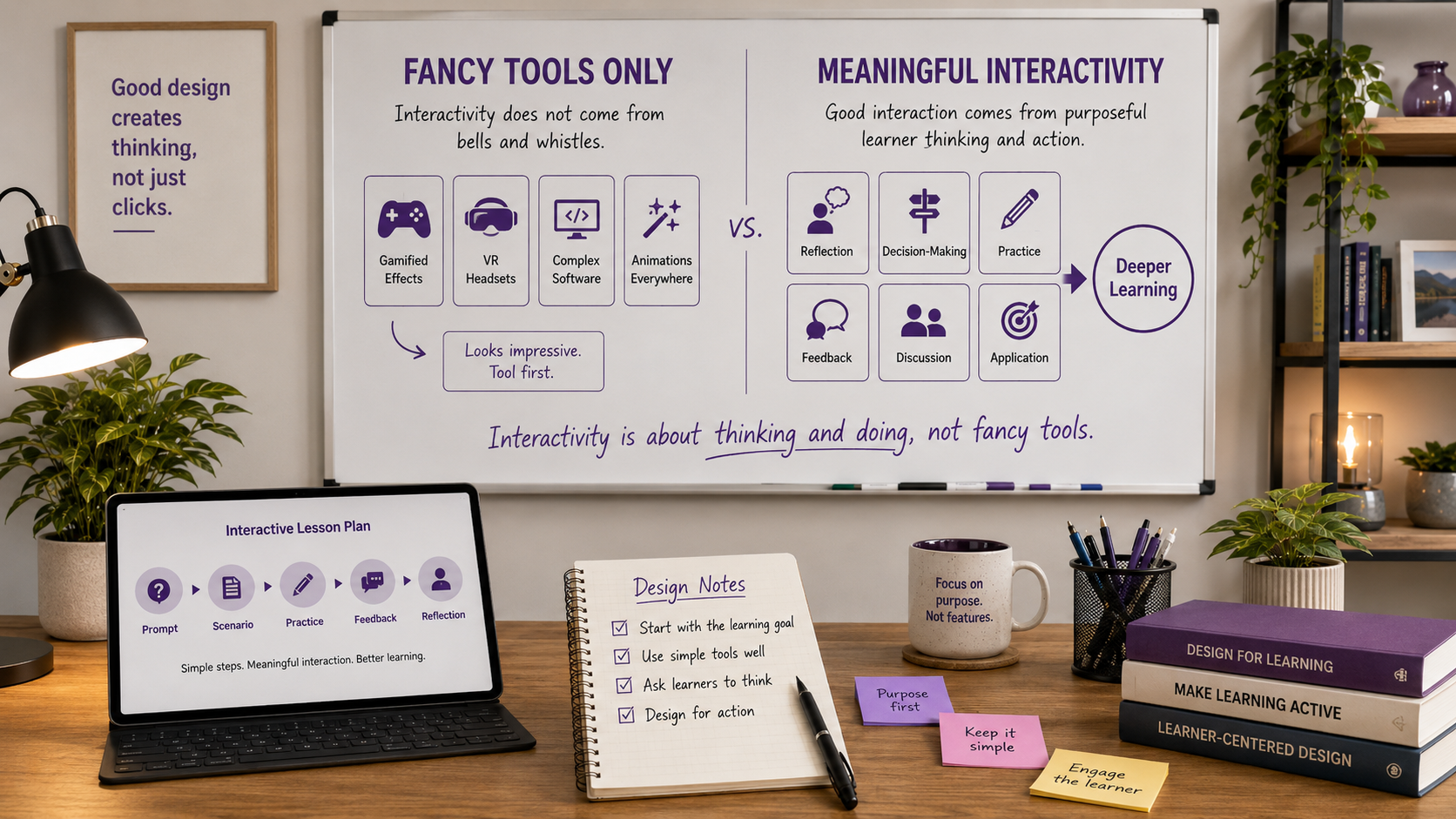
In the world of instructional design, a prevalent myth persists: interactivity requires fancy tools. This belief can mislead educators into thinking that without advanced software or complex platforms, their learning experiences will fall flat. However, interactivity is not about the tools themselves; it’s about how learners engage with the content and the depth of that interaction.
Understanding Interactivity
Interactivity in learning is defined by the meaningful actions that learners take: thinking, deciding, practicing, reflecting, and applying knowledge. This means that whether using high-tech tools or simple strategies, the focus should be on fostering active engagement rather than on how flashy the tools appear.
Why the Myth Persists
One reason this myth endures is the visibility of complex tools. They often impress stakeholders and create an illusion of quality in design. However, visual polish does not equate to instructional value. Many educators mistakenly associate interactivity with technology, overlooking simple yet effective methods like discussion prompts or reflective questions.
Shifting the Paradigm
To counter this myth, instructional designers should shift their focus from tool-driven interactivity to purpose-driven interactivity. Instead of asking what tools to use, consider what actions will best support learning goals. For instance, rather than providing a high-tech simulation, educators can design activities that require learners to make decisions or reflect on their experiences to deepen understanding.
Practical Applications of Interactivity
To create meaningful interactions, instructional designers should ask:
- What should learners do with the content?
- How can they engage thoughtfully?
- What simple tools can facilitate this engagement?
For example, a straightforward case study can prompt learners to identify problems rather than a flashy simulation that may not encourage deep thinking.
Conclusion
Ultimately, the goal is not to make learning look interactive but to ensure that it is actively engaging for learners. By debunking the myth that interactivity requires fancy tools, educators can create more effective and meaningful learning experiences. This week, take a moment to evaluate a lesson or training module: Are learners truly engaging, or merely interacting with the screen?
Key Takeaways
- Interactivity is about learner engagement, not tool complexity.
- Focus on actions that support learning goals.
- Evaluate existing modules for meaningful interactions over decorative ones.
🔗 Episode Links
Please check out the resource mentioned in the episode. Enjoy!
Myth Reset Case File: Low-Tech Interactivity
🖼️ Image Disclosure: This featured image was generated with AI using ChatGPT and reviewed by the author.

Award-Winning Instructional Designer, College Professor, Consultant, and Podcast Host
Jackie Pelegrin is an award-winning instructional designer, adjunct instructor at Grand Canyon University, podcast host, and consultant. Her experience spans higher education and corporate learning, and she holds an MBA and a master’s degree in Instructional Design and Technology. An Arizona native, Jackie enjoys reading, movies, games, and time with family and friends.
The Rise of Adaptive Pathways: Personalized Learning at Scale