How to Move Beyond Content in Learning Design: Insights from Nicole Weber
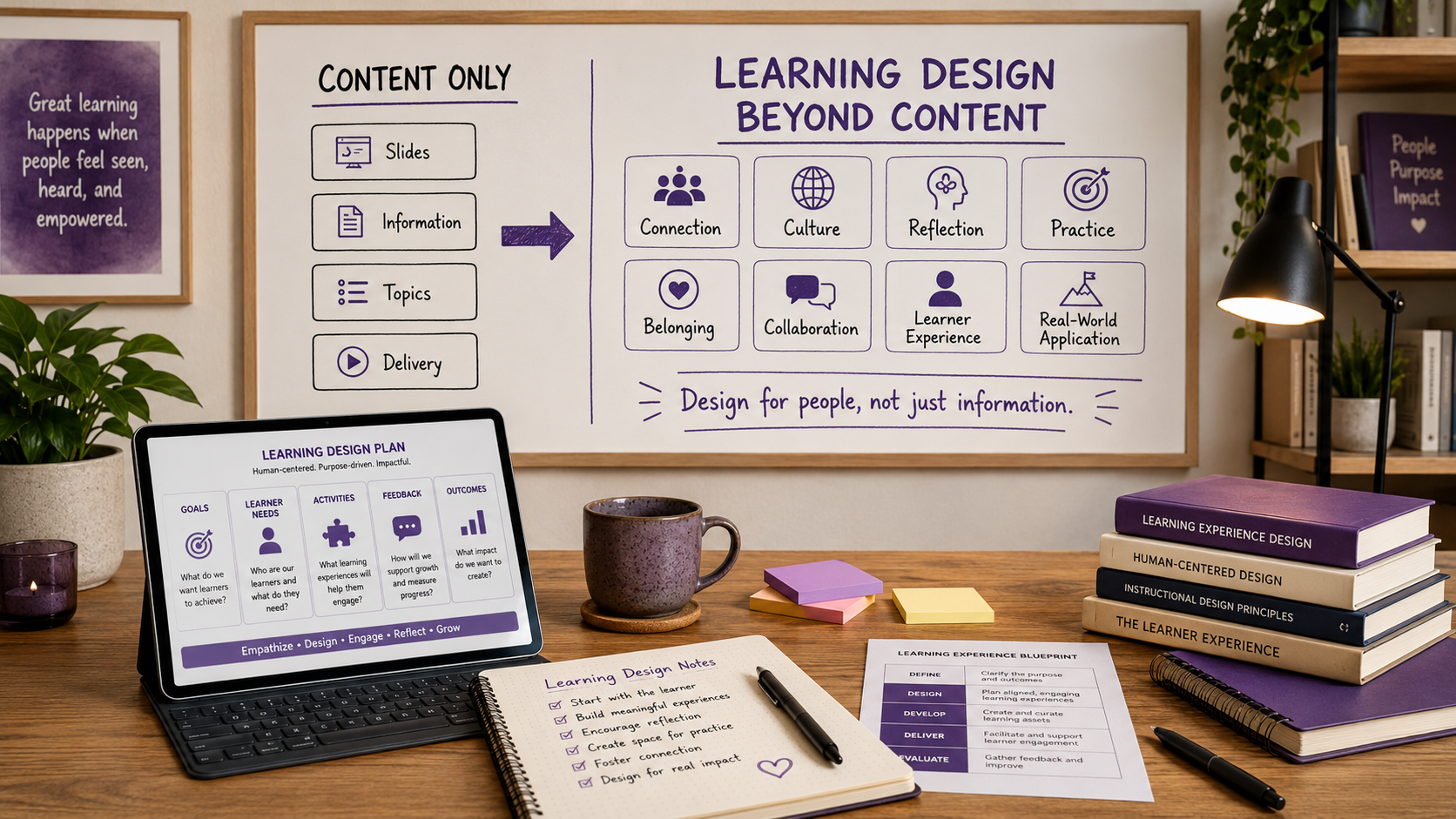
In the realm of instructional design, one question often arises: how can we create learning experiences that resonate deeply with our learners? In this post, I’ll explore insights shared by Nicole Weber, a seasoned curriculum and learning experience designer, on the importance of moving beyond content to foster genuine connections and cultural relevance in learning. We’ll delve into key themes like curiosity, trauma-informed practices, and the reciprocal nature of learning.
Understanding the Learner's Context
When designing learning experiences, it's crucial to consider the diverse backgrounds and contexts of your learners. Nicole emphasizes the significance of incorporating inclusion, cultural responsiveness, and trauma-informed practices. Understanding who your learners are and the experiences they bring to the table is foundational in creating effective learning solutions.
The Importance of Empathy Mapping
- Recognizing Diversity: Every learner comes with unique cultural lenses and experiences. By employing empathy mapping, instructional designers can better understand the emotional and psychological factors that influence learning.
- Cultural Nuances: As Nicole points out, learning is not a one-size-fits-all process. Factors like cultural habits can significantly impact how learners engage with content. For example, why would someone prefer hot soup for breakfast? Such simple cultural differences can reveal deeper insights into learning preferences.
The Role of Relationships in Learning
Learning is fundamentally a social endeavor. Nicole highlights that meaningful learning occurs through relationships, curiosity, and productive struggle. This perspective shifts the focus from merely delivering content to creating conditions that foster connection and understanding.
Designing for Connection
- Building Relationships: Effective instructional design should prioritize building relationships between learners and facilitators. This can be achieved through interactive learning experiences that encourage dialogue and collaboration.
- Constructing Meaning: By designing learning environments that promote inquiry and reflection, we enable learners to construct their own meaning from the content, making the learning process more impactful.
Trauma-Informed Practices in Learning Design
Understanding trauma's impact on learning is essential for creating safe and inclusive educational environments. Nicole stresses that if a learner doesn't feel safe, they cannot learn effectively.
Key Considerations for Trauma-Informed Design
- Awareness of Triggers: Instructional designers must be mindful of the content and its potential to trigger negative experiences for learners. This requires careful consideration of the topics addressed and the language used in learning materials.
- Creating Safe Spaces: Designing courses that foster a sense of safety and belonging can significantly enhance learner engagement and retention. When learners feel heard and understood, they are more likely to participate actively in the learning process.
Moving Beyond Content: A Holistic Approach
Ultimately, Nicole argues that content is merely a tool in the broader context of learning. The real challenge lies in creating an environment that nurtures curiosity and connection.
Shifting the Paradigm
- Cultural Relevance: Instructional designers should strive to create culturally relevant content that resonates with learners' experiences. This can involve incorporating local examples, stories, and case studies that learners can relate to.
- Emphasizing Human Connection: Learning should not be an isolated incident; it should be a continuous journey that involves dialogue, reflection, and community engagement.
Conclusion
In conclusion, moving beyond content in learning design requires a shift in mindset. By prioritizing the learner's context, building relationships, and incorporating trauma-informed practices, instructional designers can create more meaningful and impactful learning experiences. As you embark on your next design project, consider how you can apply these insights to foster deeper connections and understanding among your learners.
Key Takeaways
- Understand your learners' backgrounds and experiences.
- Build relationships and promote dialogue in learning environments.
- Incorporate trauma-informed practices to create safe spaces for learning.
- Strive for cultural relevance in all learning materials.
🔗 Website and Social Links
Please visit Nicole Weber’s website and social media links below.
📢 Call-to-Action: To learn more about Nicole’s work in curriculum design, learning experience design, and human-centered learning, visit her website and connect with her on LinkedIn. Nicole says that she believes some of the most powerful learning happens through conversation and shared reflection. She welcomes opportunities to connect with educators, instructional designers, and learning leaders who are interested in creating more human-centered, inclusive, and impactful learning experiences.
You can also reflect on today’s conversation by asking yourself: Am I designing only for content completion, or am I creating space for culture, curiosity, connection, and meaningful learning?
🖼️ Image Disclosure: This featured image was generated with AI using ChatGPT and reviewed by the author.

Award-Winning Instructional Designer, College Professor, Consultant, and Podcast Host
Jackie, an Arizona native, leverages decades of experience as an award-winning instructional designer within both higher education and the corporate world. She holds an MBA and a Master of Science in Instructional Design and Technology, both acquired through online learning. In addition to her full-time role, Jackie serves as an award-winning adjunct instructor, teaching online courses at Grand Canyon University. During her leisure time, she delights in reading books across a range of genres, enjoying movies and TV shows, playing games, listening to uplifting music, and spending quality time with her family and friends.

Human Connection In Teaching With Lou Hirsch
