Assessments Must Be More Than Tests: Rethinking Validity in Instructional Design
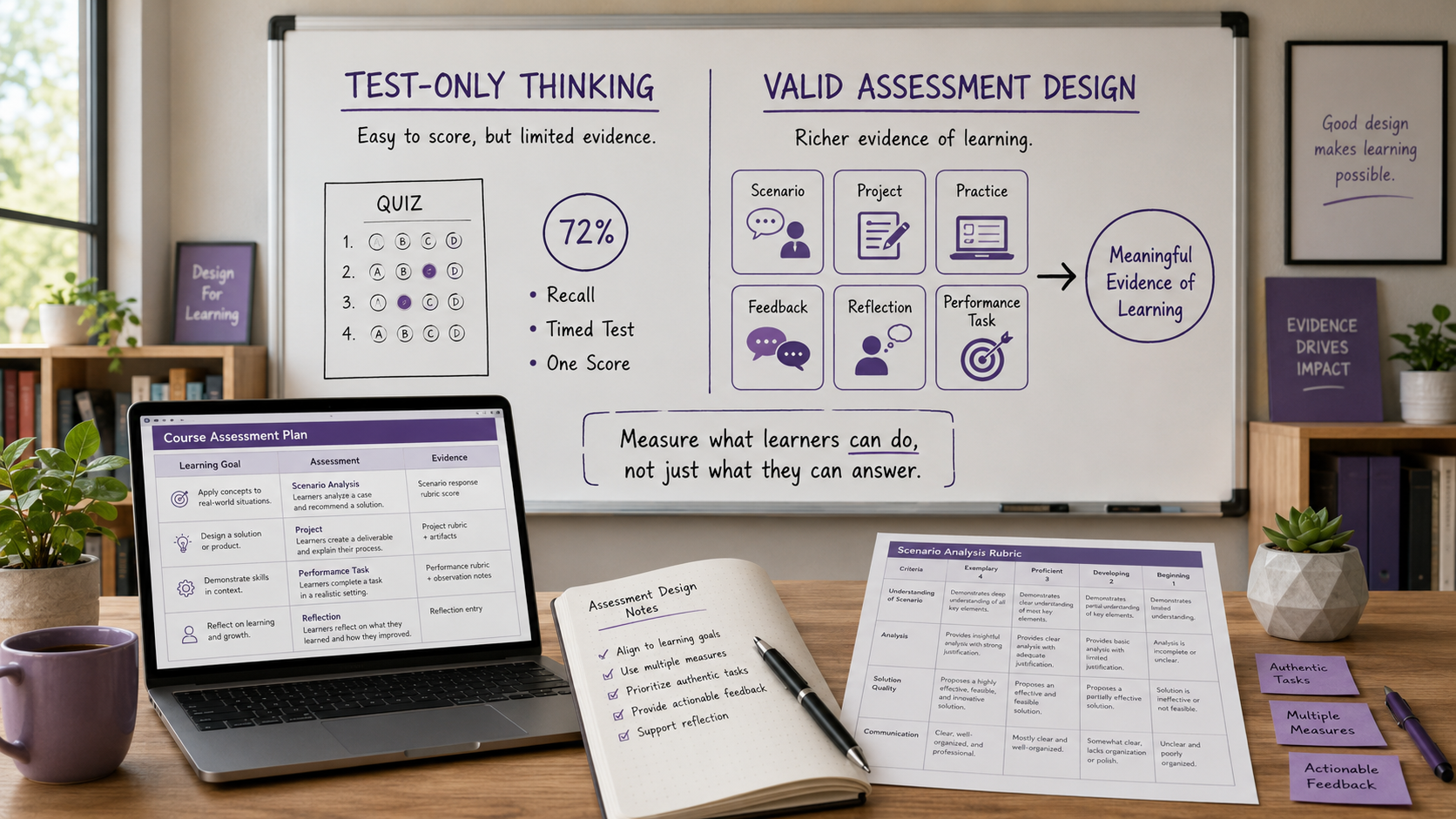
In the world of education, assessments are often synonymous with tests, leading to the myth that valid assessments must be tests. This belief not only limits our understanding of assessment but also potentially undermines our educational goals. In this blog post, we will explore why assessments should not be confined to traditional testing formats and how to create more meaningful evaluation strategies that genuinely reflect learners’ abilities.
Understanding the Myth: Assessments Must Be Tests
The assumption that assessments are only valid when they are tests is a common belief in educational environments. This myth can be traced back to our own experiences in school, where quizzes, exams, and standardized tests dominated the assessment landscape. But while tests can provide valuable information about a learner's recall and understanding, they fail to capture the full spectrum of what learners can do. This section will delve into the reasons why this myth persists and the implications it has for instructional design.
Why Tests Are Not Enough
Many educators view tests as objective measures of learning. They are simple to administer, easy to score, and provide clear outcomes. However, relying solely on tests can overlook critical skills such as applying knowledge, problem-solving, and decision-making. For example, a short quiz may indicate that a student remembers key terms, but it does not show whether they can apply that knowledge in a real-world scenario.
Moreover, tests can create a false sense of security regarding learning outcomes. They may produce a score, but that score does not always equate to a true understanding of the material. By focusing too heavily on tests, we risk neglecting other forms of assessment that could provide richer, more comprehensive insights into learner capabilities.
Expanding Our Definition of Assessment
To create valid assessments, we need to redefine what we consider an assessment. Valid assessments are those that provide meaningful evidence of learning outcomes, regardless of format. This section will explore alternative assessment methods that align with specific learning goals, providing examples of how to implement them effectively.
Assessments That Reflect Learning Goals
When designing assessments, it’s crucial to consider the specific learning objectives. For instance, if the goal is to foster critical thinking, a project or case study may be more appropriate than a multiple-choice test. Here are some alternative assessment formats:
- Performance Tasks: These allow learners to demonstrate skills in realistic contexts. For example, a customer service course might include role-playing scenarios.
- Portfolios: Ideal for writing or creative courses, portfolios allow learners to showcase their work and reflect on their growth.
- Self-Assessments: Encouraging learners to reflect on their understanding and experiences can provide valuable insights into their learning journey.
- Simulations: In fields like healthcare or engineering, simulations can provide learners with a safe environment to practice skills without real-world consequences.
By diversifying assessment formats, we can create opportunities for learners to demonstrate a wider range of skills and knowledge.
Implementing Evidence-First Assessment Design
As instructional designers, we must shift from a test-first mindset to an evidence-first approach. This means asking ourselves what evidence we need to confirm that learners have met their goals and choosing assessment formats accordingly. This section will cover how to implement this approach in practice.
Steps to Shift Your Assessment Design
- Identify Learning Goals: Determine what learners should be able to do by the end of the course or module. This clarity will guide your assessment choices.
- Choose Appropriate Evidence: Consider what kind of evidence would best demonstrate that learners have achieved the learning goals. Would a test suffice, or is there a better way to capture their understanding?
- Design for Fairness and Clarity: Ensure that your assessments are straightforward and provide learners with a fair opportunity to showcase their skills. Consider how to make assessments meaningful rather than merely familiar.
- Reflect and Revise: After implementing assessments, take time to review their effectiveness. Are they providing the evidence needed? Are there alternative formats that could yield better insights?
By following these steps, you can create assessments that align with learning goals and provide valuable evidence of learner success.
Key Takeaways and Next Steps
In summary, the myth that assessments must be tests to be valid limits our potential as educators and instructional designers. By recognizing that valid assessments are those that provide meaningful evidence of learning, we can design assessments that truly reflect what learners know and can do.
As you move through the week, consider reviewing one of your assessments. Ask yourself:
- What is the main learning goal?
- What evidence would show that learners have met this goal?
- Does the current assessment format collect that evidence effectively?
By challenging the default belief that assessments must be tests, you can create more flexible and effective evaluation strategies that enhance learning outcomes.
🔗 Episode Links
Please check out the resource mentioned in the episode. Enjoy!
Myth Reset Case File: Assessment Beyond Tests
🖼️ Image Disclosure: This featured image was generated with AI using ChatGPT and reviewed by the author.

Award-Winning Instructional Designer, College Professor, Consultant, and Podcast Host
Jackie Pelegrin is an award-winning instructional designer, consultant, and adjunct instructor at Grand Canyon University. Her experience spans higher education and corporate learning, and she holds an MBA and a master’s degree in Instructional Design and Technology. An Arizona native, Jackie enjoys reading, movies, games, and time with family and friends.
Future Ready Learning: Designing Education for What Comes Next