AI Governance Before AI Adoption With Dr. Latha Karthigaa
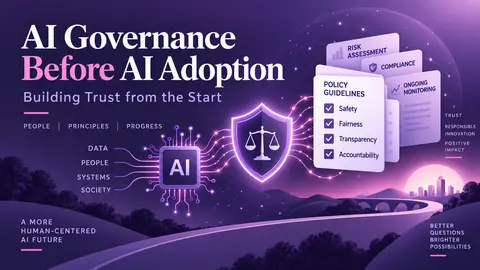
Artificial intelligence is rapidly becoming part of how organizations work, teach, design, and make decisions. Teams are experimenting with generative AI, automating tasks, and exploring new ways to improve efficiency and innovation. But as adoption accelerates, one important question cannot be overlooked: How will organizations ensure that AI is used responsibly?
In an episode of the Designing with Love podcast, Jackie spoke with Dr. Latha Karthigaa, the Director and Head of AI Governance at the Global AI Certification Council (GAICC), about why AI governance should begin before adoption becomes widespread.
One of the strongest takeaways from our conversation was simple: Responsible AI begins with intentional planning, clear expectations, and human accountability.
Governance Creates Clarity
AI governance can sound technical, but at its core, it is about creating structure. Organizations need to understand where AI is being used, what information is being entered into these systems, who is responsible for reviewing the results, and what happens when something goes wrong. Good governance helps answer questions such as:
-
Which AI tools are approved?
-
What data can safely be entered?
-
Who reviews AI-generated output?
-
Which uses require greater oversight?
-
How are concerns reported and addressed?
Governance should not be viewed as something that slows innovation down. When people understand the boundaries, responsibilities, and expectations surrounding AI, they can often experiment with greater confidence.
Start with Ownership and Risk
Every important AI-supported workflow should have a responsible human owner. That person does not need to perform every task, but someone should be accountable for how the system is used, how its output is reviewed, and how concerns are handled.
Organizations also need to recognize that not every use of AI carries the same level of risk. Using AI to brainstorm presentation titles is very different from using it to evaluate learners, screen job applicants, analyze sensitive information, or influence high-stakes decisions. The greater the potential impact, the stronger the oversight should be.
This risk-based approach allows organizations to support lower-risk experimentation while giving greater attention to applications that could significantly affect people.
Human Oversight Still Matters
AI can assist with decision-making, content creation, analysis, and feedback, but it should not replace human responsibility. Meaningful oversight requires more than placing a person somewhere in the process. Reviewers need enough knowledge and authority to question an AI-generated result, identify problems, and decide when the output should not be used.
This is especially important in education and learning design. If AI supports assessments, feedback, curriculum development, or learner services, educators and instructional designers still need to ensure that the final experience is accurate, fair, accessible, and aligned with the intended learning outcomes. AI can support professional judgment. It should not replace it.
Policies Need Practical Training
A written AI policy is an important starting point, but people also need to understand what that policy means in their everyday work. Employees may need guidance on:
-
Which tools they may use
-
What information should never be uploaded
-
When AI-generated content needs additional review
-
How to recognize inaccurate or biased output
-
When they should disclose the use of AI
-
Who to contact when they are unsure
This is one area where instructional designers can make an important contribution. We can help transform broad organizational policies into realistic learning experiences, scenarios, job aids, and decision-making practice. AI readiness is not only about teaching people how to operate a tool. It is also about helping them develop the judgment needed to use that tool responsibly.
Start Small, but Start Now
Organizations do not need a perfect governance system before they begin. A practical starting point might include the following:
-
Identify where AI is already being used.
-
Assign clear ownership for important AI-supported processes.
-
Separate lower-risk uses from higher-impact applications.
-
Establish expectations for sensitive or confidential information.
-
Require meaningful human review when decisions have consequences.
-
Provide practical training for employees.
The important thing is to begin before AI use becomes difficult to track or manage.
Responsible Innovation Requires Intentional Design
AI adoption is not only a technology initiative. It is also a people, learning, leadership, and accountability initiative. As Dr. Latha emphasized throughout our conversation, organizations build trust when they can explain how AI is being used, who remains responsible, and what safeguards are in place.
Governance should not be something organizations create only after a problem occurs. It should be part of how responsible innovation is designed from the beginning.
🖼️ Image Disclosure: This featured image was generated with AI using ChatGPT and reviewed by the author.

Award-Winning Instructional Designer, College Professor, Consultant, and Podcast Host
Jackie Pelegrin is an award-winning instructional designer, adjunct instructor at Grand Canyon University, podcast host, and consultant. Her experience spans higher education and corporate learning, and she holds an MBA and a master’s degree in Instructional Design and Technology. An Arizona native, Jackie enjoys reading, movies, games, and time with family and friends.
How to Motivate Learners in a Distracted Era