AI Will Not Replace Instructional Designers: Rethinking Our Roles in Learning
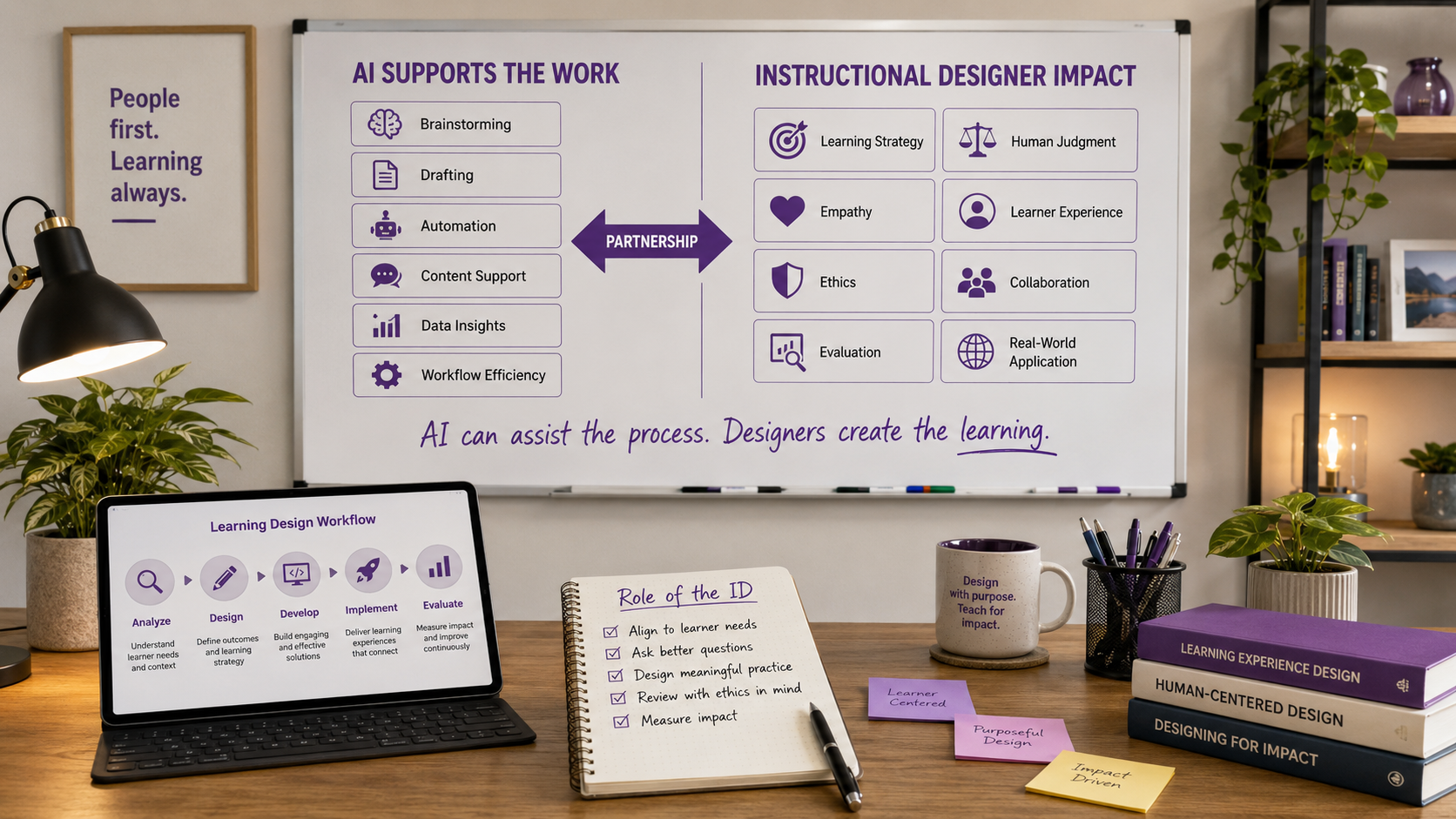
In the ever-evolving landscape of education and instructional design, one myth stands out: the belief that artificial intelligence (AI) will replace instructional designers. While AI tools have demonstrated the ability to generate content, outlines, and quizzes in mere seconds, it’s crucial to understand that the role of an instructional designer extends far beyond mere content creation. In this post, we will unpack this myth, explore the nuanced relationship between AI and instructional design, and provide actionable insights on how to navigate this shift thoughtfully.
Understanding the Role of Instructional Designers
Instructional design is not merely about producing content quickly; it involves a comprehensive understanding of learners, analyzing their needs, and creating engaging, effective learning experiences. Instructional designers collaborate with stakeholders, make critical design decisions, and ensure that educational materials align with learning outcomes. Here, we will delve into why this myth has gained traction and clarify the essential human elements that AI cannot replicate.
The Myth Explored: Why Do People Believe AI Will Replace Instructional Designers?
- Visible Outputs Create Misconceptions: Many individuals observe AI tools producing course outlines, quizzes, or drafts and mistakenly conclude that this represents the entirety of instructional design. However, these outputs are just one component of a much broader process.
- Content Creation vs. Learning: There’s a common misconception that content creation is synonymous with instructional design. A polished module or generated quiz does not automatically translate into effective learning. Instructional design encompasses a deeper engagement with learning objectives and learner needs.
- Fear of Change: Rapid advancements in technology can be intimidating, leading professionals to question their roles and future within education. This fear can result in an oversimplified view of AI's capabilities, prompting the belief that it could replace human designers.
The Partnership Between AI and Instructional Designers
Rather than viewing AI as a competitor, we should embrace it as a partner in the instructional design process. Here’s how:
- AI as a Tool for Efficiency: AI can assist instructional designers by accelerating certain tasks such as drafting content, brainstorming ideas, and summarizing source material. This allows designers to focus more on strategic thinking and human-centered design.
- Enhancing Human Judgment: While AI can generate content, it cannot understand the context, culture, and nuances that human designers bring to the table. Instructional designers must evaluate AI outputs for accuracy, bias, accessibility, and alignment with learning goals.
- Shifting the Conversation: Instead of asking whether AI will replace instructional designers, we should ask which aspects of our work AI can support. This shift encourages a more thoughtful integration of technology into our practices.
Rethinking Our Approach: Practical Steps for Instructional Designers
To navigate the intersection of AI and instructional design, consider the following strategies:
- Evaluate Current Practices: Review one instructional design task where you currently use or are considering using AI. Assess its purpose and the context AI needs to function effectively.
- Identify Human-Required Decisions: Determine which parts of the design process require human judgment. For example, while AI can generate quizzes, the instructional designer must ensure they align with the learning objectives and are appropriate for the target audience.
- Implement a Review Process: Develop a checklist for reviewing AI-generated outputs, focusing on aspects like accuracy, bias, and accessibility. This ensures that the final product meets educational standards and effectively serves learners.
Key Takeaways
- AI Can Support, But Not Replace: Remember that AI is a tool designed to enhance our work, not to replace the critical thinking and ethical considerations that instructional designers provide.
- Embrace Change with Caution: While AI can streamline certain aspects of our roles, we must remain vigilant about its limitations and the importance of human involvement in the learning process.
- Continuous Learning and Adaptation: As AI continues to evolve, so too must our approaches to instructional design. Stay informed about AI developments and integrate them thoughtfully into your practice.
Conclusion
The myth that AI will replace instructional designers oversimplifies the complexities of our roles in education. Instructional design is fundamentally about understanding learners, creating meaningful experiences, and making ethical decisions—areas where human judgment is irreplaceable. As we explore the potential of AI, let’s focus on how we can use it responsibly to enhance our work and ultimately improve learning outcomes for our students.
If you found this discussion insightful, share it with fellow educators and instructional designers who are navigating the changing landscape of learning.
🔗 Episode Links
Please check out the resource mentioned in the episode. Enjoy!
Myth Reset Case File: AI and the Future of Instructional Design
🖼️ Image Disclosure: This featured image was generated with AI using ChatGPT and reviewed by the author.

Award-Winning Instructional Designer, College Professor, Consultant, and Podcast Host
Jackie Pelegrin is an award-winning instructional designer, adjunct instructor at Grand Canyon University, podcast host, and consultant. Her experience spans higher education and corporate learning, and she holds an MBA and a master’s degree in Instructional Design and Technology. An Arizona native, Jackie enjoys reading, movies, games, and time with family and friends.
Human-Centered Learning in a Tech-Driven World