The Evolution of AI and Its Ethical Implications in Content Creation With Dr. Dwayne Wood

As instructional designers and educators, navigating the rapidly evolving landscape of artificial intelligence (AI) in content creation is crucial. In this post, we will explore how AI has transformed the creation of academic materials, the responsibilities tied to its use, and the ethical considerations educators must address.
Understanding AI's Rapid Evolution
The evolution of AI in content creation has been astonishing. Just a few years ago, we witnessed the advent of basic chatbots, and now we have sophisticated authoring tools capable of generating e-learning content from simple text inputs. This shift from text-only outputs to multimodal capabilities—including images and videos—has made content creation more accessible than ever before.
However, this ease of access raises important questions about the quality and reliability of the content produced. As we integrate these tools into our instructional design processes, we must remain mindful of the instructional designer's ongoing role in reviewing and ensuring the accuracy of the AI-generated content.
Ethical Responsibilities in AI Content Creation
As AI becomes a prevalent tool in crafting course materials, understanding the ethical responsibilities accompanying its use is paramount. Four key areas of concern include:
- Accuracy: AI tools are known to produce content that may sound plausible yet is factually incorrect. Educators need to verify the information generated by these systems to prevent the dissemination of false or misleading content.
- Privacy: The data inputted into AI systems can lead to privacy concerns, especially regarding sensitive information. Educators must be cautious about the content they share with AI tools and understand the implications it may have on data privacy.
- Intellectual Property: Questions of copyright and fair use arise when using existing materials to prompt AI tools. Educators need to ensure that they are not infringing on copyrights and should consider utilizing open educational resources (OER) or materials under Creative Commons licenses to avoid legal complications.
- Accountability: Ultimately, the responsibility for the outputs generated by AI rests with the user. Instructional designers must take ownership of the content they create and ensure it meets ethical and quality standards.
Navigating Bias and Fairness in AI Outputs
Another critical aspect of using AI in content creation is the potential for bias, which can emerge from both the data used to train AI models and the way prompts are structured. For instance, AI may reflect societal biases present in its training data, which can lead to skewed or stereotypical representations in generated content. Educators must be aware of these biases and actively work to mitigate them by critically assessing the inputs and outputs of AI systems.
Practical Strategies for Ethical AI Use
To harness the power of AI responsibly, instructional designers can adopt several best practices:
- Thoroughly review AI-generated content for accuracy and relevance before integrating it into educational materials.
- Utilize resources with clear licensing agreements to ensure compliance with copyright laws.
- Be mindful of the prompts used when engaging with AI tools, as the phrasing can influence the output and perpetuate biases.
- Encourage students to critically evaluate AI-generated content, fostering a culture of inquiry and skepticism that can lead to deeper learning.
Conclusion
As AI tools continue to reshape the landscape of content creation, instructional designers must remain vigilant about the ethical implications of their use. By prioritizing accuracy, privacy, intellectual property, and accountability, educators can leverage AI's potential while upholding their responsibilities to learners and the integrity of their educational materials.
📢 Call-to-Action: Want to explore how Generative AI is shaping academic curriculum? Visit the links in the show notes to connect with Dr. Dwayne Wood, learn more about his work, and continue reflecting on how AI can support thoughtful, human-centered curriculum design.
📖 Additional Resource: You can also visit National University to learn more about its programs and resources for adult learners, working professionals, and military-connected students.
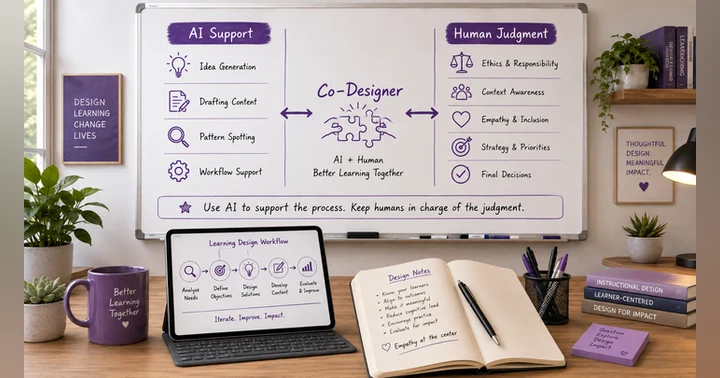
🖼️ Image Disclosure: This featured image was generated with AI using ChatGPT and reviewed by the author.

Award-Winning Instructional Designer, College Professor, Consultant, and Podcast Host
Jackie Pelegrin is an award-winning instructional designer, adjunct instructor at Grand Canyon University, podcast host, and consultant. Her experience spans higher education and corporate learning, and she holds an MBA and a master’s degree in Instructional Design and Technology. An Arizona native, Jackie enjoys reading, movies, games, and time with family and friends.
AI as Your Co-Designer: How to Use AI Without Replacing Human Judgment