How to Ensure Quality in AI-Generated Content: 3 Key Failure Modes
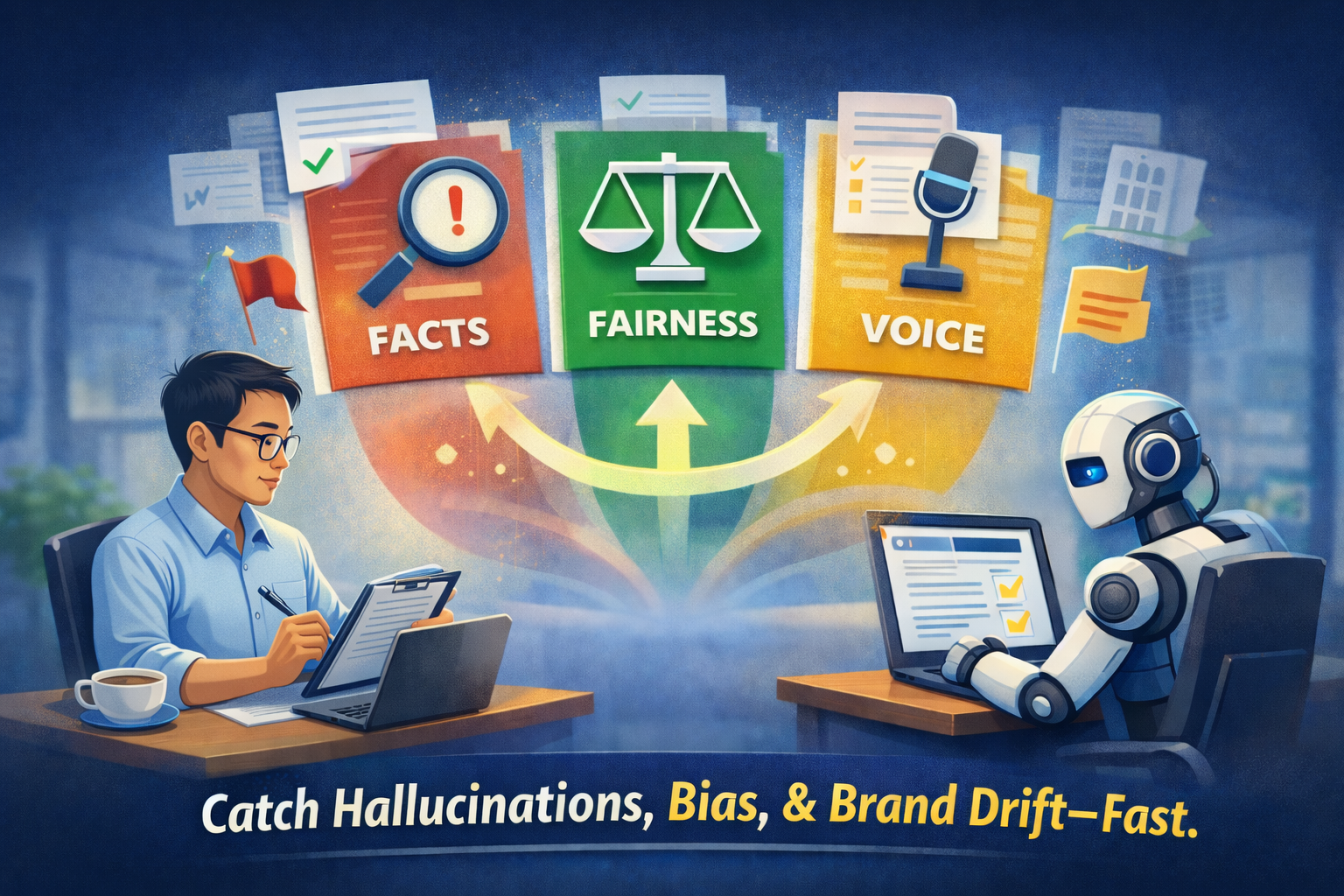
In today’s digital landscape, the use of AI in content creation is on the rise. However, with this innovation comes significant challenges. One common problem is that AI can produce content that sounds accurate but may still be misleading. In this post, we’ll explore three major failure modes in AI-generated content—accuracy, bias, and tone—and provide actionable tips on how to identify and rectify these issues to maintain the quality of your educational materials.
Understanding the Shift in AI Content Creation
The emergence of AI technology has transformed how we create content. AI can now produce clean, professional-sounding text almost instantly. However, this speed can lead to serious quality assurance oversights. Instructional designers and educators need to recognize that a confident error is still an error, especially in learning contexts where misinformation can spread quickly.
The Role of Quality Assurance (QA)
Quality assurance in AI-generated content is not just an afterthought; it’s a necessity. Educators and designers must take ownership of the content quality to ensure that learners receive accurate and fair information. This commitment is crucial, particularly when creating training materials that touch on sensitive topics like policy and compliance.
Failure Mode 1: Accuracy
Accuracy is paramount in educational content. AI-generated material can sometimes invent details, cite fake sources, or fill in gaps with incorrect information. Here are some red flags to watch for:
- Specific numbers, dates, and definitions: These require verification.
- Best practices and policies: Always confirm these with trusted sources.
Actionable Tip: Highlight any specific claims in your content and verify them against reputable sources or subject matter experts (SMEs).
Failure Mode 2: Bias
Bias in AI-generated content can manifest through examples or scenarios that reinforce stereotypes or exclude certain groups. This can lead to a lack of inclusivity in learning materials. Look for these signs:
- Default names or roles: Are they representative of diverse backgrounds?
- One cultural viewpoint: Ensure multiple perspectives are included.
Actionable Tip: Review your content for inclusive language and scenarios that accurately reflect your audience's diversity. Swap in names and contexts that resonate with all learners.
Failure Mode 3: Tone and Brand Drift
AI content can sometimes lack a consistent voice, appearing generic or overly formal. This inconsistency can dilute your brand message and confuse learners. Watch for:
- Buzzwords and vague promises: These can make content feel impersonal.
- Inconsistent terminology: Ensure that language matches your established brand voice.
Actionable Tip: Conduct a voice pass using your organization’s style guide to ensure that terminology aligns with your audience’s expectations and that the tone is appropriate.
Implementing a Fast QA Scan
To address these failure modes effectively, implement a quick QA scan that focuses on three areas: accuracy, fairness, and voice. Here’s how:
- Accuracy: Identify claims that need verification and focus on high-stakes details that could lead to misinformation.
- Fairness: Analyze examples for inclusivity and representation.
- Voice: Ensure that the tone and language are consistent with your brand.
Practical Application: Field Note Example
Consider a scenario where a designer uses AI to draft a compliance micro-lesson. The AI-generated content looks polished, but during the accuracy check, the designer discovers incorrect information about policy requirements. A fairness check reveals the content assumes a single type of employee, excluding remote staff. Lastly, the voice check uncovers generic language that doesn’t match the company’s tone. By catching these issues early, the designer can avoid a lengthy SME review cycle later.
Challenge: Conduct Your QA Scan
This week, challenge yourself to pick an AI-generated draft you’ve created recently. Run it through the accuracy, fairness, and voice checks. Set a timer for five minutes and focus on identifying major issues without aiming for perfection. You’ll be surprised at how many problems you can spot in just a few minutes.
Conclusion
In conclusion, while AI can significantly speed up content creation, the quality of that content is what truly earns the trust of learners. By running a quick scan for accuracy, fairness, and voice, you not only enhance the quality of your materials but also protect the credibility of your educational programs. Remember, as Maya Angelou said, "When you know better, you do better." Keep these practices in mind as you design with love and integrity.
🔗 Episode Links
Please check out the resource mentioned in the episode. Enjoy!
🖼️ Image Disclosure: This featured image was generated with AI using ChatGPT and reviewed by the author.

Award-Winning Instructional Designer, College Professor, Consultant, and Podcast Host
Jackie Pelegrin is an award-winning instructional designer, consultant, and adjunct instructor at Grand Canyon University. Her experience spans higher education and corporate learning, and she holds an MBA and a master’s degree in Instructional Design and Technology. An Arizona native, Jackie enjoys reading, movies, games, and time with family and friends.
Instructional Design: More Than Just Making Slides