Apple Podcasts
 Spotify
 Youtube Music
 Amazon Music
 iHeartRadio
 Podcast Addict
 PocketCasts
  Podchaser
  Deezer
  PlayerFM
  Castro
  Castbox
  Goodpods
 AI Quality Assurance: Catching Hallucinations, Bias, and Brand Drift

Key Takeaways
- AI-generated content can deceptively mislead learners despite appearing polished.
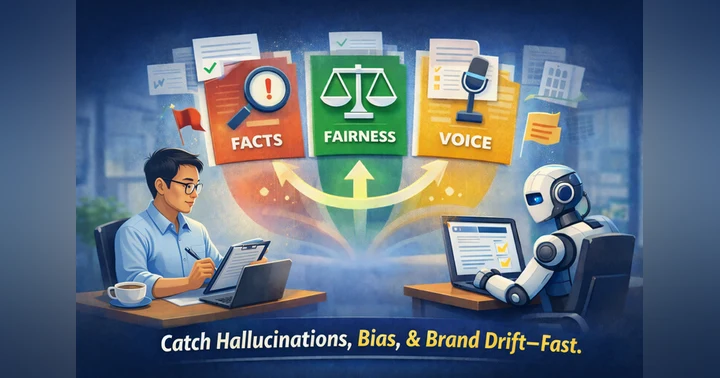
- A practical QA scan can quickly identify inaccuracies, bias, and brand drift in AI drafts.
- Focusing on facts, fairness, and voice ensures AI content is accurate, unbiased, and on-brand.
- Risks like invented details, stereotypes, and generic tone can harm learners and organizational reputation.
- Implement a simple, repeatable method with quick passes for facts, fairness, and voice on AI drafts.
AI can write training content that looks flawless, sounds professional, and still quietly mislead your learners. That’s the problem we tackle today, along with a practical fix you can use immediately: a fast QA scan that keeps AI speed while protecting trust, accuracy, and credibility.
In this episode, Jackie walks through three failure modes that show up again and again in AI-generated eLearning and microlearning drafts: accuracy issues like invented details or wrong policy claims, bias that slips into scenarios through assumptions or stereotypes, and brand drift where the tone turns generic, overly corporate, or inconsistent with your organization’s voice. If you design learning for compliance, safety, HR, legal, or any high-stakes topic, these risks aren’t theoretical; they can impact people’s well-being, employment, and your organization’s reputation.
You’ll leave with a simple, repeatable method: run three quick passes on any AI draft facts, fairness, and voice. I share the exact questions to ask, the red flags to watch for, and an easy checklist to keep next to your keyboard.
If you found this helpful, follow or subscribe, share the show with a fellow instructional designer, and leave a review so more designers can build AI-ready workflows without quality surprises.
🔗 Episode Links
Please check out the resource mentioned in the episode. Enjoy!
Join PodMatch!Use the link to join PodMatch, a place for hosts and guests to connect.
Disclaimer: This post contains affiliate links. If you make a purchase, I may receive a commission at no extra cost to you.
💟 Designing with Love + allows you to support the show by keeping the mic on and the ideas flowing. Click on the link above to provide your support.
☕ Buy Me a Coffee is another way you can support the show, either as a one-time gift or through a monthly subscription.
🗣️ Want to be a guest on Designing with Love? Send Jackie Pelegrin a message on PodMatch, here: Be a guest on the show
🌐 Check out the show's website here: Designing with Love
📱 Send a text to the show by clicking the Send Jackie a Text link above.
👍🏼 Please make sure to like and share this episode with others. Here's to great learning!
Frequently Asked Questions
What are the main risks of AI-generated learning content?
AI content can contain inaccuracies like invented details, introduce bias through stereotypes, and drift from your organization's brand voice, potentially misleading learners and damaging credibility.
How can I ensure AI-generated content is accurate and unbiased?
Implement a quick QA scan focusing on three passes: facts (checking for invented details or policy errors), fairness (identifying assumptions or stereotypes), and voice (ensuring brand consistency).
What is 'brand drift' in AI-generated content?
Brand drift occurs when AI content's tone becomes generic, overly corporate, or inconsistent with your organization's established voice and messaging.
Why is AI Quality Assurance important for high-stakes topics?
For compliance, safety, HR, or legal topics, AI content errors can have severe consequences, impacting individuals' well-being, employment, and the organization's reputation.
Welcome & Series Setup
Jackie PelegrinHello, and welcome to the Designing with Love Podcast. I am your host, Jackie Pelegrin, where my goal is to bring you information, tips, and tricks as an instructional designer. Hello, instructional designers and educators. Welcome to episode 115 of the Designing with Love Podcast. As we continue through the 2026 lineup, we're also moving through the AI Ready Designer Series. Last time, we built a human in the loop flow, so quality stays high and rework stays low. Today, we'll cover the three failure modes, accuracy, bias, and tone, and how to catch them fast before they ever reach a learner. So grab your notebook, a cup of coffee, and settle in as we explore this topic together. Before we jump in, a quick note. This is a 12-episode arc, and each episode builds on the last. In this 12-episode AI ready designer series, we'll move through five AI ready checkpoints each time. So you always leave with something practical you can apply right away. Alright, let's jump into checkpoint one. Here's the shift. AI can produce clean, professional sounding content instantly. But the problem is it can be wrong without sounding wrong. That means quality assurance can't be an afterthought anymore, because a confident error is still an error, and in learning, errors spread fast. Now here's your anchor line. AI is fluent. QA makes it trustworthy. So that's what's changing. Now let's anchor it in what doesn't change, our responsibility to learners. What doesn't change is this. Learners trust us to give them information that's accurate, fair, and aligned to their reality. And stakeholders trust us to protect the organization's credibility, especially when training touches policy, compliance, safety, or sensitive topics. So even if AI helps you draft the content, you own the quality bar. And when quality is the goal, the next question becomes, what exactly are we scanning for? Let's name three ways AI generated content goes off the rails. Failure mode one, accuracy. This is when AI invents details, cites fake sources, or confidently fills in gaps. Here's some red flags to watch for specific numbers, dates, definitions, policies, best practices, and anything that sounds official. Failure mode two, bias. This is when examples, scenarios, or assumptions subtly reinforce stereotypes or leave learners out. Here's some red flags to watch for default names or roles, one cultural viewpoint, gendered assumptions, or examples that don't match your audience. Failure mode three, brand drift. This is when your content sounds generic, overly corporate, overly casual, or inconsistent with your brand voice. Here's some red flags to watch for buzzwords, vague promises, inconsistent terminology, or a tone that doesn't match your learners. So those are the three failure modes. Here's the upgrade. A fast QA scan that catches them in minutes. Here's a quick QA method you can run on any AI draft. Step one, facts. Ask the following. What claims require verification? What details are high stakes or policy related? What could cause harm if wrong? Here's a quick action you can take. Highlight anything specific, numbers, dates, or rules, and verify with a trusted source or SME. Step two, fairness. Ask the following. Who might feel excluded or misrepresented? Are examples realistic across different backgrounds? Are we implying one right way that doesn't fit everyone? Here's a quick action you can take. Swap in inclusive names, context, and scenarios that match your learner population. Step three, voice. Ask the following. Does this sound like us? Is the tone consistent with our audience? Are we using our preferred terms and style? Here's a quick action you can take. Apply a voice pass using your style guide, terminology, reading level, and tone. And now that you've done the scan, let's make it actionable with a simple checklist you can reuse on every project. Here's a simple checklist you can keep next to your keyboard. Accuracy, verify specifics, and confirm policy or compliance language. Fairness, scan examples, remove stereotypes, and include your audience. Voice, align terminology, match tone, and remove buzzwords. And here's one rule that protects you every time. If it's high stakes, it's human reviewed, always. High stakes includes compliance, safety, HR, legal, medical, and anything that could impact someone's well-being or employment. All right, let me give you a quick field note so you can hear what this looks like in real life. A designer uses AI to draft a short compliance micro lesson. It looks polished, but during the fast Oops. Pause, take two. A designer uses AI to draft a short compliance micro lesson. It looks polished. But during the FACS pass, they notice a specific claim about a policy requirement, and it's wrong. During the fairness pass, they notice the scenario assumes a single type of employee and excludes remote staff. During the voice pass, they catch generic corporate language that doesn't match the company tone. In 10 minutes, they fix all three and avoid a messy SME review cycle later. Alright, let's make this practical with a quick challenge you can use this week. This week's checkpoint challenge is simple. Pick one AI-generated draft you've created recently and run the facts, fairness, and voice scan. Set a timer for five minutes. Remember, you're not aiming for perfection. Just catching the big issues early while they're still easy to fix. Alright, if you try that scan this week, I think you'll be surprised how many issues you catch in just a few minutes. Before you go, I made an interactive companion for this episode called AI QA Compass. It's a click-through guide you can use when you're going through these types of passes. If this episode helped you, please follow or subscribe and share it with a designer who wants AI speed without the quality surprises. AI can help you draft faster, but quality is what earns trust. When you run a quick scan for accuracy, fairness, and voice, you don't just catch problems. You protect learners and your credibility. As I conclude this episode, here is an inspiring quote by Maya Angelou. When you know better, you do better. Thanks for spending time with me today. Until next time, keep it practical, keep it human, and keep designing with love. Thank you for taking some time to listen to this podcast episode today. Your support means the world to me. If you'd like to help keep the podcast going, you can share it with a friend or colleague, leave a heartfelt review, or offer a monetary contribution. Every act of support, big or small, makes a difference, and I'm truly thankful for you.