How to Become an AI-Ready Designer: A 90-Day Plan

As instructional designers, the landscape of our work is evolving rapidly with the integration of AI tools. But how do you navigate this shift effectively? In this post, Jackie provides a structured 90-day plan to help you become AI-ready, ensuring that you’re not just using AI tools but integrating them thoughtfully into your workflow. This approach will empower you to build momentum and document your progress as you adapt to the changing environment.
The Shift to AI-Ready Design
AI readiness isn’t about learning every tool or mastering complex technologies; it’s about incorporating AI into your instructional design practice in a meaningful way. This involves analyzing problems, designing effective practices, and collaborating with stakeholders. The ultimate goal is to combine your design judgment with responsible AI use, ensuring that your work remains impactful.
Understanding the Common Traps in AI Readiness
As you embark on this journey, it’s essential to be aware of common pitfalls:
- Random Skill Building: Learning whatever pops up without a clear focus can lead to scattered knowledge.
- Random Tool Adoption: Adding tools for their novelty rather than their utility can complicate workflows.
- No Proof of Growth: Without documenting progress, it becomes challenging to showcase improvements in your work.
Avoiding these traps requires a strategic approach. Here’s how you can shift your focus over the next 90 days:
Your 90-Day AI-Ready Roadmap
The plan is structured into three lanes:
Skills: Building Relevant Expertise
- Focus: Identify specific skills to enhance your AI proficiency, such as writing better prompts or evaluating AI-generated content. Choose skills that are directly applicable to your work.
- Practice Example: If you aim to improve prompt writing, dedicate time to experimentation and refinement.
Systems: Creating Consistent Workflows
- Focus: Develop systems that make your skills repeatable and efficient. Create resources like a prompt library, QA checklists, and templates that help streamline your processes.
- Practical Example: By establishing a review checklist, you ensure that every AI-generated output meets quality standards before it goes to stakeholders.
Proof: Documenting Your Progress
- Focus: Collect evidence of your improvements and the impact of your AI integration. This could include before-and-after comparisons, time saved on tasks, and feedback from subject matter experts.
- Documentation Strategy: Create a short case study that highlights your AI-supported workflows, showcasing the benefits of your new approach.
Implementing Your 90-Day Plan
Days 1-30: Building the Foundation
In the first month, focus on clarity. Choose one AI use case, one skill to practice, one workflow to improve, and one guardrail to follow. Keeping it manageable will help you build confidence.
Days 31-60: Building the System
In the second month, concentrate on creating structures that support your skills. Develop reusable templates, measurement trackers, and approval briefs to enhance consistency in your workflow.
Days 61-90: Building the Proof
In the final month, document your impact. Reflect on what has improved, what became faster, and what you learned during the process. Create proof artifacts that demonstrate the value of your work.
Conclusion
Becoming AI-ready is about thoughtful, documented progress rather than rushing to master every tool. By focusing on skills, systems, and proof over the next 90 days, you can integrate AI into your instructional design practice effectively. Remember, it’s about building a sustainable path forward, not achieving perfection overnight.
Key Takeaways
- Prioritize building relevant skills.
- Create systems for consistent workflows.
- Document your progress to showcase your growth.
🔗 Episode Links
Please check out the resource mentioned in the episode. Enjoy!
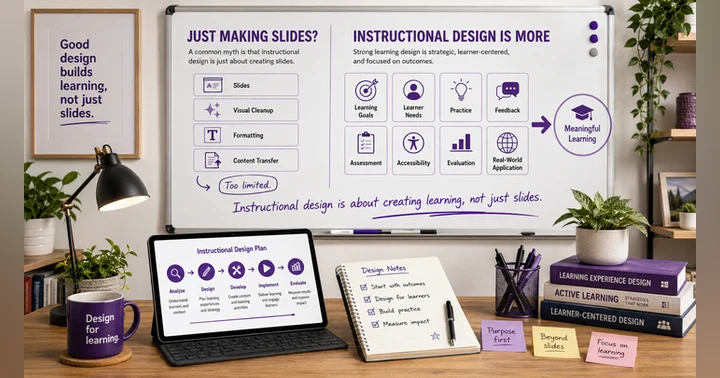
🖼️ Image Disclosure: This featured image was generated with AI using ChatGPT and reviewed by the author.

Award-Winning Instructional Designer, College Professor, Consultant, and Podcast Host
Jackie Pelegrin is an award-winning instructional designer, consultant, and adjunct instructor at Grand Canyon University. Her experience spans higher education and corporate learning, and she holds an MBA and a master’s degree in Instructional Design and Technology. An Arizona native, Jackie enjoys reading, movies, games, and time with family and friends.

How Adult Learning Principles Enhance Education: Key Insights With Dr. Dwayne Wood