Learning Styles: Myth or Reality? Why They Shouldn’t Drive Design Decisions
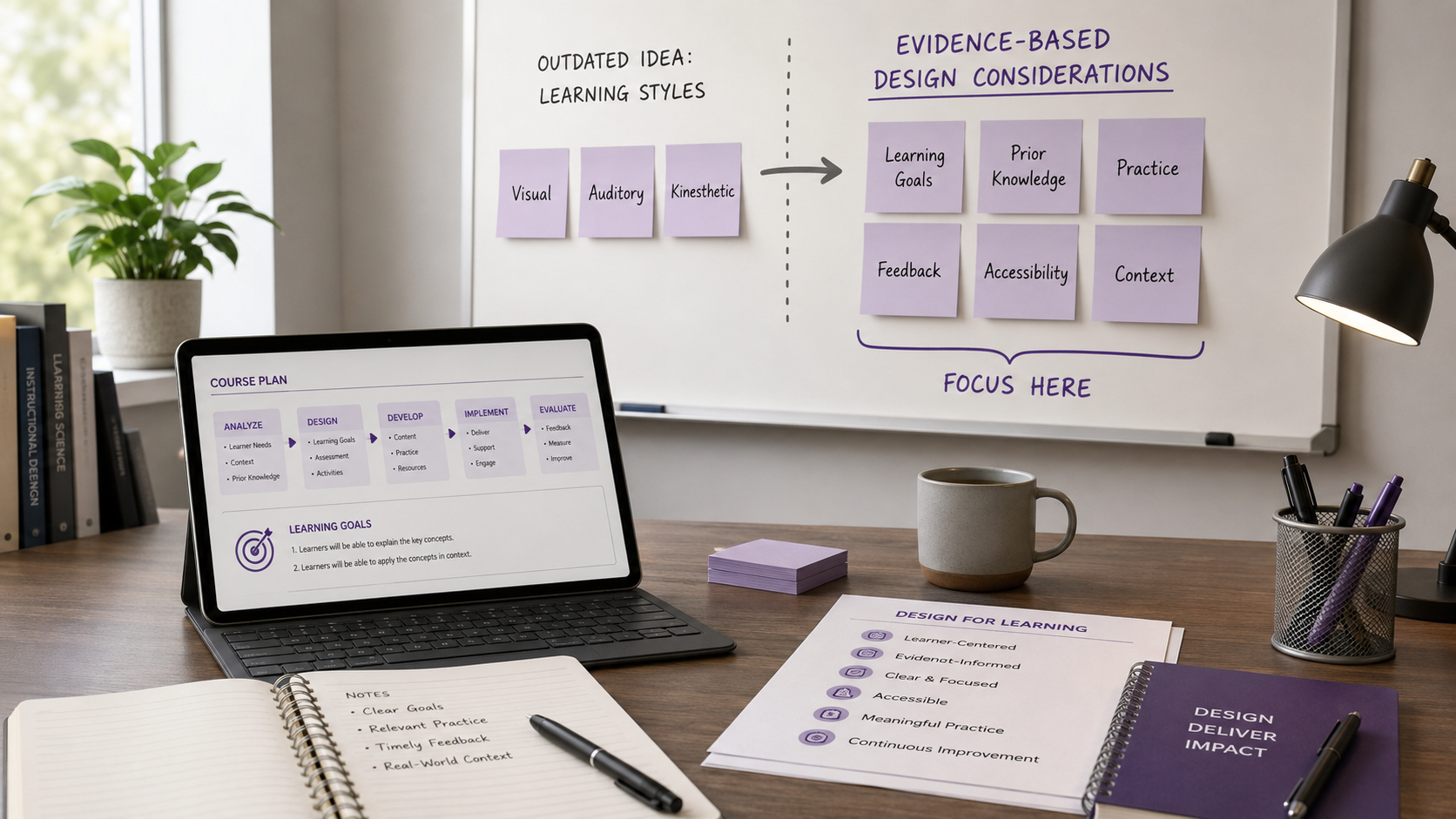
In the world of instructional design, the topic of learning styles often comes up, sparking heated debates and confusion. Many educators and instructional designers believe that tailoring instruction to specific learning styles—such as visual, auditory, or kinesthetic—will lead to better learning outcomes. However, this common belief may not hold up under scrutiny. In this blog post, we’ll explore why the myth that learning styles should drive design decisions is misleading and discuss how shifting our focus to learning goals can enhance educational effectiveness.
Understanding the Learning Styles Myth
The idea that individuals learn best when instruction aligns with their preferred learning style seems learner-centered at first glance. It acknowledges that learners have different preferences in how they absorb information. You may have heard students say things like, "I'm a visual learner" or "I learn best by listening." While these statements reflect genuine preferences, they do not necessarily translate to improved learning outcomes.
Research has shown that matching instruction to fixed learning styles does not produce significant improvements in learning. Instead, effective instructional design should consider the specific learning goals and the needs of the learners.
The Problem with Fixed Labels
When we categorize learners strictly by their preferred styles, we risk limiting their potential. A student might think, "I can’t learn from diagrams because I am an auditory learner," which can hinder their engagement and growth. Labels can create barriers rather than foster a diverse learning environment. This myth persists partly because of the comfort it provides; simple categories help educators feel more in control of their teaching strategies.
Shifting the Focus: Goal-Based Design
Instead of asking which learning style a student has, instructional designers should ask, "What does this learner need to understand, practice, or apply?" This shift in perspective encourages a more nuanced approach to instruction that prioritizes the learning goals.
Key Questions for Effective Instructional Design
- What task do learners need to perform? Understanding the task at hand is crucial. If the goal is to identify phishing emails, for example, learners need realistic examples and practice scenarios rather than just a lecture on cybersecurity.
- What formats best support the learning goal? Different tasks may require various formats. Demonstrations may be needed for physical tasks, while visual aids can clarify complex processes. The focus should be on the content and its effectiveness rather than the learner's label.
- How can we design inclusive experiences? Accessibility should be integrated into design decisions. This means providing captions, transcripts, and multiple ways to access information, ensuring that all learners can engage meaningfully with the content.
Embracing Multimodal Learning
While we should avoid using learning styles as the basis for our design, incorporating multiple formats can still enhance the learning experience. However, each format must serve a clear purpose. For example, a video might clarify a concept, while an audio example could illustrate a key difference. This way, we ensure that instructional materials are not only diverse but also purposeful.
The Myth Reset Challenge
To apply these insights, consider taking the Myth Reset Challenge: review one lesson or training experience and ask yourself if you're designing around learner labels or focusing on the learning goals. This reflection can lead to stronger, more flexible learning experiences.
Moving Forward in Instructional Design
As instructional designers, we must prioritize learning goals over learning styles. By focusing on the needs of learners and the requirements of the tasks they must complete, we can create more effective and inclusive learning environments. Remember: preferences are real, but they should not dictate the structure of our instructional design.
In the next episode of the Designing with Love Podcast, we will continue to debunk common myths in instructional design, so stay tuned for more insights!
🔗 Episode Links
Please check out the resources mentioned in the episode. Enjoy!
Myth Reset Case File: Learning Styles and Design Decisions
Multimedia Learning by Richard E. Mayer
🖼️ Image Disclosure: This featured image was generated with AI using ChatGPT and reviewed by the author.

Award-Winning Instructional Designer, College Professor, Consultant, and Podcast Host
Jackie, an Arizona native, leverages decades of experience as an award-winning instructional designer within both higher education and the corporate world. She holds an MBA and a Master of Science in Instructional Design and Technology, both acquired through online learning. In addition to her full-time role, Jackie serves as an award-winning adjunct instructor, teaching online courses at Grand Canyon University. During her leisure time, she delights in reading books across a range of genres, enjoying movies and TV shows, playing games, listening to uplifting music, and spending quality time with her family and friends.
The Myth of Class Size and Learning Quality: What You Need to Know