Instructional Design: More Than Just Making Slides
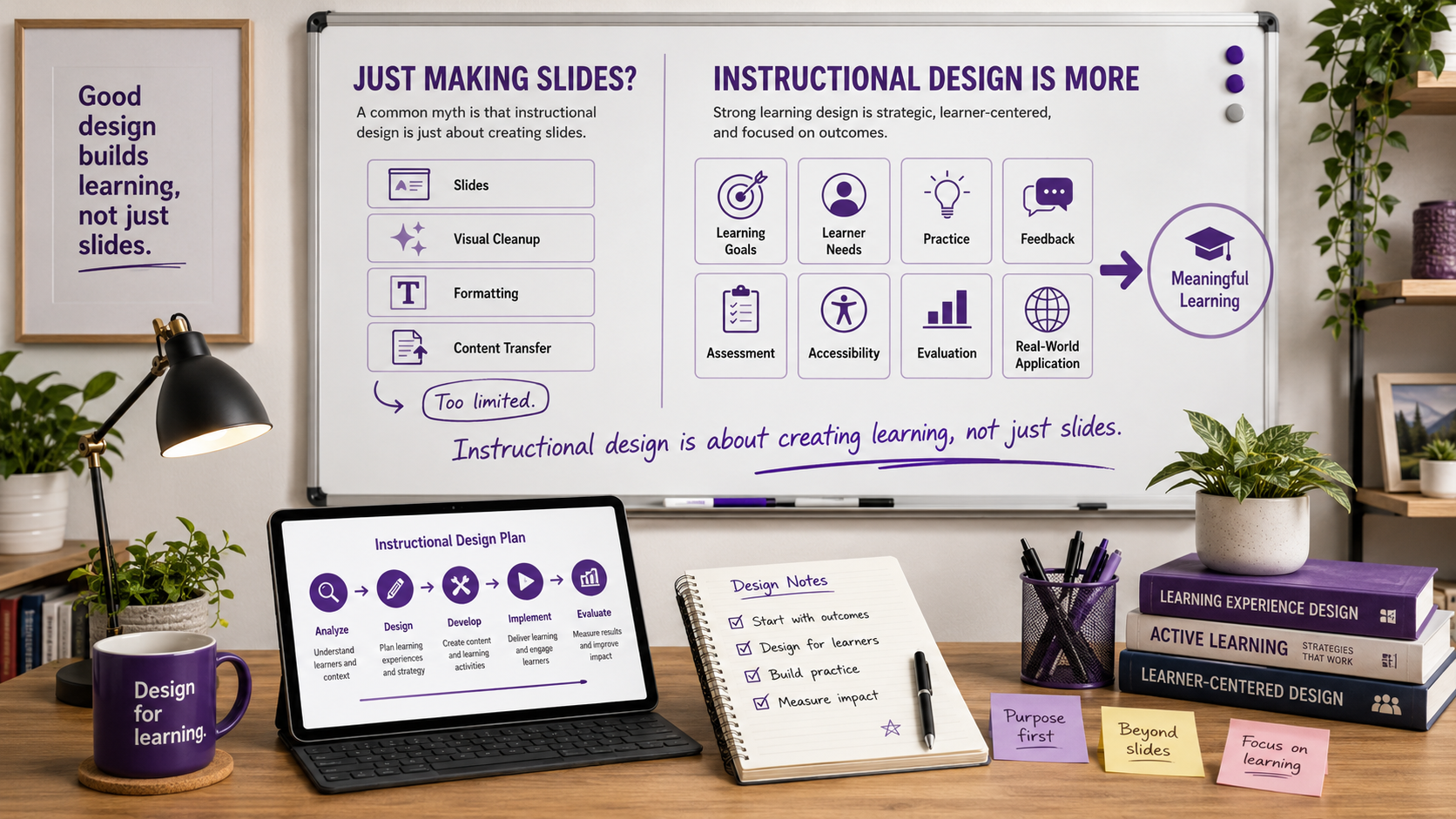
In the world of education and training, a pervasive myth exists: instructional design is merely about creating slides. This notion oversimplifies the role of instructional designers, reducing their expertise to mere aesthetics rather than recognizing the deeper cognitive and strategic processes involved in crafting effective learning experiences. In this blog post, we’ll debunk this myth and explore the true essence of instructional design, focusing on how it facilitates meaningful learning outcomes.
Understanding Instructional Design Beyond the Slides
Instructional design encompasses a comprehensive approach to developing educational experiences. While slides and visual aids are important components, they represent just a fraction of the instructional design process. The real work lies in addressing several critical questions that guide the overall learning experience:
- What problem are we trying to solve?
- Who are the learners?
- What do they already know?
- What barriers might hinder their learning?
These questions are integral to understanding the learners' needs and designing appropriate interventions that lead to effective outcomes. Instructional designers utilize needs analysis and collaborate with subject matter experts to ensure that the final learning product is a true reflection of what the learners require.
The Importance of a Holistic Learning Experience
A common misconception is that instructional design is primarily about the deliverables, such as slides or course materials. However, effective instructional design is about creating an environment where learners can thrive. This includes:
- Analyzing learner needs
- Clarifying learning outcomes
- Designing engaging activities
- Building assessments and feedback mechanisms
For instance, if the learning goal is to foster decision-making skills, a scenario-based approach may be more effective than a traditional slide deck. In contrast, if learners need to remember a process, a practical job aid might serve them better than slides filled with text.
Navigating the Myth: Instructional Design Is Not Just Slides
The myth that instructional design is limited to slide creation persists for a few reasons:
- Visibility of Final Products: Slides are often the most visible outcome of instructional design, overshadowing the extensive planning and analysis that precede their creation.
- Late Involvement: Sometimes, instructional designers are brought in at the last minute, leading to a focus on formatting existing content rather than engaging in the full design process.
- Misunderstanding Learning Goals: If stakeholders equate learning with information delivery, they may undervalue the instructional design process and prioritize slide aesthetics over learning effectiveness.
This misconception can lead to ineffective learning experiences where beautiful slides fail to engage learners meaningfully.
Shifting Towards Learning Experience Design
To combat the myth of instructional design being just about slides, it's essential to embrace a mindset focused on learning experiences rather than deliverables. Consider these strategies:
- Ask the Right Questions: Shift your focus from "What should this slide say?" to "What should this learning experience help someone do?"
- Prioritize Learner Needs: Assess what learners truly need to understand and apply, rather than what content fits neatly into a presentation format.
- Design for Engagement: Utilize diverse formats—such as job aids, scenarios, and interactive activities—to foster a more engaging learning environment.
Conclusion: Rethinking Instructional Design
In summary, instructional design is not merely about creating slides; it's about shaping comprehensive learning experiences that empower learners to reach their goals. By challenging the myth that instructional design is just about visuals, we can better appreciate the multifaceted nature of this profession. As you review your instructional materials, ask yourself: are they merely presenting information, or are they facilitating deeper understanding and application? By focusing on the learning goal, you can ensure that every design choice serves the needs of your learners.
This week, take time to evaluate one of your learning deliverables. Consider how you can better align your design with the learning outcomes you aspire to achieve. Remember, effective instructional design is about creating the right support for the learner and context, ensuring that every effort is directed toward fostering meaningful learning outcomes.
🔗 Episode Links
Please check out the resource mentioned in the episode. Enjoy!
Myth Reset Case File: Beyond the Slides
🖼️ Image Disclosure: This featured image was generated with AI using ChatGPT and reviewed by the author.

Award-Winning Instructional Designer, College Professor, Consultant, and Podcast Host
Jackie Pelegrin is an award-winning instructional designer, consultant, and adjunct instructor at Grand Canyon University. Her experience spans higher education and corporate learning, and she holds an MBA and a master’s degree in Instructional Design and Technology. An Arizona native, Jackie enjoys reading, movies, games, and time with family and friends.

How to Effectively Implement Multimodal Learning Strategies for Adult Education With Dr. Dwayne Wood