Engagement vs. Entertainment: Unpacking a Common Myth in Instructional Design
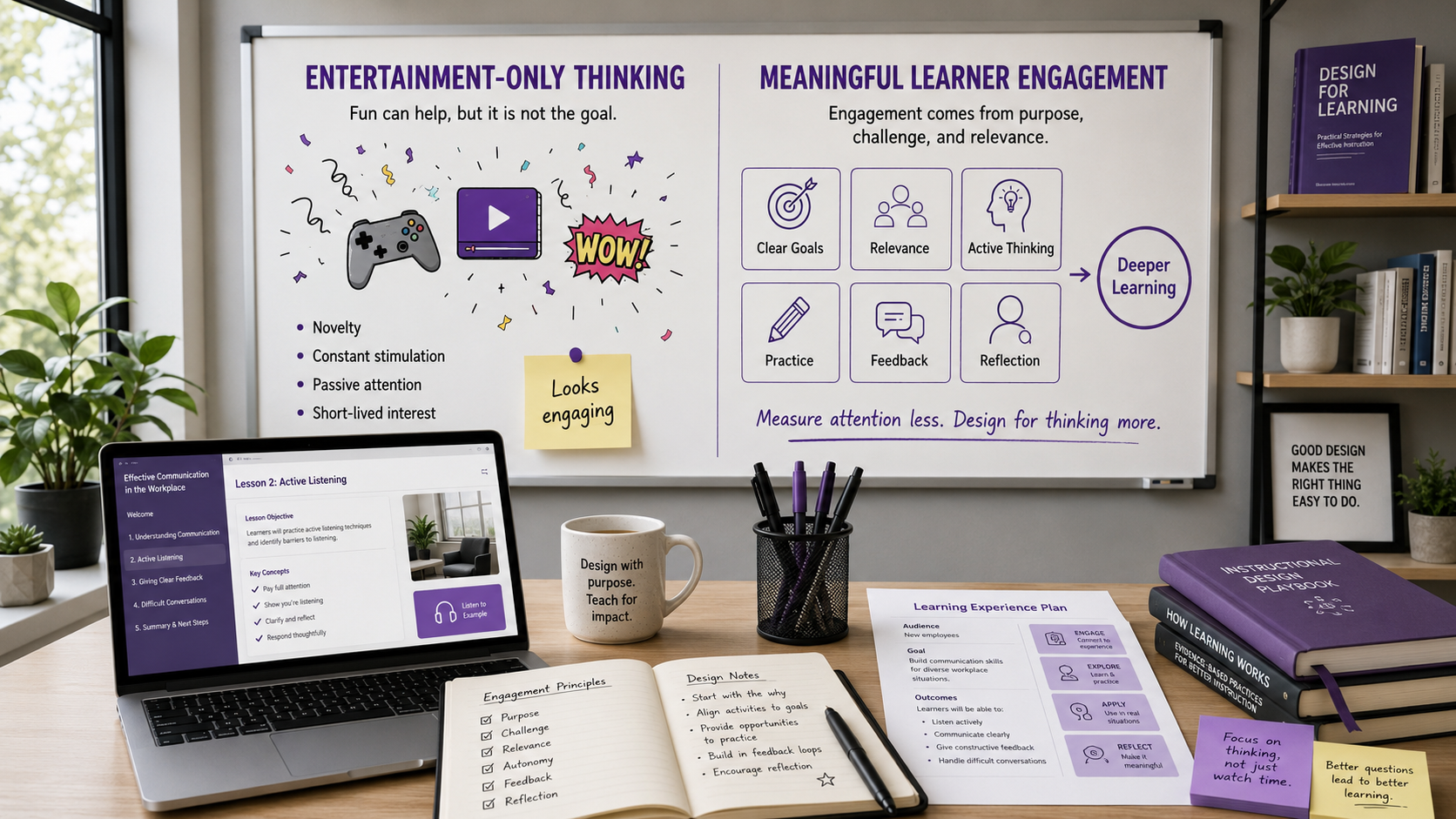
In the world of education and instructional design, one persistent myth continues to influence how we view engagement: that engagement means entertainment. This belief can lead educators to focus on making learning experiences flashy and fun, often at the expense of deeper understanding. In this blog post, we'll explore why this myth has endured, what it gets wrong, and how we can shift our approach to create more meaningful learning experiences.
Understanding the Myth: Engagement vs. Entertainment
At first glance, the notion that engagement equates to entertainment seems reasonable. After all, we want learners to pay attention and enjoy their learning experiences. However, the reality is that entertainment does not guarantee learning. A learner may laugh at a funny video yet still fail to grasp the core concepts being taught. Thus, while entertainment can capture attention, true engagement is about helping learners connect with content and apply their knowledge meaningfully.
The Problem with the Myth
The myth that engagement means entertainment persists for several reasons:
- Visibility of Activity: Visible engagement, such as laughter or participation, can be mistaken for effective learning. However, just because learners are responding does not mean they are truly engaged with the content.
- Swinging the Pendulum: Many traditional learning experiences have been boring or overly passive. In an effort to combat this, educators often overcorrect by adding entertainment elements that don't necessarily enhance learning.
- Superficial Engagement Metrics: Educators sometimes rely on metrics like completion rates or attendance to measure engagement. However, these indicators do not account for the depth of understanding or meaningful connection to the learning objectives.
Moving Toward Purpose-Based Engagement
To foster genuine engagement, we must shift our focus from entertainment to purpose. Here are some strategies to help you design learning experiences that promote meaningful participation:
- Ask the Right Questions: Instead of asking, "How can I make this more fun?" consider, "How can I make this more meaningful?" This shift encourages you to align activities with learning objectives.
- Design for Reflection: Build in opportunities for learners to reflect on what they are learning. Thoughtful prompts can deepen understanding and promote connection to personal experiences.
- Create Realistic Challenges: Design scenarios that require learners to apply their knowledge in practical situations. This can enhance their ability to make decisions and solve problems based on what they’ve learned.
Examples of Meaningful Engagement
- Scenario-Based Learning: If learners need to make decisions, create a scenario that simulates real-life challenges relevant to the content.
- Discussion-Based Learning: Use discussions to allow learners to process ideas collaboratively and hear different perspectives.
- Reflective Practices: Incorporate quiet reflection time where learners can connect the material to their own experiences, enhancing personal relevance.
The Myth Reset Challenge
This week, take the time to review one of your lessons or activities. Ask yourself:
- What is the learning goal?
- Is this activity engaging because it supports learning, or is it simply entertaining?
- What adjustments can I make to enhance the meaningfulness of the experience?
By focusing on these questions, you can design with intention rather than decoration.
Key Takeaways
- Engagement is not synonymous with entertainment. Focus on meaningful involvement in the learning process instead.
- Design with purpose. Create activities that help learners think deeply, practice skills, and apply knowledge.
- Ask the right questions. Shift your perspective to ensure that engagement serves the learning goals.
By challenging the myth that engagement equals entertainment, we can create more effective and meaningful learning experiences. Remember, the goal is not to remove joy from learning but to ensure that engagement serves a greater purpose.
🔗 Episode Links
Please check out the resource mentioned in the episode. Enjoy!
Myth Reset Case File: Engagement Beyond Entertainment
🖼️ Image Disclosure: This featured image was generated with AI using ChatGPT and reviewed by the author.

Award-Winning Instructional Designer, College Professor, Consultant, and Podcast Host
Jackie Pelegrin is an award-winning instructional designer, adjunct instructor at Grand Canyon University, podcast host, and consultant. Her experience spans higher education and corporate learning, and she holds an MBA and a master’s degree in Instructional Design and Technology. An Arizona native, Jackie enjoys reading, movies, games, and time with family and friends.
AI as Your Co-Designer: How to Use AI Without Replacing Human Judgment