Apple Podcasts
 Spotify
 Youtube Music
 Amazon Music
 iHeartRadio
 Podcast Addict
 PocketCasts
  Podchaser
  Deezer
  PlayerFM
  Castro
  Castbox
  Goodpods
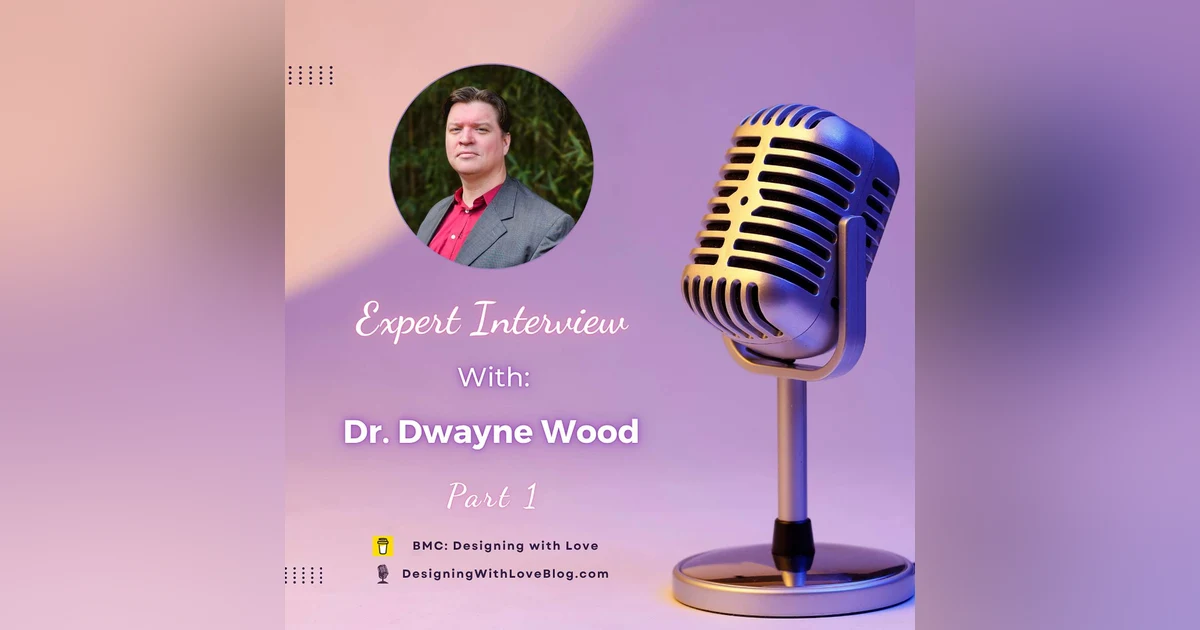
 Generative AI and Curriculum Design With Dr. Dwayne Wood
Key Takeaways
- Dr. Dwayne Wood emphasizes that generative AI operates in the same space as human cognition, presenting unique challenges for teaching, learning, and assessment compared to traditional peripheral tools.
- Domain knowledge is critical when interacting with AI; individuals with lower domain expertise are significantly more likely to accept hallucinations and biases presented by polished AI outputs.
- Skill erosion is a major hidden risk for instructional designers and educators who overly rely on AI to make design decisions, potentially losing the core expertise needed to build effective learning experiences.
- Backward design and authentic assessment that mirror real-world applications help make AI usage measurable and defensible while mitigating irresponsible student shortcuts.
- Educators should start curriculum design by focusing on clear learning outcomes and student processes rather than letting the novelty of AI dictate course development.
Generative AI is moving from “helpful tool” to something that can quietly shape how people think, write, and learn, and that changes everything about curriculum design. I sit down with Dr. Dwayne Wood, an experienced educator and curriculum developer with a background in military instruction, to unpack what generative AI in education actually means when you care about real learning outcomes, not just faster content production.
We dig into the uncomfortable middle ground between banning AI and letting it run wild. Dwayne explains why domain knowledge matters so much when learners use AI, how hallucinations and bias slip through when output looks polished, and why foundational courses may need tighter boundaries than advanced coursework. We also talk about the hidden risk for our profession: skill erosion. If instructional designers outsource the “why” behind design decisions, we can lose the expertise that makes learning experiences work in the real world.
From there, we get practical. We focus on backward design, alignment, and authentic assessment as a way to make AI use measurable and defensible. We explore strategies for adult learners, including experiential learning cycles that surface misconceptions, reflective prompts that build transfer of learning, and course policies that reduce anxiety and deadline pressure that can drive irresponsible AI shortcuts.
If you’re building academic curriculum, corporate training, or workforce education, this conversation will help you decide when to use AI, when not to, and how to keep critical thinking at the center. Subscribe for the rest of the mini-series, share this with a colleague, and leave a review so more educators can find it.
📢 Call-to-Action: Want to explore how Generative AI is shaping academic curriculum? Visit the links in the show notes to connect with Dr. Dwayne Wood, learn more about his work, and continue reflecting on how AI can support thoughtful, human-centered curriculum design.
📖 Additional Resource: You can also visit National University to learn more about its programs and resources for adult learners, working professionals, and military-connected students.
Join PodMatch!
Use the link to join PodMatch, a place for hosts and guests to connect.
Disclaimer: This post contains affiliate links. If you make a purchase, I may receive a commission at no extra cost to you.
💟 Designing with Love + allows you to support the show by keeping the mic on and the ideas flowing. Click on the link above to provide your support.
☕ Buy Me a Coffee is another way you can support the show, either as a one-time gift or through a monthly subscription.
🗣️ Want to be a guest on Designing with Love? Send Jackie Pelegrin a message on PodMatch, here: Be a guest on the show
🌐 Check out the show's website here: Designing with Love
📱 Send a text to the show by clicking the Send Jackie a Text link above.
👍🏼 Please make sure to like and share this episode with others. Here's to great learning!
Frequently Asked Questions
How does generative AI impact curriculum design?
Generative AI shifts the instructional design focus from simply displaying content to guiding learners through cognitive processes and building clear expectations around AI usage in academic courses.
What is the risk of skill erosion in instructional design?
Skill erosion occurs when instructional designers routinely outsource their critical thinking and decision-making to AI, leading to a loss of the foundational expertise that makes learning experiences effective.
Why is domain knowledge important when using generative AI?
Users with high domain expertise can better scrutinize AI outputs, whereas those without adequate background knowledge are more likely to fall victim to sophisticated hallucinations and biases.
How can educators mitigate AI misuse in student assessments?
Educators can reduce irresponsible AI shortcuts by designing authentic assessments that replicate real-world application, establishing clear policies, and ensuring transparent expectations around tool usage.
00:00 - Welcome & Series Kickoff
01:27 - Dwayne’s Army To Education Path
04:02 - AI Moves Into Human Thinking
07:52 - When AI Helps & When It Hurts
11:05 - Curriculum Design Upside & Risk
14:45 - Hallucinations Domain Knowledge & Trust
18:05 - Skill Erosion & The Master Designer
24:24 - Start With Outcomes Not Tools
28:14 - Backward Design & Authentic Assessment
36:34 - Experiential Learning To Surface Misconceptions
42:54 - Learning Over Grades Time & Resubmits
49:04 - Where To Connect & Closing Support
Welcome & Series Kickoff
Jackie Pelegrin
Hello, and welcome to the Designing with Love Podcast. I am your host, Jackie Pellegrin, where my goal is to bring you information, tips, and tricks as an instructional designer. Hello, instructional designers and educators. Welcome to episode 150 of the Designing with Love Podcast. I'm thrilled to have Dr. Dwaynewood with me today for part one of our five-part miniseries, where we will explore genitive AI's impact on academic curriculum. Duane is an experienced educator, curriculum developer, and instructional designer with a strong foundation in military service and a deep commitment to empowering others through education. His expertise spans instructional design, workforce education, and the integration of emerging technologies and learning. That's right up my alley, Dwayne. I love it. His recent research explores the role of generative AI in fostering critical thinking and human skills in educational context. Duane holds a master's degree in adult education and a doctorate in educational leadership and management from Capella University, which helps him bring a unique blend of practical experience and academic insight into his work. Welcome to the show, Duane.
SPEAKER_04
Well, thank you for having me.
Jackie Pelegrin
I am so glad we got to connect. So to start, can you tell us a little bit about yourself and share what inspired your interest in generative AI curriculum development and adult learning?
Dwayne’s Army To Education Path
SPEAKER_04
Yeah. So you've seen in my my the bio you read there, you know, military service. I I did 20 years in the Army, uh, served 20 years. And that kind of like sparked my kind of like passion for education and training. Uh, because I mean that's what we did. Um and and I actually ended up my last tour in the Army was instructing uh Army officers. So I I I that was that was a that was a passion for me where I learned that. And where I started to really start putting things together um and exploring instructional design is I saw where I could make small changes to how I was teaching and in the design itself and the outsized impact in learning that I could get. So, you know, I started making those connections. So then I dived into instructional design and dived into like educational technology and really started trying to take a hard look of like how technology is being used to achieve learning. Because I seen a lot of times where we would use technology as almost like an add-on, right? If we got this new technology, hey, we're gonna use it. But did we really achieve the learning outcome that we were trying to do? And a lot of times we couldn't answer that, or it was neutral at best, right? So I started really diving in and how do we use technology to really start thinking about and using and applying to achieve those learning outcomes that we're looking to achieve. And, you know, in the last couple of years, we had this great new technology of artificial intelligence come out that uh is a little different. And when I when I say that and I explain that, is a lot of the technologies we had before that were on the periphery of human cognition, right? We can think of spell check and some other tools that are out there that would help somebody you know go through a learning process, where this uh artificial intelligence now is in the same space as human cognition. So it produce it presents some some new challenges and how it's used. And and and I think we have to really start thinking about um how that's going to be used and what changes for us in teaching and learning and assessment. Um and you know, what do we do as educators? We're preparing people for work, right? For you know, it so making sure that we're meeting those requirements.
Jackie Pelegrin
That's so important, especially today, right? Um, yes, it seems like we always have to stay on top of that as instructional designers and and not being complacent, right? Because if we if we stay stuck in the past and what we used to do, it it doesn't allow us to help those learners, right, in the in the workforce or future workforce, right? And that, yeah. That's so true.
AI Moves Into Human Thinking
Jackie Pelegrin
Yes. I love that. So, Duane, when you think about generative AI's impact on academic curriculum, what shifts are you seeing in how educators design courses, assignments, and even learning experiences as well?
SPEAKER_04
And, you know, I mean that that is that is like I think the big question on a lot of like educators' mind and institutions and educational organizations out there. And honestly, I don't know if we know the answer yet. You know, we we see we see the spectrum now where we have organizations going no, right? There's none. And then we have some that are just open. And I think there's maybe a little bit of danger of just classifying it that way. Um, you know, I I really think it you know the answer is it depends. Um we we could talk about you know how important domain knowledge is when interacting or collaborating with an artificial intelligence tool, in that you know, it a lot of research has shown if you don't have a high level of domain knowledge and you're interacting with this tool, you're more likely to accept a hallucination or a bias because you just don't have the background information, right, or knowledge aspect of it. So when we start talking about some big foundational educational knowledge domains, maybe that's not a good place to have a full implementation of AI because we need the cognitive effort to happen in order to produce that domain expertise. You know, before versus you know, a higher end course where the domain expertise is there and now you're extending it, right? And you're and you're you're getting into those higher order thinking skills. Now AI is probably can be used in certain ways to help augment that and get to those learning outcomes. And that's even that that description is even general in itself, right? We could get down to contextual aspects of it, but those are the things I think we need to think about and not be able to just like slap a label that you know you're gonna use it or you're not. Well, let's think through it and how it's gonna be used. That that is where um you know you're gonna have your instructional designer that's that's steeped in the educational theory and the educational best practices and has to be able to now look at this tool, look at the outcomes we're trying to achieve, and see where that works and see where in that learning pathway um for that learner to achieve that outcome. That's the challenge.
Jackie Pelegrin
I like that. Yes, that is. So it's not black or white, right? It's not like you said, it's not use it or don't use it, yes or no type of thing, right? I like that. Yeah, we can't look at it like that.
SPEAKER_04
Yeah, yeah, and it's on top of it, it's it's clear expectations, right? If if we're not clear with the student, you know, then then I I like to say, you know, understanding equals motivation and motivation equals understanding. So if we have a clear, a clear um expectation on AI use, most adult learners are gonna are gonna follow that because you're very clear in how it's gonna be used. You know, example, like if you have a uh um an activity you wanted to do and you outline specifically where uh AI could be used and how, right? Um you're being very clear and upfront and being transparent. And I think that's part of it. And that's just that that learning ecosystem that goes beyond instructional design and is and is more holistic looking at how we're achieving that learning.
SPEAKER_02
Right. That's so true, Dwayne. Yeah, I love that.
Jackie Pelegrin
Wow. Wonderful. So some educators are excited about AI, while others I think are understandably cautious, and you've probably seen this in your work too. Um so for you, what are some of the biggest opportunities and concerns that institutions should consider when bringing AI into
When AI Helps & When It Hurts
Jackie Pelegrin
curriculum design, uh, especially today?
SPEAKER_04
So, you know, I I think of it like this in two kind of categories and using the tool to develop curriculum process, but then also having the tool as like an instructional tool within the curriculum, right? So there's a, and I and I think we we we look at that a little bit differently. Um, so when we're thinking about how we're using this technology and developing learning, I think our role just starts to shift a little bit. Where, you know, we we talk about curriculum developers and instructional designers, we tend to really think about content. How is content displayed? How is the learner navigating the content? And I think it's gonna shift now, where we're gonna now be really starting to really heavy focus on guiding that learner through that, those cognitive processes. So we have to really start thinking about you know, what is the learner doing here and why are they doing that, and how is that related and achieving that learning outcome more so than we do now, right? We kind of look at it at like a lesson or module kind of levels. We're gonna have to get a little more detailed, I think, in our on our learning pathways as we do our designs with artificial intelligence, uh, you know, picking up the other pieces of that design, you know, putting the content together and um organizing and and summarizing and doing all that stuff for us. Um the other benefit there is those these systems are very good at fast iterations. So where in the past, where we've done multiple cycles over weeks, we can do multiple cycles over hours. Right. And so you can get those iterations. Um I I always like to say when I work with a client doing an instructional design product, the client never knows what they want, but they they know what they don't want. So if I can produce something and they're like, I don't, that's not what I'm looking for, great. I just learned something, let's move on. Right. Um so this these technologies allow us to do that much quicker. Now on the on the other side, I think educators, there's there's room for concern here. Um because if the tool, if this AI tool is being used to substitute the cognitive effort that produces learning, then we're not achieving that outcome. So we have to really look at that process. What is the student doing? Do are we giving them everything they need to achieve that outcome? And understanding that the cognitive effort has to happen, right? That that's what we want to do. We need that friction to produce the learning and not just type in this prompt and hit go and you know, and here I go. Well, the learning didn't happen, or or the intended learning didn't happen. Which brings up a concern is maybe we have to start looking at those learning outcomes themselves. So where we focused on things like some more hard skills of like academic writing, well, maybe that's not such a prioritized skill anymore where critical thinking is and creative thinking is. So we write those into the objectives, is what we're trying to achieve. So I mean again, I think we have to really start. If if we're looking at just plugging in an AI tool in our
Curriculum Design Upside & Risk
SPEAKER_04
current processes, I think there's problems. Right? We're not gonna, we're not gonna use it in a way, and it's not gonna be done in a way to still achieve that learning outcome with the student using this tool. We have to look at that total learning process and and just think differently and how we're gonna achieve it.
Jackie Pelegrin
You know, that sounds that's that's amazing. Yeah, that's great, Dwayne. I I'm glad you brought that up because as you were talking through that, it it made me think about what what uh we do every day. And like, for example, I I work on curriculum for counseling and social work and mental health and wellness, those types of things, behavioral health, but I don't have that uh expertise in that, right? So my expertise is education, instructional design, things like that. So I take my curricular expertise, bring it to the table, right? We all come together. But what I find is happening, and I don't know if this is what you're seeing too with your clients and even in education, but what I'm finding is that sometimes the curriculum developers will go to, we have a closed AI model that we use. So they'll go there because they don't know about nursing or they don't know about counseling, and they'll bring some ideas forth with AI, right? And they'll say, here's eight topics. Let me get some objectives, let me get some assignment ideas, some discussion questions, things like that for the curriculum. And then they hand it to the faculty and they're like, oh yeah, this looks great. And and I'm thinking, wait, have they looked at it? Do they even like take a hard look at the at that information to see was it accurate and is it hallucinating, right? We don't know. So yeah, have you noticed that too? That they seem to kind of not really do that critical thinking like like they should sometimes.
SPEAKER_04
Yeah, absolutely. And and the the the the example you gave is uh I think is spa on um because it it a lot of it comes down to the familiarity of that individual and using these tools. One of the things that I've I I I talk to a lot of students about when they use AI is we don't necessarily have the mental models um to work with these tools effectively because we we're thinking of it almost like an answer machine, right? I I put in my my queries and it spits out this great thing that I can trust. Well, we really need to start thinking about that these things work off of statistical probability, right? Um it doesn't know what right is. Um so we have to we have to start shaping our mental models when we operate with that. And I I'll tell you, like we you said, when you when you give the the the client the product, right? I I produce something in AI um and I send it to the client. It looks good, right? It looks great. The client doesn't now do the normal scrutiny that they might do previously because it looks great. They're like, oh yeah, it must be good, right? And they just bless off on it. Um, you know, so yes, um there that that is a danger, I think. We and and that comes down to not the technology itself, it's our organizational architecture and our HR resources um that we have to get aligned and we have to adjust because it's more than just that technology. It's it's it's those things around it um and that matter and how are we gonna do it? You know, I I I worry about um skill erosion. So we're using this tool as an instructional designer and we're producing great things, we're we're we're working more, right? We're getting more done in a shorter period of time. That's great. What about in three years? Is your instructional design skills better? Or have they eroded because you've let this machine
Hallucinations Domain Knowledge & Trust
SPEAKER_04
decide for you? That's where I would play and we when we wouldn't know that would happen until there's some kind of like error in the system or there's you know something that happens. Um and then we have, you know, then then it then it becomes evident that you know the the the instructional design skills aren't there now, right? On on the human side.
Jackie Pelegrin
That's so true, yes. Because I, you know, it's kind of another example, and I think listeners will appreciate this. And I think I brought this up in another podcast episode, but it's so true in this context that we're talking about too, Dwayne, because I was preparing I did a whole entire like 22-episode miniseries last year, or well, I was more than a miniseries, it was huge. It was all about the different models and theories. And one of my colleagues actually said, you should do a whole series on that. That's when I started my my whole aspect of doing series on this podcast. But um, I got to Mayors and and and then Merrill's, right? So I did both of them, but I was kind of preparing, they were back to back. And it was funny because ChatGPT actually got the two mixed up. It started conflating the information and and taking Mayer's multimedia principles and then Merrill's first principles, and it started mixing up the information. And if I hadn't had the skills as an instructional designer, I would have taken it for what it was. But I was like, wait, as I started reading the output, I was like, this doesn't seem right. Oh, wait a minute. I see what's happening. It got it mixed up, and I I went to, you know, I put in a prompt in Chat GPT and I said, I think you might have gotten this mixed up with the two. And it said, Yes, you're right. I did. And I'm like, wow, it was very interesting. But yeah, you're right. I mean, if we're not using our our critical thinking, then we won't recognize those errors, right? When they happen.
SPEAKER_04
Yeah. And you know, you talk about marriage. That's just a good example I like to do with students, is I like to push them further and have them articulate the theories that supports Mayor's principles. So, you know, a lot of it has to do with cognitive load theory, right? And how that's uh applied. You know, so then I can get them to really start thinking about um, you know, what because I I always tell them, I said, look, you know, all the all the educational models we have and theories and stuff, they're all wrong, right? Um, because they they were all built on ideal conditions. As an instructional designer, you're never gonna have ideal conditions. What you have to do is understand what those models and frameworks are saying and be able to adapt them to your context. Because we're gonna have to make trade-offs. We have to understand what we're trading off, right? Uh, so those that that depth of knowledge is needed. Uh, you know, we could what's the difference between a novice and a master instructional designer? Well, a master instructional designer will tell you the why behind every decision and how it impacts student learning. A novice just follows a process.
SPEAKER_03
Mm-hmm. Absolutely.
SPEAKER_04
And then there's, you know, it's there's a range there. So that's what I like. I it it if I had to say like I was concerned about something in the AI use in the instructional design profession to build um content and build courses and educational things, it's that. It's skill erosion. We just rely on the system to tell us what's best. It doesn't know the context. It doesn't know what's right. No one knows that context
Skill Erosion & The Master Designer
SPEAKER_04
better than you as the instructional designer. No one knows that target audience better than you, which all will impact your decision making when it comes to what you're putting putting in that educational um product.
Jackie Pelegrin
Right. Absolutely. Yes, we're we know we know what the learners need and and what they want, yeah, more than AI could ever know. That's so true. Absolutely. I love that. So, Dwayne, for our bonus question, what's is one common misconception about generative AI in education that you wish more people understood today? And it can be from that instructional design educator standpoint, however you want to approach that.
SPEAKER_04
So, you know, I I'd like to think of this, you know, I um when I when you when you you posed that question, I a whole bunch of things came to mind. Some like like very technical things, like we could talk about, you know, the physical probability, you know, and prompt engineering and all this other things that come up. But what I think is a bigger one is just the kind of either-or kind of thought process. It's great or it's bad. And the technology itself is not good or bad. It's how it's used. And that's where we really have to put thought in. You know, um, we we I think you see a lot of stuff if you if you go out and look at you know, Google searches and all kinds of stuff, you'll find where there's a lot of stuff, a lot of research, a lot of um great ideas people got out there about how we should use it. There's not a lot out there when we should not use it. So I think there's a gap there that we really need to explore. And we kind of hit on it, we talked about like domain knowledge. And when I really think about where we need to really think about restricting that type of technology is when we're developing that foundational domain knowledge. And then even um if we're looking at a professional arc of you know, going somebody going from novice to master and having all those formal and informal type of um education, it's we we not only need to do that during the developmental, but we also got to have that where we maintain expertise and we improve expertise. If we use this tool just to shortcut, you know, cognitive offload, cognitive substitution, whatever um term we want to use, we're not maintaining expertise. And then we have that condition of skill erosion. So when I think of that professional development cycle that we that we have um in our in our professions, we have to think about it there too. Um, so that we're we're maintaining our level of expertise so we don't have that problem when the system fails and we don't know what to do, right?
Jackie Pelegrin
That's true. Yeah, you're right. Because as I think about our role as instructional designers and then with the educational technology, one of the things from the very beginning, I got my degree back in 2013 for in with instructional design. And so, but from that point forward, I thought to myself, I need to continue to use the tools. And then when I got to the current position I'm in now, I don't use those tools every day. But I still make sure that I maintain that skill set. Uh, because for me, it it's um it was an investment in that and being able to make sure that, yeah, I spent the extra money to have, you know, a subscription to captivate at the time, but it was great because if I was out of that tool too long, then I found that I had a hard time remembering where things were and how to do things. So you're right. I mean, that skill development needs to, it needs to be constant, right? Uh where we're we're constantly upskilling ourselves, right?
SPEAKER_04
Yeah, you know, uh I'm gonna I'm gonna push back to my military days. Um, but I I always I had a saying to my troops, you know, if you couldn't do your combat role without technology. Technology, you weren't tactically competent.
SPEAKER_03
Wow.
SPEAKER_04
Right. Um, so and that's always stuck with me. So that that that gave me maybe a slant how I view kind of using these different technologies. You know, I uh because I've I have taught courses, I've taught courses, you know, hybrid in class, I mean all kinds of different, you know, some of the best classes I taught were outside scratching in the dirt.
SPEAKER_03
Right?
SPEAKER_04
My technology was uh a stick and some stones, but it was effective. So we really have to think about it's not just the technology and the novelty of the you know of of using it. How is that technology helping you better achieve the learning outcome?
SPEAKER_02
Right, exactly. Yeah. That's fantastic, Dwayne. I love that.
Jackie Pelegrin
Yeah, that's great. It's not just something that we're tacking on, right? Yeah. That's wonderful. Great. So, Duane, as we wrap up, what advice would you give to educators and instructional designers who are just beginning to explore how AI might shape their curriculum?
SPEAKER_04
All right, it it this is a another great question. Uh I mean, we we could probably spend uh you know a while just kind of like um you know kind of kind of thinking through this. You know, one, if you haven't used these tools, one of the best ways to use is just to go out and play with them, right? Go out there and try different things um and see what it does and really try to find those limitations and boundaries because that's that's really important to kind of understand uh where these technologies are at. But the best advice I would say is uh start with the learning outcomes. What are you trying to achieve? And then translate that to what is the student doing? What is the
Start With Outcomes Not Tools
SPEAKER_04
student doing to achieve that outcome that you've articulated? And then use that as your starting point. Don't don't use that we're gonna use AI, right? Um start with that learning outcome. You may find that to achieve that learning outcome, you don't need any technology, and that's okay. And and that's fine, right? Um it's focus on what you're trying to achieve in that learning outcome. And and and I think you probably you've seen this too, right? Um don't go crazy with learning objectives. Um if you you know, if you got a course that's a pretty short course and you've got 12 objectives, well, you're probably not achieving any of them, right? Um you know, so look at truly what you're using those objectives for to achieve. Uh and and you know, and I think when you do that, you'll find that you'll start to become a better objective writer also. Because you'll read it and you'll be like, okay, what is the what is the student doing? What is this telling me that the student's doing? And then you can start plugging in, you know, start thinking through that pathway of how they're getting to that objective. Um and then you'd be like, oh, maybe I need to reword this a little bit to be a little clearer or a little more concise, um, or to be a little more measurable. That's a always a big piece with objectives, is we write this great objective, but it's not measurable, right? So it's not it doesn't do us any good.
Jackie Pelegrin
Yep. Yeah, absolutely. I find that a lot in my work uh because I think a lot of these faculty that I work with, they they they're such experts at the curriculum, right? Or at the at the teaching aspect and they know the content so well. But to translate that into curriculum and for students to be able to digest and be able to absorb is a whole thing entirely. Like they'll put two blooms verbs at the beginning of an objective, identify and describe this, or they'll say identify this and describe that in the same objective. Um, or they'll put too much into it and it's like three lines long in a word document. I'm like, that's not an objective, that's more like a prompt. So yeah, I know what you mean. Yeah. And they want to give them eight objectives, you're right, in a in a topic. So it's yeah, it's a it's an overload for sure. So I'm trying to I'm trying to coach them and teach them. This is this is the way to make it m the most effective. So I agree with you. Yeah, yeah.
SPEAKER_04
If you have and it's yeah, you know, it's the concept of alignment, right? I mean looking at what you're doing at the you know, at each step. And this this when we kind of discussed this, right, when I talked about where we got to start with the with the AI and education now, we've got to start focus starting on more of that process versus the product. Because right, if we go back to like traditional means of instructional design, we backwards plan basically, right? We write an objective, it tells us what the assessment is, we build the assessment with the rubric, and then we just fill in the content that's aligned with meeting that um objective. Well, with AI, I can skip all of that and just do the assessment, right? And then I haven't had the cognitive effort to achieve that learning outcome that you spent a whole bunch of time analyzing and writing and trying to get that's what we're trying to achieve. So we really have to start now looking at those individual processes of achieving getting to that product and really focusing on there and what and then um using that as a means of assessment of learning versus that just that final product checkpoint.
Jackie Pelegrin
Absolutely. I love that. You know, one one thing I've been asking my curriculum developers to experiment with with uh with the subject matter experts is doing a backwards design approach. Because what I find is that when they start with the topics and then they formulate objectives and then we work on the assessments, then we have to end up going back and rewriting objectives or or reformulating them because they don't work for the assignment. So what I challenged one of my curriculum developers to do for a brand new course development is I said, let's work on the assessments first in the DQs, and then we'll develop the objectives
Backward Design & Authentic Assessment
Jackie Pelegrin
based on what we just designed with the assessment. And it's worked so well, Dwayne. It's been amazing. I'm like, wow, this is going so smoothly. I could I couldn't have asked for anything better. And she's realized, she's like, this is really neat. I need to do this more often. And I'm like, see, I told you it would work.
SPEAKER_04
You know, you know, the criticism the the criticism that the backwards design model gets is that you're basically teaching to the test. Which uh there there's some there's definitely there. What I would pose though is if your assessment is truly authentic, so that it replicates what's happening in the real world where a student would use this in the real world, whatever skill or knowledge you're developing, doesn't matter. Right. Um, so you know that that's another thought process and in making our assessments as authentic as we can. Not only does it help us with it helps us with AI mitigation, um, it also helps us with building out those processes, right, to achieve that uh objective and it helps us with the overall instructional design, but it also helps us with the idea of transfer of learning. So having an individual take it from the academic and applying it in the real world. I like to think of it as like, you know, if you think about that gap is like a ditch you got to jump across. Well, right now it's probably it's probably too far for somebody to jump across. So that the transfer of learning doesn't happen. Our job as designers is to narrow that. We can't make it away, we can't make it go away, but we want to make it narrow enough where someone can jump across and transfer the learning to the real world. And we can do that through authentic assessment. So if we do that using the backwards methodology, you can get some really good learning experiences.
Jackie Pelegrin
Right. Absolutely. Yes, and we were in a meeting yesterday, in a development meeting, Duane, and this was really cool because one of the faculty SMEs, she actually brought four different ideas for an assignment to us. And uh and the other subject matter expert was they were bouncing it all off of each other. And it was really neat to actually see that process unfold because the curriculum developer said, okay, here's this assignment. It's a needs assessment. This is for uh integrated behavioral health, is what it's for. And it's their first course that they would take in the major. So it's a 100-level course. So just to give you a little bit of context, but it's really neat because it uh the first assignment was like a needs assessment analysis. And I was like, oh, okay, that's neat. Second assignment was an infographic with a reflection of how they they got to that point, right, with the infographic. The third one was a case study analysis. And I'm trying to remember what the fourth assignment was. I can't remember. I think it might have been like a comparison chart or something like that. It could be wrong. But they kept going back to the needs analysis. And I'm like, well, can this, I mean, can they use AI to actually do this needs assessment? They're like, they can do it with anything. It's just, you know, how do we make it authentic, right? So it was, it was very interesting. It was a cool conversation. And then they ended up going with the needs assessment, and I said, okay, let's let's do that. And then we'll see, you know, see how it goes. But it was really interesting to kind of see those ideas and then see what they ended up, you know, gravitating towards. And then I kind of helped them, and the curriculum developer helped them to kind of come up with that. So it was pretty neat to see that process.
SPEAKER_04
Yeah, I mean, and that's a good example of you know, looking at like that authentic task, right? And then going, okay, we're in this uh because you may actually want the student to use AI to develop um maybe a part of that needs assessment and then evaluate it.
SPEAKER_03
Right.
SPEAKER_04
Critique it. Um, and you know, and and reflect on it, how well it did. Uh, I like to do that with my instructional designers is you know, hey, write down your notes about a section of your target audience, and then let's ask AI to develop us a learner persona about that. And then take that learner persona and and start critiquing and evaluating it. Right. And then and then, you know, and just you know, so then you start really having those higher order kind of thinking skills about that. Again, I'm using the needs assessment example because um it it was just fresh in my mind. But you know, because a lot of times instructional designers skip that, right? They skip that that um that step and they because it's not as fun as development, right? It's not as fun as design, right? Um same with the evaluative stage. That gets skipped all the time too. Again, because it's not as fun as design and development.
Jackie Pelegrin
I say that all the time too with some of my students. I'm like, yep, they it's those are the bookends, right? That's what holds it all together and and gives us, you know, we have to be able to do that strong needs assessment to see is training the answer, it may not always be the answer, and to see where the gaps are. And then you're right. They and I'm sure sometimes clients even that you've worked with and some that I've talked to, they they want to skip that evaluation or they want to shorten it and like, nope, we got to get it out.
SPEAKER_04
And it's like, oh, yeah, it's it's a scary thing. Yeah, I mean you you you bring up the one, you know, some of my experience, it matches exactly yours, where you know, well, the easiest solution is training. Well, it's probably not the problem. You know, it the problem is culture, not training, right? You know, so but but culture is very hard to affect in an organization, right? It takes a long time to change. Training's easy comparatively. So, you know, it's always the solution. And but without doing that level of analysis, you know, we we didn't do a root cost analysis. So we don't know where training would be most effective to solve that problem. Training might have a part of that, right? But you know, we don't know where that fits. So we're not gonna get the effectiveness that we're looking for, right? Because we didn't do that analysis.
Jackie Pelegrin
Right. Yeah. Because a novice, instructional designer, you know, they may hear, you know, their their employer or a client say, Here, can you just make a training, make some slides? And then the instructional designer that doesn't know about that may be like, sure, yeah, I'll make them. And then they're not getting to the root of it. So yeah.
SPEAKER_04
Yeah, we have to dig deeper. We we could talk about slides. Um in the in the military sphere, you know, it's not training unless it's like 80 PowerPoint slides, right? Um so Oh my goodness. Oh yeah. Uh you know, trying to get um I I I could tell you stories where they they've like, they give me like an 80 slide, you know, 80 slide deck for a module training, and I give it back to them and it's six. And they're like, there's no way that we're meeting the okay, let's let's execute this and you'll see how, why, and why. Um, because students are doing more now than just sitting and listening. And that gets back to that question, right? We always ask the question, what is the student doing? If the student's just listening, maybe we can put in some more active learning, you know, around that. And I don't mean to say that like I'm anti-lecture or stuff. There's time and places for that. You know, there's uh direct instruction works great for some very specific um contexts, but active learning, you need to put that in there to make that learning uh get a chance for it to have a higher retention and use afterwards. Um, you know, so again, trying to trying to think through that and get people to kind of break out of that uh more is better type mentality.
Jackie Pelegrin
Right. That's so true. You know, there's another model too, Dwayne. I've been I've been using quite a bit and referencing in my classes and just in general and conversation is the ARCS model because uh it's so it and especially now with capturing everybody's attention and getting them motivated and keeping them motivated and then their confidence. So is that another model that you that you find is really helpful um when you're teaching your students and working with your clients using that as well?
SPEAKER_04
You know, um the another model is fairly similar. There's a lot of models that kind of like support that same kind of like cadence or like applying some of those same kind of like principles and theories. Um one that I like to use, and again, it works very well in an adult education um context because it uses the uh the learner's experience as the basis. And the the researcher's kolb uh with a K. And it's the experiential learning model, is how it's is and if you look at the research, he breaks out into
Experiential Learning To Surface Misconceptions
SPEAKER_04
different types of learners. I I I I I put that to the side because um learning is much more complex than you can put a single learner within a box and how they learn. It's just too complex. Um I agree. But the process that comes out of that, I found works really well. And if we have time, I could walk through real quickly and I just I'll highlight a couple points where I think it's it becomes super critical, and it even potentially could help minute a system to help mitigate AI use. And what I mean by that is it starts with this idea of a concrete experience. And what that is, is before you do any type of um instruction, you didn't provide any uh information, excuse me, the you provide this experience, and it can vary from you know a task, it can it could be you know maybe watching a video clip, um a whole bunch of stuff where you're you're making an abstract idea concrete. Um but if it's a task, you know the students are gonna fail. And you can start applying some what you know, what we call productive failure, right? You're applying that that kind of cognitive effort there. And when you move to the next phase, you're basically reflecting on that experience. And what's really helpful there is the questions you ask and you have the group work through in that prop in that phase is you start to under uncover what the students already know about this topic or skill and where their skill level's at. You also uncover misconceptions. One of the things that I as an instructor that I don't want to happen, I don't want a misconception to survive the course or training. Because if it does, then the student believes that that's correct. So this is a way to uncover those misconceptions. Then you can get into what the what we what they've termed as general new information, right? So that's that's your traditional kind of like your education piece. But as an instructor, when you're using that methodology, you can adapt that based upon what you learned in the previous phase. So now you've almost made like a group individual individualization of learning. Uh some of the methods you can apply there, uh the old method of think, pair, share. I mean, that comes from the K through 12, but it works really well in that phase because you start to learn what they already know, and then you can adapt what you're gonna talk about or what the the information you're gonna cover in that next phase. But one of the one more last phases that I think is super important that you do all the time is you ask the question, you have the articulation of how are you gonna use the information that we've just covered in the real world? So you start to make the learner take um ownership of that learning. It's a real simple process. And sometimes you can you can do that process over days, over weeks, you can do that process in 30 minutes, right? Um so it's very adaptable to your context. Um and and I find it just works uh works really well. Now, where it doesn't work is when your audience doesn't have enough experience to apply in that concrete experience. Right? Now now you're kind of so you may have to rely on a more direct uh instructional methodology, right? Depending on, again, knowing your audience before you go in and start approaching um that instructional um product or or event that you're covering.
Jackie Pelegrin
Right. That's true. That's so much of what I do with with my students. I give them like an extra uh classroom assessment technique in the online classroom, and uh and I'll I'll take one of those assignments later on in the course. Like usually it's in topic five, um, typically because it's towards the end of the course. They're only the courses I teach are six weeks long, so they're not, they're not, they go by fast. But I'll usually do it in topic five and I'll pick one of those key assignments, right, where they're bringing all that learning together, and I'll ask them uh a few key questions, and I'll say, so based on this week's assignment, you know, what what kind of things are have you learned from this class that are going to help you in your future career as an instructional designer and how, you know, are you going to utilize this? And I get a lot of students that love to respond to that because they're, you know, they give me such rich answers and I love it. And I'm like, this is great. This is helping prepare you for your career. So I know that that transfer of learning has happened, right? Because they can see that connection between, oh, I did this project and now I'm able to see it work in the real world. So I'm like, that's exactly what we're trying to do.
SPEAKER_04
And I'll tell you that you're trying to do that. Another reason why that works well is when that instructional designer is in a job interview, they've already put the cognitive effort in to explain that.
SPEAKER_02
Right.
SPEAKER_04
It it comes much easier um when they're asked those difficult questions in a job interview. So it it's it it you know, you're getting a twofer, uh buy one, get one, right? You're getting that you're getting that um recap and that reflective, that reflective aspect of that learning, but you're also preparing them for that job interview. Um, you know, so it's a I I like to use that technique all the time. Almost all our all our uh has like a separate assessment that is you know re reflect on that learning that we've that we've done. Or or have or have the student use some kind of evaluative framework to evaluate their own product. You know, uh quality matters or um you know UDL or any of those type of frameworks to kind of evaluate their own product. Um and and we kind of keep that as a low stakes because it's okay to make the mistake.
unknown
Right.
SPEAKER_04
Because that's we're using that to kind of learn. It's an iterative process, right? And we're gonna use that to learn. And and that's again, I'm I have a philosophy that I like to say that I'm learning focused, not grade focused. Um, because I have a I kind of yeah, I have kind of this like um love-hate relationship with letter grades. Um because to me, that's not a real good representation of what learning happened. You know, because I if if I had a C student that's working really, really hard and they get to a B versus that student that's been an A the entire time, well, that B student has shown learning. That A student did not. You know, so the the grade really doesn't mean much to me. Um, it's more about where that learning happens. And and and I know in higher education, right, we're around timelines. Um
Learning Over Grades Time & Resubmits
SPEAKER_04
in our program, we're four-week courses. They go by so fast. And it's a heavy lift, right? Um time doesn't equal learning. Right? Um, you know, like late penalties to me, I think, are silly. If if a student needs more time, you need more time, right? I don't want you to rush through and and time is a pressure that could force a student to use AI response irresponsibly, right? Not you so because they just need to get done, submitted so they can get the grade, check the box, and move on. Learning is there, learning is not a consideration at all in there. And that has nothing to do with the design of the course. That is all of the atmospherics or the ecosystem of the learner. So we have to factor those things in when we think about how we interact with these students to produce that learning. You know, so if we know that time's gonna be an issue, we need to have policies in place and stuff in place to give that learner the opportunity to demonstrate that they've met that objective.
Jackie Pelegrin
I agree. Yeah, because uh, you know, especially with adult learners, you just never know what life can throw at them. And I've had students that, you know, I I always give them that opportunity to have additional time if they need it. As long as they make arrangements with me ahead of time and they let me know, and it's not the 11th hour where they're like, oh, I need more time. Well, wait, why didn't you tell? Or they do it after the topic is already ended and we're in the next one, and then they tell me and I'm like, uh, you know. So I always tell them, good time management is key, right? But yeah, I agree with you. I think uh, you know, we uh so I I have a graceful approach when it comes to how I how I do that too, because I want to make sure I honor, you know, what they're going through and and not be such a stickler about it. Right. Yeah. So on the same line.
SPEAKER_04
And this is me just taking on the additional workload. Like I always take resubmissions. Um, because my thought process on that is that if you get feedback from me and you go back and make the changes, the learning happened.
SPEAKER_03
Yes.
SPEAKER_04
Right? Where if we just left it at is, the learning didn't happen. So, you know, to me, the resubmission is just that extension of that meeting that learning objective. So really understanding that what am I doing to help that student work through that cognitive effort process to achieve that objective. But you know, I don't I want to remove those barriers. Um, and not and not the cognitive barriers. I want you to work through the cognitive effort piece of it. Uh, but I want to remove those other barriers if I can. Like anxiety. I I you know they get stressed because it's the deadline, they're trying to achieve it, right? Trying to get it done. And right. And well, that hinders learning. So what can I what can I do in the structure of the course within my what I can do to help mitigate that?
unknown
Right.
SPEAKER_04
I love that. Yeah. Again, to the the goal is learning, not to get an A. The goal is learning. Did you meet these learning outcomes? And you may be able to demonstrate that in different ways. I I offer all the time, if we except for the written research portion, because that's an accreditation, right? Um uh piece to it, but the project, we can always do live one-on-one. Because you're you're meeting the learning objective. The learning objective is not um, you know, build a video. That's that's nowhere in the learning objective. The learning objective is what you applied within that. So we can do that, right? So it's really understanding what those objectives are and meeting those and how a student can demonstrate that. And if we can if we can have that flexibility, we're helping that student.
Jackie Pelegrin
Right. Absolutely. I do the same thing, Dwayne. It sounds like you and I have a similar teaching philosophy because I do the same thing. If I see a student submit something and I see it's not their best work and I know they could do better, and I can give them that extra time and effort to put that in, and I know they'll be able to do that, I'll I'll just re-reassign it to them and say, hey, you know what? This part wasn't really fully fleshed out. I can see you you had a thought there and you didn't quite finish it, or just the project didn't, yeah, it didn't meet the expectations that I'm expecting of them. So I give them that opportunity to do better. And I'm saying, and I always tell them, you know, uh, I'll give you, you know, if you can do it in a week, great. But if you need more time, just let me know. And yeah, so I'm the same way. I I love doing that. And you're right, there's there's more learning that happens when they do that. Absolutely.
SPEAKER_04
That's good. It also has that intangible social uh emotional piece, right? The student starts to understand that I'm working with a person here, right? And and it helps with that. Uh it's only going to help with retention of material afterwards because they're having that that positive social and emotional interaction with the faculty member. You know, so um it's more than just that, you know, cognitive aspect of meeting the uh requirement. It's it's there's that so social emotional. I again, I always like having conversations with the students because um you learn I I learn just as much, right? When we're having that conversation.
Jackie Pelegrin
Absolutely. I always tell my students that I learn from them just as much as they learn from me. I love that. Yeah, that's great. Wonderful. Well, Dwayne, thank you once again for being here and for helping us think more clearly about how generative AI is shaping academic curriculum. This is such an important conversation because AI is not just changing the tools we use, as we talked about. It is also changing the questions we need to ask as designers, educators, and leaders. So, in part two of this mini-series, we'll continue the conversation by exploring strategies and best practices for implementing multimodal techniques for adult learners. I'm looking forward to that conversation. So, Duane, for anyone who wants to keep learning from you, what's the best place to follow you or connect?
SPEAKER_04
Uh so I'm not, I'm not on all like the social media out there, but I do have a LinkedIn. So please feel free to connect with me on LinkedIn. Um, or you can just email me at my National University email. And I'm
Where To Connect & Closing Support
SPEAKER_04
more than happy to carry on a conversation uh with other educators.
Jackie Pelegrin
That's great. I love that because we're true advocators for the profession, right? Uh whether it's instructional design, education, so I love that. I love being able to carry that on. And that's one of the reasons I started this podcast was to be able to help spread the word and advocate for this profession. So it's exciting. Great. Well, I'm looking forward to our our next part of the series, and uh and uh it's gonna be great.
SPEAKER_02
I'm looking looking forward to that. Thank you so much, Dwayne.
Jackie Pelegrin
Thank you for taking some time to listen to this podcast episode today. Your support means the world to me. If you'd like to help keep the podcast going, you can share it with a friend or colleague, leave a heartfelt review, or offer a monetary contribution. Every act of support, big or small, makes a difference, and I'm truly thankful for you.

Educator
Dr. Dwayne Wood is an experienced educator, curriculum developer, and instructional designer with a strong foundation in military service and a deep commitment to empowering others through education. His expertise spans instructional design, workforce education, and the integration of emerging technologies in learning. His recent research explores the role of Generative AI in fostering critical thinking and human skills in educational contexts. Dr. Wood holds a master’s degree in Adult Education and a doctorate in Educational Leadership and Management from Capella University, bringing a unique blend of practical experience and academic insight to his work.