The Myth of Class Size and Learning Quality: What You Need to Know
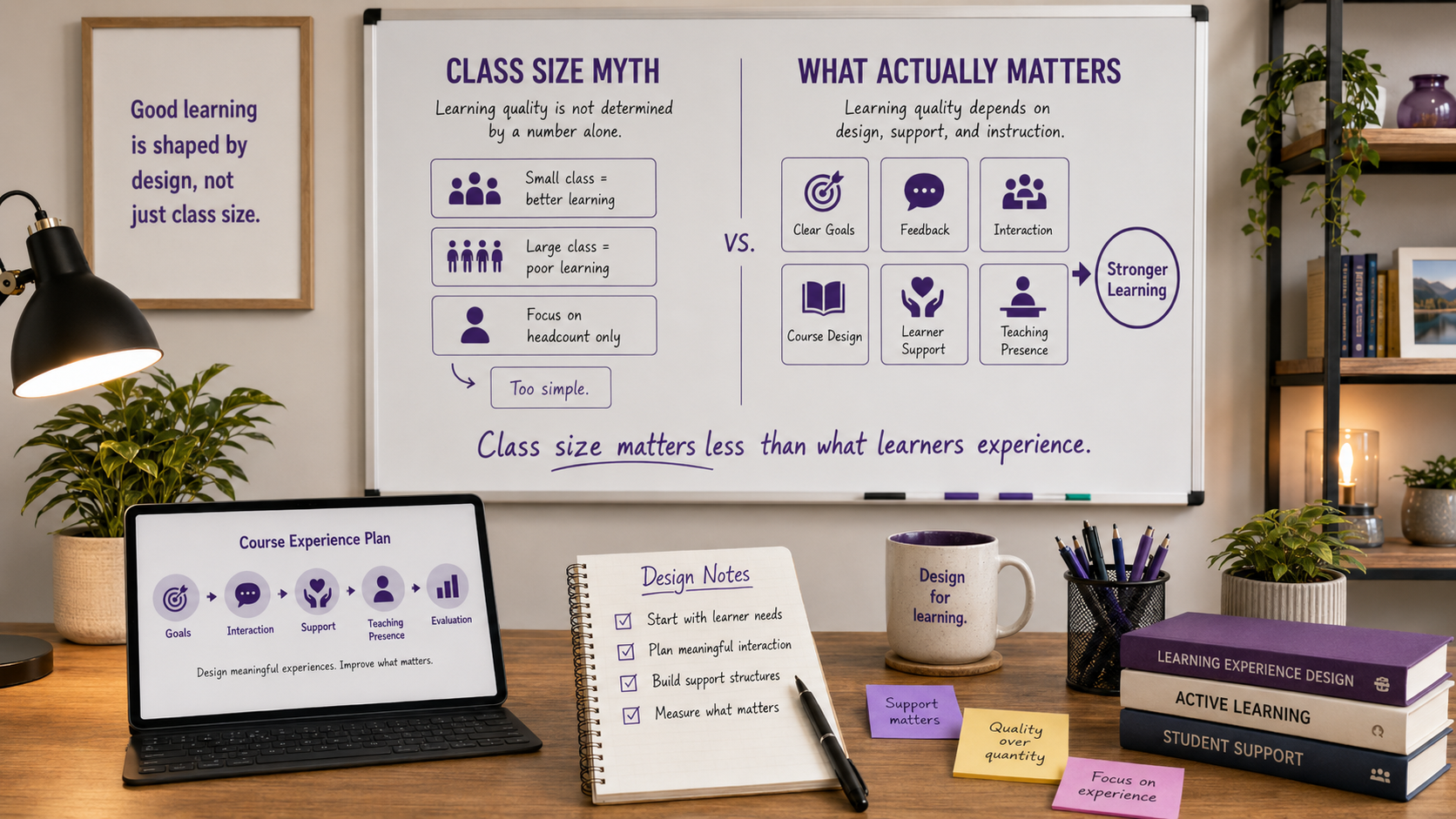
In the world of instructional design and education, one common belief often surfaces: class size does not affect learning quality. This myth can be misleading and oversimplifies the complexities of learning environments. In this post, we will explore why class size does matter, how it impacts learning conditions, and what instructional designers and educators can do to create effective learning experiences, regardless of class size.
Understanding the Class Size Myth
The notion that class size doesn’t influence learning quality may seem practical at first. After all, educators often find themselves with predetermined rosters, deadlines, and learning outcomes. However, assuming that the same instructional design will work equally well in classes of varying sizes is a misconception. Class size fundamentally alters the learning conditions, affecting feedback, interaction, and support among learners.
The Impact of Class Size on Learning Conditions
When we examine the dynamics of small versus large classes, several key differences emerge:
- Feedback and Interaction: In smaller classes, instructors can provide personalized feedback and foster meaningful interactions. Conversely, in larger classes, feedback may be delayed or generalized, leading to surface-level understanding.
- Facilitation and Connection: Smaller groups allow for deeper connections between learners and instructors, while large classes can feel impersonal and overwhelming.
- Workload and Support: The demands on educators increase with class size, as they must manage more questions and interactions, which can dilute the quality of support provided.
Why the Myth Persists
The longevity of the belief that class size does not affect learning can be attributed to various factors:
- Administrative Focus: Often, class size is viewed as an administrative concern rather than a design issue. Enrollment numbers and budgets take precedence over considerations of interaction and learner support.
- Instructor Adaptability: Experienced educators often excel in making large courses successful through improvisation and hard work, which can mask the underlying challenges posed by class size.
- Technology's Role: Modern tools can facilitate large-scale delivery, but they do not replace the need for meaningful interaction and feedback. Just because a learning management system can handle hundreds of students does not mean that the quality of learning will remain intact.
Designing for Different Class Sizes
Instead of ignoring the implications of class size, instructional designers and educators should embrace a scale-aware approach to design. Here are some strategies to ensure effective learning experiences across various class sizes:
- Adapt Activities: Instead of using the same activity for all sizes, consider how the activity needs to change to fit the scale. For instance, smaller discussion groups can enhance participation and engagement in large classes.
- Structured Feedback: Implement a mix of feedback types, such as peer reviews alongside instructor feedback, to accommodate larger groups without sacrificing depth.
- Clear Instructions: Provide detailed guidance and expectations to help learners navigate the course effectively, especially in larger settings where individual attention may be limited.
- Frequent Check-ins: Utilize polls, self-assessments, and reflection prompts to gauge where learners are struggling and adjust support accordingly.
Conclusion: Embracing the Design Shift
The key takeaway is that class size does impact learning quality, but it doesn't dictate it. The goal is not to make large classes mimic small classes, but to design the right support for the learning context. As instructional designers and educators, we must ask ourselves how to adjust our designs to fit the realities of the class size we are working with.
This week, challenge yourself to review one course, lesson, or training experience and evaluate whether the design aligns with the number of learners involved. By doing so, you can create more intentional and effective learning environments that cater to the needs of all students, regardless of class size.
🔗 Episode Links
Please check out the resources mentioned in the episode. Enjoy!
Myth Reset Case File: Class Size and Learning Quality
Quality Matters: Class Size in Online Courses
🖼️ Image Disclosure: This featured image was generated with AI using ChatGPT and reviewed by the author.

Award-Winning Instructional Designer, College Professor, Consultant, and Podcast Host
Jackie, an Arizona native, leverages decades of experience as an award-winning instructional designer within both higher education and the corporate world. She holds an MBA and a Master of Science in Instructional Design and Technology, both acquired through online learning. In addition to her full-time role, Jackie serves as an award-winning adjunct instructor, teaching online courses at Grand Canyon University. During her leisure time, she delights in reading books across a range of genres, enjoying movies and TV shows, playing games, listening to uplifting music, and spending quality time with her family and friends.

The Impact of Generative AI on Curriculum Design: What Educators Need to Know With Dr. Dwayne Wood