Lead Without a Title With Darrell Williams

In today’s fast-paced educational environment, many educators and instructional designers find themselves leading teams and initiatives without formal authority. This can be challenging, but effective leadership is possible when you focus on building relationships and solving problems. In this post, we will explore five practical strategies to help you lead effectively, no matter your official title.
Understanding Leadership Without Authority
Leading without authority means influencing others through relationship-building, expertise, and collaboration rather than relying on a title or formal power. This approach is especially relevant for educators and instructional designers who often work in collaborative, team-based environments.
Why This Matters
In educational settings, leaders often need to inspire and motivate others, foster collaboration, and create a positive learning culture. Understanding how to lead without authority can help you achieve these goals, even if you lack a formal leadership position.
Step 1: Focus on Solving Problems
One of the most effective ways to establish yourself as a leader is to focus on solving your colleagues' problems. Instead of simply pushing a new tool or method, ask your peers about their biggest challenges. For example:
- Ask Open-Ended Questions: "What is your biggest headache right now?"
- Address Pain Points: By actively listening and addressing these pain points, you build credibility and trust.
This approach not only helps your colleagues but also fosters a positive reputation for you as a problem-solver.
Step 2: Adopt a Coaching Leadership Style
Transitioning from a directive to a coaching leadership style can significantly enhance your influence. This means:
- Asking Powerful Questions: Instead of telling people what to do, ask questions like "How might this change impact your students?"
- Encouraging Collaboration: Shift the dynamic from that of a boss to a strategic partner, where you work collaboratively with your colleagues.
This method allows you to lead through influence and expertise, rather than through authority.
Step 3: Build and Leverage Relationships
Strong relationships are at the core of effective leadership. Here’s how to cultivate them:
- Connect with Mentors: Reconnect with mentors who can guide you and provide insights based on their experiences.
- Network: Attend workshops and conferences to meet other professionals in your field. Building a network can provide you with support and resources that enhance your leadership capacity.
Remember, mentorship can help you navigate challenges and accelerate your growth.
Step 4: Embrace the Three Rs to Reconnect with Purpose
When you or your colleagues feel stuck or unsure, consider the following framework:
- Re-look at Your Passion: Reflect on what initially drew you to education or instructional design. This can reignite your motivation.
- Reconnect with Mentors: Seek guidance from those who have been in your shoes. They can provide you with perspective and advice.
- Review Options for Coaching: Consider finding a coach who can help you explore your strengths and strategies to move forward. A coach can facilitate self-discovery and help you develop actionable plans.
Step 5: Cultivate a Positive Culture
A supportive culture is essential for effective leadership. As you lead without authority, focus on:
- Creating Connections: Foster opportunities for team members to connect. This could be through regular check-in meetings or collaborative projects.
- Promoting Open Communication: Encourage an environment where everyone feels comfortable sharing their thoughts and ideas.
By creating a positive culture, you enhance your ability to lead and influence others.
Conclusion
Leading without authority is not just possible; it can be incredibly rewarding. By focusing on problem-solving, adopting a coaching approach, building relationships, reconnecting with purpose, and cultivating a positive culture, you can influence and lead effectively in your role as an educator or instructional designer.
So, take the first step today: reach out to a colleague, ask about their challenges, and start a conversation. Together, you can create a more collaborative and effective educational environment.
🔗 Website and Social Links
Please visit Darrell Williams’ website and social media links below.
📢 Call-to-Action: Collaborating toward success can help unlock the excellence from within. Alliance Seminars Coaching performs C.P.R. on lives by providing clarity, understanding, purpose, and building resilience. Most of life’s challenges can be solved with effective leadership and efficient mentorship.
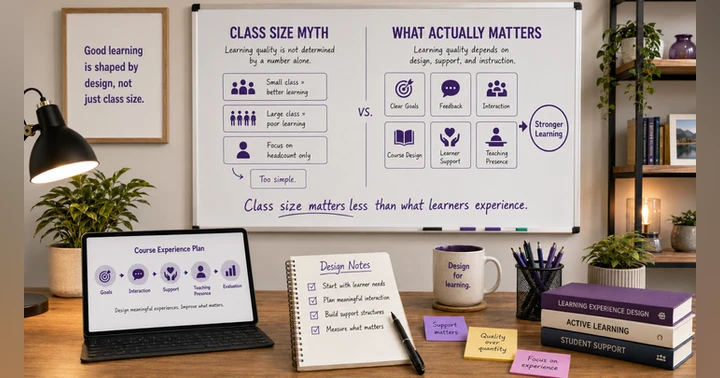
🖼️ Image Disclosure: This featured image was generated with AI using ChatGPT and reviewed by the author.

Award-Winning Instructional Designer, College Professor, Consultant, and Podcast Host
Jackie, an Arizona native, leverages decades of experience as an award-winning instructional designer within both higher education and the corporate world. She holds an MBA and a Master of Science in Instructional Design and Technology, both acquired through online learning. In addition to her full-time role, Jackie serves as an award-winning adjunct instructor, teaching online courses at Grand Canyon University. During her leisure time, she delights in reading books across a range of genres, enjoying movies and TV shows, playing games, listening to uplifting music, and spending quality time with her family and friends.
The Myth of Class Size and Learning Quality: What You Need to Know