Apple Podcasts
 Spotify
 Youtube Music
 Amazon Music
 iHeartRadio
 Podcast Addict
 PocketCasts
  Podchaser
  Deezer
  PlayerFM
  Castro
  Castbox
  Goodpods
 Magnetic Talks That Move People With Dr. Danny Brassell

What if your best presentation didn’t just earn applause—it moved people to act? Jackie sat down with Dr. Danny Brassell to map a clearer path from inspiration to conversion, blending hard-won classroom lessons with decades on the stage to show exactly how to make talks that stick, spread, and sell without feeling salesy.
We start with the only scoreboard that matters: how many listeners take the next step with you. From there, Danny breaks down his Five Cs—clarity, connect, content, call to action, and close—so you can design every moment with intention. You’ll learn why defining audience and problem first prevents drift, how RAP (relatable, authority, purpose) builds trust in five minutes, and why a service-first mindset beats pushy pitches. We dig into the one-ask rule, the Trader Joe’s effect on choice, and practical ways to make your message visual so the mind can grab it and keep it.
To make this actionable, Danny shares quick upgrades you can use this week: build a personal story bank, rehearse like an athlete, and study short formats like award speeches to sharpen connection and timing. If you’re an educator, coach, creator, or leader who needs your words to turn into real-world outcomes, this conversation gives you a proven framework and tools you can put to work right away.
🔗 Website and Social Links:
Please visit Danny Brassell’s website and social media links below.
📢 Call-to-Action: As a quick thank-you, I want to point you to Danny’s free resource, “The Storytelling Blueprint: 5 Steps to Craft a Compelling Business Narrative.” It’s a practical guide for shaping a message that earns attention, builds trust, and helps your presentation move people to action. It’s a great companion resource to use throughout this mini-series.
Join PodMatch!
Use the link to join PodMatch, a place for hosts and guests to connect.
Disclaimer: This post contains affiliate links. If you make a purchase, I may receive a commission at no extra cost to you.
💟 Designing with Love + allows you to support the show by keeping the mic on and the ideas flowing. Click on the link above to provide your support.
☕ Buy Me a Coffee is another way you can support the show, either as a one-time gift or through a monthly subscription.
🗣️ Want to be a guest on Designing with Love? Send Jackie Pelegrin a message on PodMatch, here: Be a guest on the show
🌐 Check out the show's website here: Designing with Love
📱 Send a text to the show by clicking the Send Jackie a Text link above.
👍🏼 Please make sure to like and share this episode with others. Here's to great learning!
Meet Danny Brassell & The Mission
Jackie Pelegrin
Hello, and welcome to the Designing with Love podcast. I am your host, Jackie Pelegrin, where my goal is to bring you information, tips, and tricks as an instructional designer. Hello, instructional designers and educators. Welcome to episode 128 of the Designing with Love Podcast. I'm thrilled to have Dr. Danny Brassell with me today, known as Jim Carrey with a PhD. I love that. Danny has spoken to over 3,500 audiences worldwide and authored 19 books, including Leadership Begins with Motivation and Misfits and Crackpots. That's a good one, Danny. I'll have to have you talk a little bit about that one. He's also the co-founder of the Wellcrafted Story Workshop, where he helps entrepreneurs and organizations use speaking as the client lead engine. Today we're talking about how to create magnetic presentations that don't just inspire, they convert. Welcome to the show, Danny.
Speaker 2
Thanks so much for having me, Jackie. More importantly, thanks for spreading some joy in the world. We need a lot more.
Jackie Pelegrin
Thank you. I appreciate it. And I'm so glad we met through Podmatch. It's a great uh organization and a great way to connect with quality hosts and quality guests. So I appreciate that.
Speaker 2
Thank you.
Jackie Pelegrin
Yes. So before we jump into the strategy, I want listeners to get to know you just a little bit more than what I provided in the intro. So to start, can you tell us a little bit about yourself and what led you to help people use speaking as a lead source?
Speaker 2
Well, Jackie, if I was going to write an autobiography, it would probably be called Pivots because I feel like I've already lived nine lives. Uh 30 years ago, I was a journalist covering President Bush senior in the 1992 presidential election. I loved my job. I got to meet every editor of every major daily, and one editor offered me the City Beat for $16,500 a year. Meanwhile, Frain told me they were hiring teachers in South Central Los Angeles for $25,000 a year. So I became an educator for the noblest of reasons, John came for the high pay. And I actually fell in love with teaching. I've taught all age levels from preschoolers all the way up to racket scientists. I can make that claim because I used to teach English as a second language to engineering students at the University of Southern California. And in 2005, my wife and I attended a real estate seminar, which turned out to be a scam, and we lost everything financially. And I could give you the woe is me story. But I'm a positive person. I learned a lot from that experience. First of all, I learned that my wife was my soulmate. I put her through the ring there and she stood around by me and she's made. Second of all, I learned money's not everything because you can lose money just like that. Third, I try not to judge other people anymore, Jackie, because if I was somebody who saw what I'd done, I would have said, well, you deserve that. But now I realize, unless you know everything about it first, you really got money first. Fourth, I became a Christian, which I'm always embarrassed to confess it actually uh took a catastrophe to get me there. But the more I read my Bible, I realize I'm not the first screw up to find Jesus. And then fifth, I didn't want to file for bankruptcy, and my accountant said, Well, you have to earn this much more money this year. And so I started speaking on the side, and I hit that number right on the number. Well, the next year, Jack, he gave me a much higher number, and I get that number right on the number. So in year three, I thought maybe I should sell a higher number. And basically, during one of the worst economic downturns in American history, I was able to build up a highly lucrative speaking business, which event eventually attracted the attention of some pretty famous people and companies who were asking me to coach them. And I have to confess, Jackie, I resisted coaching for a long time because you need to know this about me. I'm obsessive compulsive. I will not let you fail. I will be on your back holding you accountable until you succeed. Well, now that I work primarily with entrepreneurs and executives and business owners, I find that they're highly motivated. They do the work, and it's probably been the most rewarding thing that I've ever done. So you can take me down whatever path you choose, my friends.
Jackie Pelegrin
Wow, I love that. That's great. And I love that, you know, you didn't give up, right? You just kept doing what you knew you needed to do, and you had you had Jesus along the way. He was he was there with you, right? Yeah. I always like to say Jesus is not just in the passenger seat, he's helping me drive. He's yeah, he's he's helping me along the way. And it's true. I mean, uh, you know, you you pick up the Bible and you go, wow, that person really messed up. And so I don't feel so bad for all the times that I messed up, right? Exactly. So I love that. And a lot of my students feel the same way. I mean, they go to GCU, which is a Christian-based university, so they're like, wow. So when I give them the scripture nuggets every week, uh they love it. And then I give them access to the today daily devotional, which is they love it. And they're like, wow, this is great. I need this, I need, and I'm like, yeah, you needed it. Um, I needed it just as much as you did. So it's great. I love that. So um, so I wanted to kind of uh go into um defining the target first because convert can mean different things to people, right? Depending upon the audience. Uh it just depends if you're
Defining Conversion & The Five Cs
Jackie Pelegrin
working with educators versus working with corporations, right? It just all kind of depends on who you're working with. So when you say that a presentation converts, what does that mean for educators and maybe people like me, instructional designers, and maybe what action should happen after the talk?
Speaker 2
Yeah, first. First by taking you through uh my process that I work with on clients, uh you'll have to forgive me. I'm a former teacher, so everything I do either rhymes or it's alliterative. And so I'll take through what I call the five C's process. And so the five C's are clarity, connect content, call to action, and close. Um before you put together a single word in your presentation, you have to ask yourself two clarity questions, and you'd be amazed. 95% of the people I work with at first cannot answer one or both of these questions in the 16th command. Those two questions are who is your audience and what is the problem that you solve? So this goes to the question that you're actually asking me. Um, you know, if I'm working with educators and talking about converting, well, what does that mean? Does that mean everybody's getting an A or uh I get a better understanding? Uh you know, I when I work with clients, I only judge their effectiveness in one way and one way only. I mean, I'll have people come back to me and say, Oh my god, I'm standing, I'm not nervous on stage anymore. I'm like, well, that's great. Or some will say, I got a standing motivation. I'm like, that's wonderful, good for you. But the only way I ever judge your effectiveness is how many people in your audience have taken the next step with you. So that can be an unpaid next step, like subscribe to my podcast, or vote for me. More typically with my clients, it's a paid next step like buying my product or invest in my coaching program. We need to know our numbers. How many people in your audience have you actually inspired to take that next step with you? That's the only way we're going to judge your effectiveness. So, as a teacher, you know, uh, if over half of your students failed the exam, they did not fail anything. You failed them. And so you need to understand your effectiveness. And if you're having 70, 80, 90 percent of your students taxing, well, that's that's good. That's a measure of you, it's not a measure of them. And I held myself to that standard as a teacher. It's actually one of the reasons I kind of had to leave teaching, is I hold myself to a very high standard and uh professional space, but I'm the same way.
Jackie Pelegrin
Yep, I I love that. Yeah, I had a couple of students in one of my classes that were getting B's and it, oh, it was hard. But you know, I at the same time I was like, I did all I could to help them. I gave them, I said, Do you need extra time on this assignment? And I gave them the extra time, and yeah, so I was like, okay, I'll do what I can. But at the same time, you know, yeah, it's hard with adult learners, right? The adults, yeah.
Speaker 2
It was an important word I learned during COVID in the space. It was you gotta give yourself race. And you know, absolutely every semester. My wife at the end of the term saw me frustrated, and she's like, What's going on? Like, there are two people that are gonna fail because they refuse to fulfill their obligation. Uh it really just goes back to that old saying, uh, when the student is ready, the teacher appears. So you can't help people that don't want to be helped.
Jackie Pelegrin
Mm-hmm. Absolutely. Right. Yeah, that's true. Yeah, exactly. And that grace is so important, not just yeah, not just for the student, but for ourselves too, as teachers and educators. Yeah, absolutely. Yeah, I love that. And I love how you know you define what that uh that call to action should be, right? Should be clear, that call to action. It shouldn't be something ambiguous. I also heard too, and I've heard this with podcasts, and I I wonder if this is true with presentations too. And I'm sure I know the answer already, but I um when you're giving a presentation and you give that call to action, you don't want it to be five different things, right? That you want them to do. You want it to be one clear action, right?
Speaker 2
So we're jumping ahead for my five C's, but we'll be right to call to action because you've got to be You're absolutely right. It's one of the biggest mistakes I've seen people make in their presentations. Uh I was on a podcast earlier today, and the hostess says she signed off, she said, I hope you enjoyed today's episode. Make sure you like, subscribe, and give us a five-star review. And we got off the air, and I said, uh, you just asked your audience to do three different things. They're not going to do any of that. So again, I form a teacher, everything rhyme. So I always say choices confuse and cause you to lose. I need one clear call to action. If you look at the largest grocery store chains in the United States, Publix and Kroger and Food Lion and Rams and Smith's and BJ's, whatever, uh none of them are the number one grocery store chain based on volume. The number one grocery store chain in America based on volume is Trader Joe's. And the reason is when you go into one of these major chain grocery stores to buy a mustard, there's 38 different types of mustard to buy. When you go into a Trader Joe's, there's only one. It's called mustard. They've made the decision for you. You have to take people down a very specific path. And that's the difference between a good presentation and a great presentation. A good presentation, the speaker will tell stories. A great presentation, the speaker tells stories with intention. The only intention should be to get the audience to take that next step, whatever that may be. That's why your very first question today was a perfect one, is figuring out where do you want your audience to go. That's that's a very critical question to ask yourself at the beginning of the presentation, otherwise, you're just going, you're drifting. I mean, I love watching movies and TV shows. I used to love the TV show Lost, but I was very frustrated at the season, at the finale of the entire series, because I I've guessed that from the very first episode. Obviously, the Riders had not actually thought about the arc. It was the same thing with Game of Thrones. It was a real horrible ending. I'm like, yeah, I'm kidding. My wife actually thought of a better ending of Game of Thrones than the people did. Uh they they they weren't thinking about the the ending. I mean, Stephen Covey talks about this in the second half of Society of the Affective People, is start with the end in mind. And so that's very important when you're making a presentation is what do you want your audience to do next? And again, we're talking to a lot of educators here. Well, what do you want? What what I mean, this is why fundamentals when you're putting together a lesson plan is what is the objective of the lesson? And how are you going to check and make sure that your students meet the objective?
Jackie Pelegrin
Right, exactly. Yeah, that makes me think of the backward design approach, right? You think of the end in mind. And sometimes we have to do that with our faculty when we're designing curriculum
One Clear Call To Action
Jackie Pelegrin
for these college courses, is I always have to ask them, what do you want the students to be able to do at the end of this topic? Or what do you want them to do at the end of this course? What's the outcome? And if they can't give me a clear answer, then I know that maybe we need to rethink that topic together or rethink the course description. Is it clear enough? Yeah. Because if we don't have uh the clarity, they're not going to understand it. That's for sure. Yeah, absolutely. Right. So, did you want to go through those remaining C's? Because I know I skipped to the call to action. So yeah. Yeah.
Speaker 2
So the first one is to after after clarity, the first C is to connect. This is the opening of your presentation. In the first five minutes of your presentation, again, a good man for a teacher.
Speaker 1
You have to rap.
Speaker 2
So rap stands for you have to show that you're relatable, you have to demonstrate your authority, and you have to share your purpose. So relatable. I've had that absent same problem. And solve a problem. I'm on a mission to help people just like you, so you don't have to suffer the way I suffer. If you do that in the first five minutes of your presentation, you're gonna really connect a lot better with uh your audience. And and here's a strategy for everybody. The biggest mistake I've seen in most presentations is the presenter is Bradley. Stop sharing your successes, start sharing your failures because not everybody in your audience has succeeded, but they've all failed. And the more you share your own failures, the more your audience is gonna see themselves mute. And that's ultimately what we're trying to do to connect with your audience, is to get them to think, man, where has Jackie been my entire life? It's like uh she can think inside my own head, she knows exactly what I've been going through. That's how you're gonna get people to take that next step with it. So after you connect with your audience, then we get into the largest part of most presentations, which is what most people put all of their attention to. And it's interesting because I'm an educator, so I like to look at the research. The research shows that the content of your presentation is the least important part of your presentation. Study after study shows the bun is more important than the blue. People remember the beginning of your talk and the end of the talk, they don't remember anything in between. So if I know that as a teacher, I'm gonna make sure that the most important information is coming at the beginning of class and the end of class. What can I do to make sure my students are remembering this information? Here's the other thing, though, that the research suggests what people do remember is are you helpful? I I talk to a lot of people that say, Oh, I don't want to sound sales on the stage. And so my strategy is, well, then stop selling, start serving. Uh, Donald Miller has a great company called Story Brand, and I love that he says that your job as a speaker is to be the guy and to cast your audience as the heroes. You have to look at your audience like they're they're dying, and you have the antidote. And if they don't get your antidote, they will die. That's a very different mindset than saying, oh, I gotta sell them a product for 1997. That's that's not a very effective uh sales strategy. And so what you have to do is you have to serve your audience. And all they're trying to do, all you you're trying to do is to make sure that your audience sees you as helpful. So when I first started speaking, one of my mentors was a guy named Jim Treleese. Jim wrote a wonderful book called The Read A Laugh. Everyone in America should have that book. He used to teach parents how to read aloud to their kids, and kids do so much better in school if they're read aloud too by their parents. Well, in the middle of his presentation, he'd said, Oh, oh, wait a second. I'm gonna teach y'all something. You do this, this is gonna save your life someday. If you ever lock yourself out of your car, as long as you have your cell phone, call your significant other, have your significant other at home, put your car keys next to their phone, you take your phone and put it next to the door that you're trying to unlock, it will actually unlock the car door. Jackie, I tried some 3,000 miles away, and this works. Oh my gosh, it's crazy. But that's not the reason I'm telling the story. The reason I'm telling the story, this has nothing to do with his talk whatsoever. And yet, I've seen him at the end of pre-he's no longer with us, but when he was alive, I would watch him at the end of a presentation. People would rush up to him and say, Oh my gosh, I saw you speak six years ago. You taught me how to do that with my phone. I got lied. Oh my gosh, that saved my life. Oh, I've been telling every school they should book you to speak. Wow. But what what people thought to themselves immediately this is a person that's talkable. And when I'm working with politicians, I always point this out to politicians. I'm like, you can talk and talk all you want. What are you doing for your voters? There was a whenever I talk about politicians, by the way, it has nothing to do with politics, it's the communication science. But there was a senator back in the 80s and 90s from New York Senator Alphonse D'Amato, and they called him Senator Pothole. The reason he got that nickname is whenever a constituent called his office and complained about pothole, he'd make sure that the road crew fixed that pothole within 24 hours. I thought that was brilliant because what he was demonstrating to his constituents is something as little as a pothole that matters to me. I want to make sure your life is better. And by serving his audience, he got re-elected whenever he went up for re-election. So you get we went we talked about clarity, being able to answer who's your audience and what's the problem that you're solving. We talked about connecting with your audience, being able to grab on the first five minutes. We talked about content, making sure that you serve your audience, and then we'll go to the final two, which we started to talk about, which is politic action and close.
Start With The End In Mind
Speaker 2
So you have to understand that there's two types of people in your audience, and I'm gonna be stereotypical and I'm gonna call it the husband and the wife. So the husband, the husband, we're gonna call him Joe Friday. Joe Friday is the guy sitting there in the audience with his arms crossed, looking skeptically at you like, what are you trying to sell me? How much is this gonna cost? What do I got to do? A very effective presentation makes sure to answer all of those questions to fit the needs of Joe Friday. But if you end your presentation with Joe Friday, and I see so many people end with a call to action, you are making a big mistake because you're ignoring potentially 50% of your audience, the wife. The wife I call Julia Roberts. Julia Roberts, she doesn't care how much it costs, she just wants to feel good. Oh, I always listen to Jackie's podcast because he always makes me feel good. I tell everybody to listen to Jackie. And so an effective presentation makes sure to fulfill both of those needs. So I'm working with a woman, and by the way, whenever I cite any of my clients, I never give you the real names because I believe in discretion. All you have to do is talk to my business partner, Coach Jimmy. He's a former Broadway actor. He likes to name drop all the time. I'm not going to name drop, but we're working with a nutrition expert. Her name, I'm going to call her Dr. Kathy. And so Dr. Kathy has a new 90-day nutritional program for women that cost $19.97. And she was ending with her call to action. And I implored her. I said, Hey, you are ignoring half of your audience and Julia Roberts. And she's like, Well, what do I do? I'm like, Well, you need to end with an emotional close. What do you want your audience to do? And she says, I want, I want them to buy my product. I'm like, yeah, I know you want them to buy your coaching program, but come on, let's do better than that. Went back and forth like that for five minutes. She was so dense. Finally, she let it slip. She said, I want, I want the women in my audience to understand that they can't do it on their own. You need to hire an expert story. She's like, What's that? I'm like, I'll give you an example. I'll leave you all today with this. Many years ago, my wife and I had theater tickets. We were dressed to the nines, driving to the theater, and we got a flat tire. My wife said, Well, I'll call triple A and get a tow truck. I looked at her and said, You don't need to call triple A. I'm a man. I can fix a flat tire. So I got out of the car, opened up the trunk, and I got the spare tire, and then I got the pumper thing, and then I got the big jack thing, and I started trying to take nuts off of the tire. 27 minutes later, I had grease all over my hands. I had not fixed the flat tire. I looked up. My wife was standing beside the car with her arms crossed, shaking her head like I could have done so much better than this guy. Well, unbeknownst to me, she had called AAA 27 minutes earlier, and this tow truck shows up, and this 17-year-old punk kid pops out of the tow truck and proceeds to fix my flat tire in three minutes flat. You know, I think there are times in life when all of us think we can do it on our own. But if you want to save time, you want to save money, you want to save a whole lot of headache and embarrassment, you hire an expert. And so what I've just done there, Jackie, is I've ended my presentation with a metaphorical story, which now the audience is thinking, you know, I've tried lots. The diets before, but Dr. Kathy seems to know what she's talking about. Maybe I really need her to guide me on how to actually lose those unwanted pounds. That's that's the power of storytelling. That's the power of a story with intention.
Jackie Pelegrin
I love that. Wow, that's powerful. And people remember that, right? They walk away and they, like you said, it you want to make it memorable so that they they tell other people, right?
Speaker 2
For a long time, Jackie, and I've never had a person come up to me 20 years later and say, Oh my goodness, Danny, you know what I love the most about your presentation was that one PowerPoint slide that had 27 bullet points that were in a font that you could read. I've never had a person say that, but people remember stories. People remember when I got them up under their seats. Here, I'll give you an example. I can give this to you because you teach at Grand Canyon, so you have a Christian background. I always, I I get a lot out of the Bible. It's a pretty good book. Uh but I'm always laughing when I read the Bible because when you read the Bible, when I'm reading it, I look at Jesus as the most frustrated teacher ever in history. He's got 12 dudes that are so dense they never get anything he's talking about. He's like, he gets so frustrated, Jesus is always like, All right, let me tell you a story. So to my point, I bet you nine out of ten non-Christians are familiar with the story of the prodigal son. They're familiar with the story of the Good Samaritan, they're familiar with the story of David and Goliath. But I also bet you nine out of ten Christians cannot tell you the Ten Commandments. And the
Connect With RAP & Share Failures
Speaker 2
reason is because the Ten Commandments were not presented as a story in the Bible. They were presented as a bullet, uh a PowerPoint slide with ten bullet points. People don't remember bullet points, they remember stories, they remember Noah, they remember, you know, uh Daniel in the lion's den. Like those are stories. That's the power of a story. It's so much more effective. Of all people, it was Joseph Stalin who said a million people dead is a statistic. One person dead is a tragedy. Translation, facts tell, stories sell, facts inform, stories transform. That's what we're trying to do, is to get our audience to take the next step so that they become better people.
Jackie Pelegrin
Absolutely right. Yeah, that makes me think of the series that I watch, and I don't know if you watch it too, The Chosen. And they're they're getting ready to come out with season six, which is supposed to be the most consequential season because it's all about the his suffering, right? Um, well, the season five was important too because it had the last supper in it. But what was so amazing, Danny, is the way they they did that story. They didn't just pull pages out from the Bible, which was important, right? Pulling scripture out, but they also interwove things into it. And what they ended up doing was each of the eight episodes, they did the Last Supper backwards, which I thought at first, like, why are they doing it this way? And a lot of there are some people that were like, What are you doing? You're messing up the story, but they did it in such a way that you kept coming back episode after episode. You wanted to know, okay, what are the what where are they gonna go with this? What are they doing? But yeah, it was it is very interesting. And then just the the emotion behind it, right? You know, so you're like, wow, I've read these these stories all my life, right? Since I was a kid, and yet I'm seeing it in a whole different way. So it's amazing.
Speaker 2
I've always it's always been embarrassing the B-level uh quality of Christian uh programming. And the chosen finally, I'm like, okay, we got something besides the Ten Commandments now that we can show the kids and say, Hey, it was a pretty cool story. Watch this one. Uh that's what I appreciate. Actually, you know, because I impressed my wife early on. You know, my wife's always been a Christian. I'm a new Christian, and uh we were in a hotel and she was asking me, she was like, Oh, I want to tell the story that of the to the kids of David and Goliath like left and first handle. And she's like, What? How do you know that? And the reason I knew that was I had this Robert's children's picture bible that I used to read to my kids all the time. And so the picture's always stuck in my head of all the different stories in the Bible. And so you can tell me about a lot of different stories. I know immediately just based on okay, Zacchaeus. Here we go, go on here in the Bible. Like uh it just impr I was like, oh uh it impressed my wife. My wife was so impressed because when I first read the Bible, I'm struggling, and uh it was because I had a King James version and I started with the Old Testament, and my wife's like, no, here's the new version, and let's start with the New Testament. And uh it's very difficult to impress my wife, but I was reading it and I'm like, Luke writes differently. And my wife's like, Why do you say that? I'm like, I'm just I'm reading the Bible and in the gospels. Uh you got you know John and Mark and Luke and Matthew, and she's telling us for my other gospel. Uh but um I said, No, Luke writes differently, and she's like, She couldn't believe it. She's like, you know, Luke, uh he was the educated one. I'm like, oh okay, yeah, because he does he writes very differently than the other guys. And I was like, I've always been happy about it. I was able to impress my wife because I I I knew that uh Luke wrote a little bit differently than anybody else. But that's what I and then the other cool thing about reading the Bible is uh I can read the same verse 28 different times, or if it's at 28 different points in my life, I can get 28 different passes from the same verse, which is uh when you were talking earlier, I tell people gosh, if you're having a bad day, just open up the Bible just to a random page. You'd be amazed how the words are popping out and it's it applies specifically to the situation you're going through. That's happened so many countless times. That is not a point.
Jackie Pelegrin
Absolutely. I love that. Yeah. And I I co-host another podcast called Bible versus 101. And it's with uh, yeah, and so it's nice because I co-host it with uh um with Daniel Lucas, and he does multiple podcasts. Um, and he's on pod match too. But what's great is that I pick the verse and it's usually from the Bible app, uh, I'll go, oh, that's a good one. Pull that one out and do that one, and then uh we'll just talk about it, do a deep dive on it. So it's pretty neat. And I go Old Testament, New Testament, so I go back and forth, but it's really fun. Yeah, I like that. You know what's really neat too about like, you know, different elements, different stories and um in the Bible and everything. And when they bring them to life, like in the chosen, what I really love about the chosen is the behind the scenes that they do because I don't just like to see the final production. It's just like with the presentation, you know, you want to you want to see what what work went into that. And so the behind the scenes to me are just as valuable as what the final production is, because when they were doing season six and they were showing all that went into that, it was uh for the actors and even the producers and and the director, Dallas, he said this was the most uh strenuous season that we ever filmed because it was about the crucifixion leading up to that and everything. And uh they filmed part of the crucifixion scenes in Italy. So they went to Italy and they actually uh filmed in the same area that they filmed Passion of the Christ. But what was interesting is Dallas said, look over my shoulder. He's doing a behind-the-scenes video and he said, Look over my shoulder back there. Do you see those posts? That's from the Passion of the Christ, but we decided not to film in the same location. We wanted to film a little bit off to the side. But it just struck me, I was like, wow, those posts from the Passion of the Christ are still there in Italy. And I'm like, wow, that's amazing. I'll never forget that. Yeah. And then after they filmed the scenes and everything and they were showing the behind the scenes, all the actors just kind of went to him and just started crying and hugging him, and they were all crying. And I'm like, wow, that's powerful. That just goes to show it's not just the end that you know and the final product that is amazing. It's all that comes to that. Yeah, it's all part of it. Yeah, definitely. So so since you're an educator too, um, I love pulling lessons from the classroom and kind of bringing that to life. And you were talking about that earlier. So, because you know, some of so many of my listeners live in that world, I love that your journey is uh from teaching in South Central LA to becoming that global leader. I think it's so fascinating how you took that journey. And like you said, you've learned so much along the way. So, what are some key lessons from the classroom that helped you design talks that move people into action?
Speaker 2
You know, everything I need to learn is teaching. And you know, it's that great Red Fulgen book, All I Really Need to Know Learn in Kindergarten. You
Content That Serves, Not Sells
Speaker 2
know, I learned that what works with a 12th grader does not necessarily work with a kindergartner, but what works with a kindergartner works with all age levels. I call kindergarten nothing. But you can make it there, you can make it anywhere. Those kids have about a seven-minute attention span, and they taught me how to keep things engaging because so many talks are so bad. So I actually was given a presentation yesterday. The first time I had given it was to a group of a round table of CEOs, and uh so the way here's another good mistake. I'm working with a guy right now from Saudi Arabia. He's climbed the highest peak on all seven continents. He swam with sharks in Madagascar, he did the Idida rod in Alaska. I look at him like, nobody in your audience can relate to you. Nobody in your audience climbed Mount Everest. But you know what? Everybody in your audience peed their pants when they were six years old. That's a story that's going to connect with people. And so when you're asking me, Jackie, about how does the classroom affect my speaking all of my presentations? I'm always using examples. So the example I gave yesterday, I said, okay, when I was an elementary school teacher, I was asked to be a judge at the science fair. And so there were three finalists. So finalist number one, her project was called The Impact of Photosynthesis on Chlorophyll Production. She had a trifold, uh, she had 47 bullet points, she had three graphs. The second finalist was uh a comparative analysis of soil density. He had uh tons of data, he had tons of grass, he had laminated soil samples, okay? So I ask you where do you think everybody congregated? The chlorophyll, the dirt, or the volcano?
Jackie Pelegrin
The volcano, because most of us have done it.
Speaker 2
Here's the thing it wasn't the smartest project, it wasn't the most data-driven project, it wasn't even actually the most accurate project. But you know what it was? It had structure, it built attention, it drew your interest, it got people to lean in. They're going to private equity with laminated dirt, they're going with their impressive uh uh spreadsheets to billion-dollar fund managers, and they wonder why nobody's leaning in. Simplify, simplify, simplify, create pictures for your audience. So I'll give you an example. I want you, this is an exercise for you, Jackie. I want you to take five seconds and to think of an apple.
Speaker 3
Okay.
Speaker 4
Okay, what did you just think of?
Speaker 3
A red apple.
Speaker 2
A red apple, right?
Speaker 3
Excellent.
Speaker 2
I've had people say, I thought of a green Granny Smith apple. Some people say, I thought of an apple pie. Some people get even more clever. I thought of an Apple iPhone or an Apple computer. But in all my years of doing that exercise with people, I've never once had a person say, Oh, I thought of A P P L E. Because the human mind does not think in words, it thinks in pictures. Your job as a storyteller is to get people to think in pictures. When you get people thinking in pictures, that's when you're going to become a more effective communicator.
Speaker 3
Absolutely.
Jackie Pelegrin
Oh, that's that's amazing. And I think that's where we yeah, where we lose people is we we take out the simplicity, right? We make it too complicated. Yeah. Absolutely.
Speaker 2
It's so when I again, when I use political examples, it has nothing to do with the politics, it has to do with communication style. President Reagan was the very first president on the State of the Union address. He wouldn't talk about health care. Oh, health care costs are going up $19 billion, but it's all right because we've subsidized it with a $17 billion. No, he never talked about it like that. What he'd say is Um, I invited uh I invited Jack, Jackie Pellegrin. She's up there, Jackie, come on, stand up, wave to everybody, and you stand up and wave. You know, Jackie is from Phoenix, Arizona, and she got sick recently, but she didn't have through her employer a health care plan. And her healthcare then cost over $800, which was almost twice her rent. And it really put us through. So what he just did is he got you to think of Jackie and healthcare. So now healthcare is a person, and ever since then, every single president does it now. If you watch the State of the Union, they're always pointing out to people up in the gallery. Uh, but it was a brilliant, it's a brilliant strategy. How do I humanize the whatever the problem is? That that's what an effective communicator is trying to do all the time is how do I get this problem to be meaningful to you?
Jackie Pelegrin
Right. How can I relate to it? Yeah, that's so important. Same thing as the teacher.
Speaker 2
How do I get a sixth grader interested in division and multiplication? Well, if I'm teaching a bunch of boys that have no interest in math, I'm like, of course you love math. Like, what do you mean? I'm like, did you watch the game last night? The Dodgers and the Diamondbags, the Dodgers, uh, what what's Kershaw's ERA? Well, his ERA is 2.92. I'm like, okay, now multiply that by the number of innings he's pitching. What's that mean? Now all of a sudden I've drawn their interest. They're like, wait a sec. Oh, yeah, we can use math to figure out the stat. I'm like, so if you're gonna give them a $30 million contract, is you worth it based on these statistics? Now the guys, oh, oh, yeah. Now what I've done now is I've taken the driest subject matter, but I've related it in a way to the student that gets them interested in it. They're like, oh, and I don't understand why teachers don't do this. This read reading's my specialty. And I've never understood why we require certain books to be read by kids. All I care about is that they read. I want them reading as much as they can. You know, I was when I was teaching second grade, I had a boy named Kiara. And Kiara's first grade teacher told me, Kiara, don't know nothing. I'm like, well, thank you for that. Well, Chiara, who don't know nothing, came in, this was a long time ago. He came into my classroom one day, he's like, Hey, Mr. Stound, you see Barclay last night, he had 18.16 boards. I'm like, thank you, Chiara. Because from that day forward, every day after lunch, Jackie, I'd sit Kiara on my lap, we'd read the LA Times sports page, and guess what? By the end of the year, Kiara was the best reader in my class. All that kid was reading was sports, but that's the way you get them interested in Shakespeare's. You got to get them interested in reading first. I'm always how do I connect with each kid? I mean, in high school, I had an English teacher, she made us read The Scarlet Letter by Nathaniel Hawthorne. And no offense to the Nathaniel Hawthorne fans out there. The book is basically Hester Prynn commits adultery, and so she's forced to wear an A on her chest. And I raised my hand and I asked my teacher if I could wear a B on my chest because I was so bored reading that book. And it's a good teacher. What she should have done is said, Well, what would you like to read, Danny? And I would have said, Oh, I want to read about football. And so then she starts looking around for football books because I guarantee you there's football books that are written at the same level as the Scarlet Letter. And now I'm fulfilling the objective, the requirement, but I'm doing it with something I'm actually interested in. School, we've made it so lame to so many kids. I read biographies of famous people all the time. There's one commonality in almost every biography of successful people. They dropped out of school. I'm like, yeah, what are we doing wrong in school? Like, how how do we make sure to capture that kid while they're in school and figure out, okay, there's your passion. Let's design a pro, but it's not easy. You know, anybody can I always tell people that anyone can teach. It takes a lot of hard work to be a good teacher. If you got 33 kids, you got 33 different motivations in that classroom. It's it's tough work trying to figure out how do I design? You're all about instructional design, Jackie. I mean, instructional design can be this broad approach or it can be a very individualized approach. The individualized is not easy whatsoever, but it's much more effective. This is how I'm going to get the kid uh to become a curious student of life.
Jackie Pelegrin
Right. That's so true. I'm working with someone, and I met him through PodMatch, uh Russell uh Van Brocklin, and he's a New York State Senate-funded dyslexia researcher. So I'm helping him get his uh dyslexia curriculum online. And so I just finished helping him do the curriculum for the uh for the parents, and now we're working on the curriculum for the teachers and the and the uh tutors. So, but what was amazing, Danny, is something I didn't realize with not just dyslexic students, but any students,
Stories Beat Bullet Points
Jackie Pelegrin
he works with them by figuring out what their likes and their dislikes are. And he works with that and he helps them not with their uh not with their their right, well, he helps them with their writing first, and then he then that it feeds into the reading, right? And it all connects with each other. But one thing, not just that, but he said, don't do the period until they've mastered it, right? Because you once you put the period in there, then they think that's the end, and then it's harder to go back and make changes. And all these things that I'm learning, I'm just like, oh, it's so it's so just like light bulb moment. I'm like, it's amazing.
Speaker 2
Yeah, well, we're off here. I want to know more about I'm working with an executive right now who's dyslexic, and he was asking me for different dyslexia. I mean, I've worked with lots of dyslexic students, and I told him, I'm like, well, first of all, you're in good company. George Washington was dyslexic. There's you know, Tom Bruce, Celeste Salon, they're dyslexic, uh, Richard Branson is dyslexic. Um and uh you know, dyslexia, just like every other reading disability, is curable. And uh, but I've never found an approach that I loved. So it sounds like this guy the the one thing that worked for me once, and so I told him, I'm like, this is it's not a large enough sample size. I only did it with one student. But what I what we did is I got him in a speed reading course because dyslexics they're they're browsing over a lot of words, and I'm like, I wonder if I get him a speed reading course, if that would actually help him uh become a better reader. And this student did, but uh again, it was only one student, so I don't know. Uh but what I do know is dyslexics tend to process information much better through their ears than through their eyes, and so uh the I think we recommended that you start listening to a lot of audible books because uh you know, audible uh Kindle now, there's different functions where it can have like the words while it's while it's reading aloud to you, and apparently I'll be that way.
Speaker 1
So I'm very interested in this guy. The guy who talks about Yeah, his approach.
Jackie Pelegrin
Absolutely, and what's great is that and I mean it's not a great thing, but he's dyslexic himself, and so he it's it's interesting because his story is so unique. He went to law school not to become a lawyer, but to actually uh he reverse engineered things and as he was learning, he learned this approach of what he does, and it's just it's it's amazing. So yeah, and yeah, it's great. Yeah, we'll have to connect afterwards and talk, yeah, and talk about that. Absolutely. I'm learning so much through it, so it's great. Yeah. So to help make this super practical for all the listeners as we wrap up, what are two to three quick upgrades listeners can make to their next presentation this week to make it more magnetic and more likely to convert as well?
Speaker 2
Well, again, I I I've given you a couple of things. I'll I'll give you a couple of ninja strategies. Here's two null ninja strategies. So here's something for everybody's uh later on, sit down in a comfortable chair with a pen and paper by my bench of choice, and for an hour, I want you to write down every story that's ever happened to you. And I don't mean the entire story, I just mean you know triggers like the time I locked myself out of the car and asked, the time Dan's filled a mustard on his town when we went to that fancy restaurant. You'll find in an hour you've got a couple hundred stories like that. So that's the first part of the exercise. The second part of the exercise is then I want you to think about what's this story really about. Oh, this is a story about never giving up Oh, this is a story about uh dealing with difficult people.
Speaker 1
This is a story about priorities.
Speaker 2
I have listened. Hundreds of files on my computer with tens of thousands of stories. So when I'm putting together a presentation and I need to evoke a certain emotion for my audience, I've got to have stories right at my disposal that I can insert into my talks. That's one quick ninja strategy for everybody who has. People always ask me, how do you become a good speaker? Well, there's only two ways that I know. First of all, uh, I've had lots of wonderful teachers in my life. One of my coaches was a guy named Jim Rowan, and Jim used to say, you can't pay other people to do your push-ups. Translation, you gotta do the rest. I guarantee you, Jackie, the first time you did your podcast, it stuck. And the second time you did your podcast, it's stuck. But it didn't stink as bad as the first time. Now you've been doing it for a while, you're starting to feel more comfortable, it's becoming a little bit more automatic. Everything in life is all about the rest. Same thing with speaking. We can get you better at speaking, but just by by giving you lots of practice at it, that'll build up your confidence. The second way you get better at being a speaker is by watching lots of speakers. I watch 10 speakers a day. I watch politicians, I watch televangelists, I watch comedians, I watch them in front of big groups, in front of small groups, in front of men in front of women. Here's another ninja strategy. I watch a lot of award shows because when a person wins the Academy Award, they only have 45 seconds to connect with their audience. I don't see how they use their time. Most people waste their time. They get up there, they're like, I want to think good, I want to think the academy. It's stupid, nobody's paying attention. But only now they're gonna get it out of the park. So a few years ago, there was a gentleman by the name of Joe Walker who won the Academy Award for Best Film Editing. Now this is Hollywood. The Academy Awards, the important people are in front of the room. The actors. And you can tell the actors aren't paying attention. This is film editing. Well, Joe Walker gets on stage and he's British. He speaks very slowly and deliberately. He says, A lot of people don't know this, but when French properly, the term Academy ordinary can be used as an insult. Well, now the game understands the crowd. You see people leaning in, like, what's he talking about? And he continues, For example, yesterday I got in an argument with my 17-year-old daughter, and she said, Well, Academy Award nominee Joe Walker, all of a sudden you see everybody laughing hysterically. He gets off stage, Denzel Washington wants to meet him, Sandra Bolik wants to meet him, Brad Pitt wants to meet him. Time magazine said he was one of the highlights of the Academy Awards. Well done, Joe Walker. That's the way to use your time. And so uh when you're really trying to get better, it takes time. Nothing, you know, nothing worth having comes overnight. You have to practice at it and you got to watch people that are really good at it. But if your audience can do that, they'll be well served.
Jackie Pelegrin
Absolutely. I love that. You know, I at work, I have an opportunity to do devotion a devotional every once a year because we we don't do the devotionals uh all the time, because we do them at our staff meetings at work. And so I'm part of the devotional team. We get 10 minutes, Danny, to do a devotional. And every time I share a story, right? So that was one, it was about the importance of spending time with family. And I did it actually right before it was for the Christmas one. So it was our Christmas staff meeting, right? Right before Christmas. So I was like, oh, I need to talk about the importance of spending time with family. So I shared a story and it was hilarious. Um, and it happened when I was in college with my grandparents at Thanksgiving time. So when I shared it, it was everybody laughed. Um so I'll tell
Emotional Close For Action
Jackie Pelegrin
the story really quick. So basically it was Thanksgiving Thanksgiving time, and we were over at my grandparents' house. It was my uncle, my grandparents, my mom, and I. And they wouldn't, my grandmother never wanted us to eat at the fancy dining room table. That was the dining room table they got at when they got married. So we would eat at the cheaper one, right? And it was just the your basic table. So we've got everything on the table, all the sides, mashed potatoes, everything. And my grandpa would always get at least a 20-pound turkey. So that's the last thing that he's getting ready to get out. So he gets it out from the oven, puts it on the table, and the table collapses, literally collapses. And we're like, oh my God. And we're like, save all the stuff. And we're like getting it over to the the fancy dining table. And my grandmother's like, no, don't do that. We're like, what are we supposed to do? Eat on the floor like Indians? I mean, what do you know? I'm like, it was crazy.
Speaker 4
I'm just that would have invented it.
Jackie Pelegrin
Yeah, exactly. Oh my goodness. So we're just like rushing trying to get it all over because I mean, it just literally the legs collapsed. It didn't, everything wasn't sliding off, thank goodness. But we were just like, oh my gosh. And that was like the most memorable Thanksgiving, I think, ever. I mean, it happened in college, that was 20 years ago, but never we'll forget that. And just everybody started laughing, and I'm like, have you ever had a moment like that? And raise your hand. And actually, a couple people said they had similar moments like that. And I'm like, there you go. I I connected with them, I made them laugh.
Speaker 2
So that's storytelling, and it's uh, you know, you learn that in the movie Monsters Inc. is uh that laughter's more powerful than sadass. That's why I prefer to use humor in my presentations. The people that give all the sad sad tales, that's just a friend's thing. Life's too short. I want to show something that gets people to check all and retelling that Thanksgiving story that's fantastic.
Jackie Pelegrin
Yeah, exactly. I love it. So, Danny, thank you again for being here and for sharing these practical grounded insights that my listeners can actually apply right away. And we shared some fun stories along the way, so I love that. And for those that are listening, this is just the start of our conversation. I'd love to have you back on the show, Danny, because I've got other questions ready for you that we can do down the road. So I'd like to zoom in on the next part, which is storytelling a little bit more. How to craft those stories that stick and actually drive action. So, for anyone that wants to keep learning from you, what's the best place to follow you or connect while we wrap up?
Speaker 2
Well, thank you to you and your audience for having listened to me, Jackie. I want to give everybody a freebie. So if you go to freestoreguide.com, guide like a tour guide, freestoreguide.com. I'm going to give everybody their own complimentary well-cracked story glueprint. What this is, is the actual process that my partner, coach Jimmy, and I take our clients through to help you create your well-cracked story. What this does for you is it takes the guesswork out of what story should I use and where should I put it in my presentation. And what this means for you is you finally have a system to convert your audiences into actual clients to have impact in every presentation you deliver. You get that at freestoreguide.com. And again, Jackie, I just I appreciate all that you're doing and I hope you keep on doing it.
Jackie Pelegrin
Thank you. I appreciate it. I'll have to uh definitely get that because as I maybe start doing conferences down the road, yeah, I gotta be able to have that, you know, get them to go into go into that action and be clients down the road, right? Absolutely great. Well, I look forward to having you back on in the near future.
Speaker 2
Thank you, Jeff. You know, as I used to close, whether I was teaching my little ones or my older ones, as they left my classroom, they always had to hear the same. I always said, remember, kids, education is valuable, but execution is priceless. Knowledge is not found, only applied knowledge is found. Knowing what the right thing to do and doing the right thing are two very different things. So let's go out, do the right thing to make this world a better place. You're making the world a better place, Jackie.
Jackie Pelegrin
Oh, thank you. I appreciate it. That means the world. Appreciate it. Thank you for taking some time to listen to this podcast episode today. Your support means the world to me. If you'd like to help keep the podcast going, you can share it with a friend or colleague, leave a heartfelt review, or offer a monetary contribution. Every act of support, big or small, makes a difference, and I'm truly thankful for you.
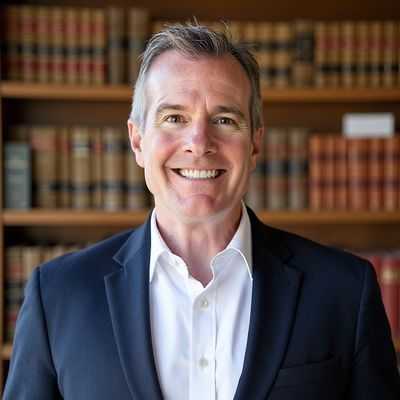
Professional Speaker, Trainer, and Coach
A highly-sought after speaker, trainer, and coach known as “Jim Carrey with a Ph.D.,” Dr. Danny Brassell has spoken to over 3,500 audiences worldwide. He has authored 19 books, including "Leadership Begins with Motivation" and "Misfits and Crackpots." The co-founder of The WellCrafted Story Workshop, Danny helps entrepreneurs, individuals, and organizations leverage speaking on stages as a major client lead source that converts.