
 Apple Podcasts

 Spotify

 Youtube Music

 Amazon Music

 iHeartRadio

 Podcast Addict

 PocketCasts
 Podchaser
 Deezer
 PlayerFM
 Castro
 Castbox
 Goodpods
AI Should Improve Your Thinking, Not Replace It With Michael Leggs


Key Takeaways
- Writing is fundamentally a process of thinking, questioning, and revising, making it essential to develop the writer rather than just generating text with AI.
- Educators should avoid an adversarial approach of policing students with AI detectors, choosing instead to redesign assignments to make critical thinking visible.
- With students drowning in digital information, evaluating the credibility of sources is far more critical than simply finding them.
- Tools like Smartleby utilize artificial intelligence as a revision tutor to encourage critical thinking rather than replacing human authorship and authentic voice.
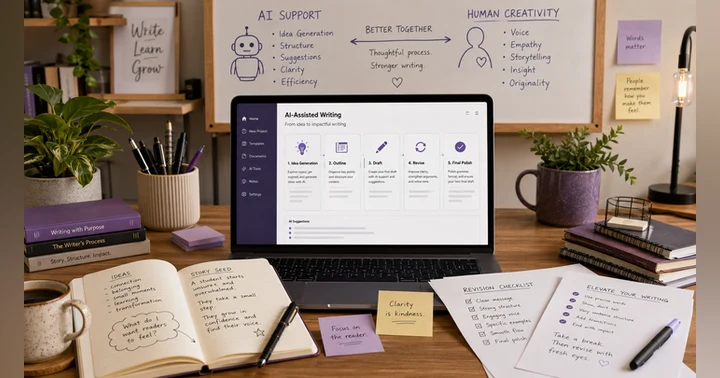
AI can produce a polished paragraph in seconds, but that doesn’t mean students are learning to write. Jackie sat down with Michael Leggs, a college professor and the founder of Smartleby, to unpack a more useful way to think about artificial intelligence in education: not as a replacement for writers, but as a revision tutor that helps writers grow. Along the way, we dig into what “authentic voice” and academic integrity look like when AI tools are everywhere, and why writing still matters because writing is thinking.
Michael shares the story behind the Smartleby name and the design philosophy that separates it from popular AI writing tools that generate content on demand. We talk about what students actually need most in college composition and beyond: support with the full writing process, not just grammar fixes. We also wrestle with a very real classroom tension, where educators can lose hours trying to detect AI use instead of teaching. His Roadrunner analogy lands hard: chasing new detectors can create a culture of mistrust, while redesigning assignments can make learning visible again.
We also zoom in on research and digital literacy. With students drowning in information, the skill that matters is not finding sources but evaluating them. We discuss credibility checks, why Wikipedia is a fine starting point but not a final citation, and how AI-generated search results can raise the stakes for careful verification.
Subscribe for more practical conversations on instructional design, learning, and responsible AI, and if this helped you, share it with a colleague and leave a review. What’s one change you’re making to your writing prompts or assessments this year?
🔗 Website and Social Links:
Please visit Michael Leggs’s website and social media links below.
📢 Call-to-Action: Smartleby is an AI-powered writing and revision platform created by college professor Michael Leggs. Designed to help students, educators, and writers improve their work while maintaining academic integrity, Smartleby provides intelligent feedback and revision support that strengthens critical thinking rather than replacing it. Listeners can learn more about responsible AI use in writing, explore educational resources, and discover practical tools for becoming more effective communicators.
Join PodMatch!
Use the link to join PodMatch, a place for hosts and guests to connect.
Disclaimer: This post contains affiliate links. If you make a purchase, I may receive a commission at no extra cost to you.
💟 Designing with Love + allows you to support the show by keeping the mic on and the ideas flowing. Click on the link above to provide your support.
☕ Buy Me a Coffee is another way you can support the show, either as a one-time gift or through a monthly subscription.
🗣️ Want to be a guest on Designing with Love? Send Jackie Pelegrin a message on PodMatch, here: Be a guest on the show
🌐 Check out the show's website here: Designing with Love
📱 Send a text to the show by clicking the Send Jackie a Text link above.
👍🏼 Please make sure to like and share this episode with others. Here's to great learning!
Frequently Asked Questions
Who is Michael Leggs and what is Smartleby?
Michael Leggs is a college professor, author, and the founder of Smartleby, an AI-powered writing and revision platform designed to help students improve their critical thinking and writing process without replacing human effort.
How does Smartleby differ from other AI writing tools like ChatGPT?
Unlike generative AI tools that produce final content on demand, Smartleby functions as a revision tutor that helps students develop their own writing and maintain the authenticity of their voice.
Why is information literacy important in the age of AI?
As AI-generated content and search results proliferate, students face a massive flood of information, making the ability to evaluate source credibility and avoid unverified sources like Wikipedia crucial.
How can educators address AI use in the classroom without policing students?
Instead of chasing new AI detectors, educators can redesign their learning assessments and prompts to encourage original student thinking and make the learning process visible.
Welcome & Guest Background
Jackie Pelegrin
Hello, and welcome to the Designing with Love Podcast. I am your host, Jackie Pellegrin, where my goal is to bring you information, tips, and tricks as an instructional designer. Hello, instructional designers and educators. Welcome to episode 162 of the Designing with Love Podcast. I'm thrilled to have Michael Legs with me today. Michael is the founder of SmartleBee, an AI-powered writing and revision platform, and college professor with more than 20 years of experience teaching writing, rhetoric, research, and critical thinking. He helps educators, students, and professionals harness artificial intelligence responsibly to enhance learning, communication, and academic success. Combining the perspectives of educator, entrepreneur, and author, he helps audiences understand how to thrive in a world where human creativity and artificial intelligence increasingly intersect. So I'm excited to learn more about that. That'll be great. Michael is also the author of Reenvisioning Writing, a college composition textbook forthcoming from Kendall Hunt Publishing in spring 2027. Congratulations on that. Welcome to the show, Michael.
SPEAKER_00
Well, thank you, Jackie. It's it's great to be here. Um well um I guess I mean, just you want to know a little bit about me and how I uh what inspired me to create Smartleby?
Jackie Pelegrin
Yes. Okay, that's a cool name, and I love the name. I'd love to hear how you came up with the name too.
SPEAKER_00
You want me to start off with that first?
Jackie Pelegrin
Sure, yeah. You want to yeah, I'd love
The Smartleby Name & Mission
Jackie Pelegrin
that.
SPEAKER_00
Well, Smartleby, it's it's a play on uh the Bartleby, Bartleby the Scrivener from uh Melville's you know novella. And you know, I just thought, you know, Bartleby, he was a copyist, and he um, you know, he was a writer, but he was a copyist. But the he was famous, famously known for saying, you know, I would prefer not to. And I thought, you know, that might be kind of a funny uh kind of a twist on things where he refuses to write, and then Smartleby doesn't write for you, but it encourages you to write and revise and you you know use critical thinking to go through the writing process. And so that's how I came up with it. Um but you know, just a little bit more about me. You mentioned I I've uh taught for you know about 20 years, more than 20 years, you know, college writing. And um, you know, I think probably you know over that time, I I think you know, students they need more than just help with their grammar. And so, you know, they need to still kind of be shown how to go through the whole writing process. And so one of the things that um when AI just kind of came, you know, emerged on the horizon, um, you know, a lot of the conversation focused on, you know, detecting whether students were using AI and you know investigating, you know, these possible infractions. But you know, what I felt is that you know every um like every hour that I was being expected to you know be a you know police my students is an hour that I'm not spending teaching them. And so, you know, that's what kind of led me to create you know Smart will be where I'm kind of harnessing AI as a revision tutor for my students so it will teach them how to write rather than generate you know the writing for them. Um and uh I think that pretty much you know kind of sums it up in a nutshell.
Jackie Pelegrin
I love that. That's great that you you saw that need in your students, and you don't want them just going to these tools that are out there, and you really wanted them to be able to go to something that would help uh with their critical thinking and not take away from it. So I like that.
Developing Writers, Not Generating Text
Jackie Pelegrin
Um so uh so what makes Sart Smartle be different from popular AI writing tools like Chat GPT and Grammarly? Because Grammarly is well known with writing, especially when it comes to supporting revision, critical thinking, and academic integrity, which are so important today, right, with writing and just academic um you know assignments in general, right?
SPEAKER_00
Yeah, and you know, uh I'd say the biggest difference um between SmartLB and other applications like ChatGPT and Grammarly is that um SmartLB isn't designed to write for the students, you know, so it's designed to help them to think critically and to write and revise on their own. And so, you know, I'm not putting down Chat GPT or Grammarly, Grammarly or any of the other tools. They're great for what they do. And in some cases, in the professional world, you might need it to generate some type of content uh in you know, in a business context where it's it that smaller task is actually something that can be taken over by AI while you could you take care of the larger tasks as a human being. But um I digress. So basically, you know, it's Smart will be helps students to learn how to write and revise on their own. And so, you know, it also helps them to maintain their, you know, the authenticity in their voice. Um and so just simply put, it doesn't replace the writer, it develops the writer.
Jackie Pelegrin
I love that. Right. So it's not like this is in competition with all those tools, it just it's another tool in their tool belt that they can utilize.
SPEAKER_02
Right. Exactly.
Jackie Pelegrin
I I love that. I I love telling letting my students know that there's all these tools out there, but it's what you choose to put in your tool belt that makes the difference. And then you can pull it out when you need it. So I always tell my students, you you gotta have your toolkit or your tool belt, whatever you want to call it.
SPEAKER_02
Yep.
Jackie Pelegrin
Have it ready and good to go. So you've added a really great tool for their toolkit or their tool belt. So that's great. I love that. Yeah, that's wonderful.
Research Skills in an AI Flood
Jackie Pelegrin
So, Michael, you spent more than two decades, as you said, and as I mentioned in the introduction, teaching writing and critical thinking. What have you noticed about how students' needs have changed, especially as technology has become more embedded in the writing process today?
SPEAKER_00
Well, you know, it's I I don't want to date myself, but you know, it's like been a longer, you know, over 20 years, but you know, I've um from the very first classes that I taught and you know, as a graduate teaching assistant, the majority of my students back then used typewriters and word processors. But you know, over the years, you know, students they face the same challenges. And so, you know, they still need to be able to kind of make sense out of information that they they have and synthesize it and to, you know, put it into a coherent essay. But what I found is that over the years, you know, it's there's been more information out there. You have the the internet and you know, the web. And so I feel like my students have been kind of like they're drowning in all this information. And so that's now they need to be able to, you know, make sense out out of all that, and you know, to be able to synthesize these all this information into, you know, essays or whatever, you know, writing tasks they have at hand. Um so I would say, you know, one of the things I would say is that the AI probably it's made those, you know, the writing skills and the analytical analytical skills like even more important um now uh rather than less important.
Jackie Pelegrin
So true. Yeah. I love that. Yeah, because I remember when I was in even in high school, the we would in order to do research, we would go to the library and we would go to the card catalog. And even then it did, I mean, they had the computers, but it was in its infancy, right? When you know using that. And uh I was during the era of of AOL, right? You've got me all I remember the.
SPEAKER_00
Oh, that brings back memories.
Jackie Pelegrin
That brings back a lot, yeah, a lot of memories. And it's interesting because I did um a short little um episode for one of I I co-host a few episodes, a few podcasts with someone named Daniel Lucas, and he has a network of podcasts, and one of them is AI 101, and then another one is tech 101. So I talked about the internet and how how it's changed things. And it's very interesting how when you talked about that too, how we we have just so much information at our fingertips, but in some ways that can be harmful to us too, right? So um, so do you do you teach your students about the importance of information literacy as well or even digital literacy, how to be able to tell what's what's a good source and and what's really not a good source, especially with AI now, because it can hallucinate, right?
SPEAKER_00
Yeah, exactly. I mean, I do, you know, I do spend time uh uh telling, you know, kind of showing my students how they can um you know figure out whether a source is you know something that's uh authoritative and if it's something that they can use. I think you know, I explain to them nowadays, you know, anybody can publish anything um very quickly and make it look you know nice and glossy and just put it up on a nice website that looks authoritative. And so, you know, the a bigger part of when I teach research, I tell them, you know, it's not necessarily the task isn't finding what you need. It's uh it's the evaluating what you what you find. And that's gonna take up a lot of your time. And so with AI, now you see AI results, you know, actually popping up in search results when you search using Google. Right. So true. It's kind of made things a little more um kind of more complex, but it's still manageable, I I think.
Jackie Pelegrin
I think so too. Yeah, I've I've noticed when I've searched for things uh or I've I've wanted help brainstorming with Chat GPT and some others, you can see it doing its search and you can see all the sources it's pulling from. And the one thing I don't know if there's a way to do this in the settings, but maybe there is, and I'm sure your your tool has this, but I notice it pulls from Wikipedia, and that's one of the ones where I'm like, I don't know about Wikipedia. I even tell my students, please do not cite Wikipedia or simply psychology or anything like that, because you just don't, like you said, some anyone can write an article or a blog and put it up and sound like they know what they're talking about, put you know, a PhD behind their name and you just never know, right? So yeah, it's interesting. I don't know if there's a way to do that, but I've just noticed that it it doesn't know, it just pulls from everything, right? Yeah, anything out there. Yeah.
SPEAKER_00
And so yeah, even when you get those results and you see that it's pulled from Wikipedia, you know, it's like, okay, I tell my students the same thing. It's like, don't cite Wikipedia. Uh it might be a and it you know, might be a good starting place, you know, just for you to brainstorm and get ideas, but it shouldn't be something that you cite as a you know, like a final um source that's cited in your paper.
Jackie Pelegrin
Right. Kind of look for that extension of if it's.edu dot gov.org, you know, then you know, okay, that's that's more credible than something that's dot com or dot net or something like that. So yeah, so true. So it's so important for us to teach our students, whether it's a writing class or it's a business class, right? To teach them the importance of that digital literacy and information literacy as well. That's that's good. I like that. So you're really taking them on that path. I I like that.
SPEAKER_02
Yeah.
Jackie Pelegrin
Yes,
From Policing to Redesigning Learning
Jackie Pelegrin
absolutely. So, Michael, many people are concerned that AI will weaken students' writing skills. And you talked about this a little bit earlier. What is your perspective on that concern? And how can educators help students use AI in ways that strengthen rather than replace their thinking?
SPEAKER_00
Well, you know, that's really it's a good question. Um, you know, I kind of hear, I can put it in these terms. I was um think about like uh you know, like the old Roadrunner cartoons. Uh you have, you know, think of like AI is the roadrunner. And uh, you know, every week, you know, it's faster, smarter, it's able to, you know, outsmart Wily Coyote. Wiley coyote, that's educators. And so, you know, we're constantly trying to catch up with new technologies and and in some cases trying to prevent you know AI generated, you know, AI generated papers. And then, you know, what do we do? We have the Acme company that keeps providing us with uh these different resources. They're the institutions that we work for. And they get us another AI detector, they might get us some other kind of forensic analysis tool so we can, you know, somehow trace the authorship of a student's essay. But you know, those things, um, you know, those are making though based on the assumption that, you know, AI is something that will is just totally bad. And so, you know, what I like to do is kind of shift the attention to, you know, that AI can be used to help our students learn how to write, and that we shouldn't be creating these this kind of environment of mistrust by trying to always police our students. And so, you know, it's it's one of those things where we have to say, okay, it's we shouldn't take on the role of being Wiley Coyote continuously trying to chase after the roadrunner with all these different um the next big next best thing, you know, the next best tools. So uh I would say um, you know, if we don't try to make our goal to outrun AI, then we should probably look at how we can redesign redesign our learning, you know, so students can spend time doing their own thinking, you know, rather than looking for ways to have AI do the thinking for them.
Jackie Pelegrin
Absolutely. I love that. That's great, Michael, because I I think so many times you're right, that that can be seen as you know, the the big red monster or something like that. Yeah, and I like your analogy because that's so important because the Roadrunner just keeps out running, right?
SPEAKER_00
You know, and I was kind of afraid to use that analogy. I didn't I didn't know if it would work. So he could let me know.
Jackie Pelegrin
I think that's a great analogy. It helps you kind of imagine that. So uh and I've talked to some other educators and I've mentioned to them because some people have have said that AI is is more like a like a creative partner in a sense. It comes alongside us. But then I heard someone the other day, another educator, say, well, I don't know, because they're not it's not really create, it's creating stuff, but we still have to check it. We still have to have that human part of that, and that human loop type of thing. But I still think of it as like my digital assistant, um, maybe even creative partner. But what are your thoughts on that? Do you see it like a creative partner, more like maybe an assistant, digital assistant?
SPEAKER_00
You know, I think it can be like, you know, there are times where I might use AI as a digital assistant, and it, you know, it kind of takes care of all these mundane tasks. But also, you know, if you say a sometimes I might use it as a like a muse, like if I'm writing something like, you know, and I I'll help, I'll say, hey, what are some things that I could, you know, some topics I can write about, and then it'll generate those things. And then I'll, you know, I'll ask it questions just when I'm trying to generate ideas. Um so yeah, I I think that you know, it's a little bit of both.
Jackie Pelegrin
I like that. Yeah, that's good. You know, depending upon what you're using it for, it can be it can be different things for different people. So it's not uh, you know, and not one of the things that this educator said to me too is that, you know, some of these answers we don't or some of these questions we don't know the answers to because there's still so much gray area. We're still trying to figure it out because it's still so new. Uh just like when the internet came along, we were all like, what do we do with this? Right. I remember when computers, you know, were were coming to the scene and we were just like, wow, what what do we do with Windows? You know, we were so used to DOS systems, and then all of a sudden Windows comes along and it's like, wow, okay, what what do we do with that? So I think sometimes with technology, we tend to, you know, um either like you said, and we said this offline, people go one of two ways, right? They either freak out about it and they go, nope, but hands off, none at all, or they go towards it and they embrace it. Um so you don't find too many people in the middle of that road too much. Um, but I think you and I are kind of we're in that middle. We're that cautious optimism. That's how I was in the beginning. And um, I tend to be that way when it comes to integrating technology into curriculum and and courses because I want to make sure that the technology doesn't drive the learning, that it's the learning outcomes. And yeah, yeah, I think that's so important. That's one of the myths I talked about in one of my episodes that's coming up on the new series about myths and instructional design and education. So it talks about how technology should not drive um education, it should be the other way around.
SPEAKER_00
Yeah, yeah. And you know, there's also if we I was thinking when you were explaining that, I was thinking, you know, I've been teaching a long time, and a lot of my assignments, you know, I created them before AI existed. And so it's a matter, it could be a matter of just redesigning some of my uh lesson plans, my course materials to meet the kind of meet this moment where AI is is something that's in our in our lives, and we, you know, we can use it for good or you know, or use it for evil. I want to you know focus on using it for good.
Jackie Pelegrin
I like that. Yeah, and I I'm glad, Michael, that you're talking about, you know, looking at some of your assessments and redesigning them if needed. And the ones that work well, you can, you know, you can keep that at, you know, and then be able to maybe update it a little bit without redesigning it. So I think it's good. I think it's good for us as educators to look at those and see where we can make those updates and those changes that will benefit the learners more than anything and and make it student-centered. Because so many times I I hear instructors that that do something because they think it's gonna be easy to grade. And I'm like, we should, yeah, like they I had one uh faculty I was working with. You'll you'll think this is you'll crack up on this one. Okay. But it was a couple of years ago, or for me, it was about three or four years ago, and we were we were working on a counseling course together, a graduate one, and he wanted to put a quiz in every topic in an eight-week course. And I said, well, and I asked him, I said, what's the reason for that? Because tests can be good and and they can also, it depends on how they're written and how they're administered. They can work well, but then also if you're just using it for grading or something like that, it doesn't work well. And his answer to me was because they're automatic grading and they're so easy, I don't have to grade. And I'm like, if that's the only reason he wants tests, that's not a good reason, you know. Oh my goodness. Yeah. So I was just, I I was trying not to like sound surprised or look surprised, but I was just like, wow, okay. Um that's for automatic grading.
SPEAKER_00
Um the old Stantron tests, those are great.
Jackie Pelegrin
Right. Exactly. I remember those. Oh, wow. Yeah, the little bubbles don't go outside the bubble. Yeah, I remember those. Yeah, exactly. I love that. So, Michael, onto our bonus question. I I love the bonus question because it's it's a nice way to be able to kind of have a
One Question to Stay Honest
Jackie Pelegrin
little bit of extra um that we can talk about too. So when students use AI during the writing process, what is one question they should ask themselves to make sure they're still owning their ideas and learning from the experience?
SPEAKER_00
Hmm. Let's see. I think you probably maybe I've kind of said this a couple different ways before, but uh if I they should ask themselves, like, am I using AI to do my thinking or to improve my thinking? And so if AI is helping you think more deeply, then you're using it in the right way. If if it's doing the thinking for you, then you're kind of missing the whole point.
Jackie Pelegrin
So I love that. Yeah, that's so true. Yeah, it's good to stop and think and not just charge forward, right? Students tend to do that. Sometimes educators do too. When they're using AI, they tend to just, I don't know if you found this. I I found it with curriculum design and development that we'll sometimes get revisions to a course as we're working on it, we open it up, right, and we revise it. And then I'll notice that there's the telltale signs that there's AI being used, that they just went to AI, cop, you know, asked it to do something, and then they put it right in the syllabus. And I'm like, wow, this looks way, way too long for one thing. And then I can see like the M dashes, and I see the highlighted terms, and I'm like, oh my goodness, they didn't even change that. Um, yeah. And sometimes I even see like the little Statement at the bottom that says, let me know if this is what course this is for. And I'm like, oh wow. Students do that too. And I'm like, wow, you could have at least taken the time to take not include that, right? Don't copy the whole thing.
SPEAKER_00
Well, I've I've told my students, I said, you know, if you use AI generatively, that's not a good thing. But you know, I told them that one way to tell is of course you mentioned it is the M-dashes. So I don't know what is it, what about AI loves those M-dashes.
Jackie Pelegrin
Right. And they do have a place, right? Because I've I've heard from other um, I've heard from editors. I I know some editors in my department and others that are that teach writing courses as well, like you do. And they said it does have a place. It's not that it's bad. And I think with AI using it so much, I think people see it and they're they think, oh, gotta take it out. But it does have its place, right?
SPEAKER_02
Yep, it does.
Jackie Pelegrin
Yeah. So it's not it's not a bad thing. It's in Word. So, you know, the M-dash and the N dash are both there. So um, but it's so funny how it it just overuses it, right? And yeah, that's the that's the part right there that we gotta be aware of. And it likes to uh repeat things too, just in a different way. So you have to kind of be on the lookout for those things. I'm like, wait, didn't it just read something similar to that? Um, yeah, so it's funny how it does that. I love that.
SPEAKER_00
See, all that stuff it still you know lets us know that you know humans still need to do their, you know, the thinking.
Jackie Pelegrin
Right, exactly.
SPEAKER_00
Let AI do all of it.
Jackie Pelegrin
That's true. No, absolutely. So, Michael, as we wrap up, if listeners could take away one lesson about writing, learning, and AI, what would you want it to be?
SPEAKER_00
Um I would say, you know, the technology, AI technology is very powerful, and you just have to find, you know, positive ways to use it. And, you know, don't be, I think, you know, it's like, don't be like the, you know, I try to not to be like the old man shaking my fist at the clouds, you know, cursing change. So I don't, you know, I would say look at it and try to find positive ways to use it.
Jackie Pelegrin
Right. Because it can be used for good. We just have to be able to do that. And right, let the let the good outweigh the stuff that's bad, right? And yeah, I like that. Be positive and optimistic about it. Yeah, that's that's great. Well, Michael, thank you so much for joining me today and for sharing your perspective on writing, learning, critical thinking, and the responsible use of AI because it's so important, especially today. And I think in the future, right? Next few years or so, I think it's gonna be even more critical, as you mentioned. This conversation is such an important reminder that writing is not just about producing polished sentences, which I think a lot of people forget sometimes. It is the process of thinking, questioning, revising, clarifying, and even making meaning of the information. As AI becomes more present in education, your work challenges us to think carefully about how these tools can support the writing process without replacing human judgment, creativity, and ownership that make writing so valuable. For instructional designers, educators, and learning professionals, this is a helpful reminder that the goal is not simply to teach people how to use AI. The deeper goal is to help learners become more thoughtful communicators, stronger critical thinkers, and more confident revisers of their own ideas. For anyone who wants to keep learning from you, Michael, and to maybe even explore SmartLB, what's the best place to follow you or connect?
SPEAKER_00
I say the best place would be smartleby.com. And that's you'll be able to find out more information about that. And also you can, you know, get in contact with me through that website.
Jackie Pelegrin
Great, wonderful. I'll make sure to link that in the show notes at the bottom, and then uh that way they can get more information as well. And I have a call to action I'll put at the bottom of the show notes as well for our for my listeners. So I appreciate it. And I look forward to maybe having you back on the show sometime. I would love it.
SPEAKER_00
I'd love to be back whenever you want me.
Jackie Pelegrin
Great, wonderful. Well, thanks again, Michael, for your time and your expertise. And welcome, I would welcome you back anytime.
SPEAKER_00
Okay, well, thank you very much.
Jackie Pelegrin
You're welcome. Thank you for taking some time to listen to this podcast episode today. Your support means the world to me. If you'd like to help keep the podcast going, you can share it with a friend or colleague, leave a heartfelt review, or offer a monetary contribution. Every act of support, big or small, makes a difference, and I'm truly thankful for you.
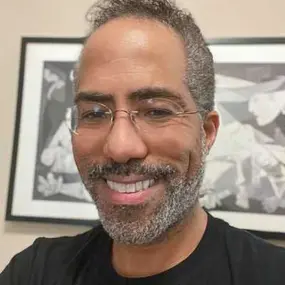
Founder of Smartleby
Michael is the founder of Smartleby, an AI-powered writing and revision platform, and a college professor with more than 20 years of experience teaching writing, rhetoric, research, and critical thinking.
He helps educators, students, and professionals harness artificial intelligence responsibly to enhance learning, communication, and academic success. Combining the perspectives of educator, entrepreneur, and author, he helps audiences understand how to thrive in a world where human creativity and artificial intelligence increasingly intersect.
Michael is also the author of Re-Visioning Writing, a college composition textbook forthcoming from Kendall Hunt Publishing in Spring 2027.