
 Apple Podcasts

 Spotify

 Youtube Music

 Amazon Music

 iHeartRadio

 Podcast Addict

 PocketCasts
 Podchaser
 Deezer
 PlayerFM
 Castro
 Castbox
 Goodpods
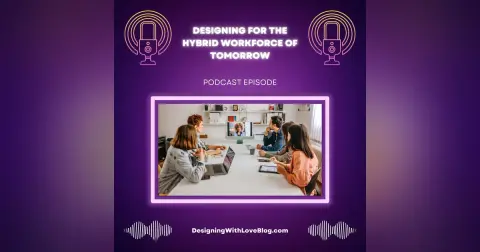
Designing for the Hybrid Workforce of Tomorrow
Key Takeaways
- Hybrid work is an established reality for modern remote-capable roles, requiring instructional designers to move away from location-dependent learning models.
- Effective hybrid learning design focuses on access first, ensuring that digital workspaces, resources, and question channels do not favor those physically in the room.
- Instructional designers must balance synchronous time for meaningful collaboration and live feedback with asynchronous options that respect learners' time and flexibility.
- Presence on a video call does not guarantee inclusion, meaning participation strategies like polls, chat, and collaborative documents must be intentionally designed.
- The ultimate goal of designing for a hybrid workforce is to ensure that remote and on-site learners have an equal opportunity to succeed regardless of their physical location.
Hybrid work has changed the ground rules for training, and most learning designs still act like everyone is sitting in the same room. When we do that, remote learners get a smaller slice of the experience: the side conversations they can’t hear, the whiteboard they can’t see, the questions they can’t easily ask, and the participation that never quite opens up.
We start with a future-ready signal backed by Gallup data showing hybrid work is now a stable reality for remote-capable roles. From there, we move from location-dependent learning to location-inclusive learning, using three practical design shifts you can apply immediately.
If you’re an instructional designer, educator, trainer, or learning leader working with a hybrid workforce, this will help you create training that feels fair, connected, and genuinely effective across locations. Subscribe for more Future Ready Learning shifts, share this with someone designing hybrid training, and leave a review so more people can find the show.
🔗 Episode Links
Please check out the resources mentioned in the episode. Enjoy!
Future-Ready Design Brief: Designing for the Hybrid Workforce
How to Manage Hybrid and Remote Teams: A Gallup Strategic Guide
Join PodMatch!Use the link to join PodMatch, a place for hosts and guests to connect.
Disclaimer: This post contains affiliate links. If you make a purchase, I may receive a commission at no extra cost to you.
💟 Designing with Love + allows you to support the show by keeping the mic on and the ideas flowing. Click on the link above to provide your support.
☕ Buy Me a Coffee is another way you can support the show, either as a one-time gift or through a monthly subscription.
🗣️ Want to be a guest on Designing with Love? Send Jackie Pelegrin a message on PodMatch, here: Be a guest on the show
🌐 Check out the show's website here: Designing with Love
📱 Send a text to the show by clicking the Send Jackie a Text link above.
👍🏼 Please make sure to like and share this episode with others. Here's to great learning!
Frequently Asked Questions
What is location-inclusive learning in a hybrid workforce?
Location-inclusive learning is an instructional design approach that builds access, participation, and connection for both in-person and remote learners from the very beginning, rather than treating remote participants as an afterthought.
How can instructional designers improve hybrid training sessions?
Instructional designers can improve hybrid training by using shared digital workspaces instead of physical whiteboards, offering asynchronous resources for information delivery, and intentionally planning interactive activities to ensure equitable participation.
Why is hybrid learning considered an equity issue?
Hybrid learning becomes an equity issue when physical proximity gives on-site learners invisible advantages, such as easier access to the facilitator, side conversations, and spontaneous participation, while remote learners are left struggling to engage.
When should synchronous versus asynchronous learning be used in hybrid training?
Synchronous time should be reserved for activities that genuinely benefit from live interaction, such as discussions, practice, feedback, and collaboration, while information delivery can be handled asynchronously for greater flexibility.
Welcome & the Hybrid Question
Jackie PelegrinHello, and welcome to the Designing with Love Podcast. I am your host, Jackie Pellegrin, where my goal is to bring you information, tips, and tricks as an instructional designer. Hello, instructional designers and educators. Welcome to episode 165 of the Designing with Love Podcast. Today we are continuing our series, Future Ready Learning: Designing Education for What Comes Next. In our last episode, we explored MicroLearning 2.0 and how small, focused learning moments can support practice, reinforcement, and performance. In today's episode, we're shifting from when learning happens to where it happens, because the workforce of tomorrow may not all be sitting in the same office. Some employees may work on site, while others may work remotely, and many may move between the two. That creates an important question for instructional designers and learning leaders. How do we create learning experiences that work for everyone, regardless of where they happen to be working? Hybrid learning cannot mean creating the real experience for people in the room and giving everyone else a link and hoping for the best. Future ready design asks us to build access, participation, connection, and flexibility into the experience from the beginning. So grab your notebook, a cup of coffee, and settle in as we explore this topic together.
Why Hybrid Work Changes Learning
Jackie PelegrinHere's today's future ready signal. Hybrid work is becoming an established part of the workplace, rather than a temporary arrangement. And the numbers help us put that into perspective. According to Gallup, as of May 2026, among U.S. employees whose jobs can be done remotely, 52% work in a hybrid arrangement, 26% work exclusively remotely, and only 22% work fully on-site. Gallup also shows that these overall patterns have remained remarkably stable since 2022. So, for instructional designers and learning leaders, hybrid work is not something we should design for, just in case. For many organizations, it is already the reality. A trainee session might include employees in a conference room and others joined virtually. A team might spread across several locations or time zones. And some learning may need to happen asynchronously because everyone cannot or should not be expected to gather at the same time. That means the learning environment has changed and our designs need to change with it. Instead of asking how can we make our in-person training work online, future ready designers ask, how do we design an experience that works across locations from the beginning? This matters because hybrid work can create invisible differences in the learning experience. Imagine a training session where some people are sitting together in a room and others are joining virtually. The people in the room may easily see who wants to speak, hear side conversations, or ask the facilitator a question during a break. Meanwhile, someone joining remotely may be staring at a screen filled with tiny faces and struggling to hear the person speaking across the conference room. Technically, everyone attended the same training, but did everyone have the same opportunity to participate? That is the distinction we need to notice. And there is evidence that intentional planning matters. Gallup reports that teams with a formal hybrid collaboration plan are 66% more likely to be engaged at work and 29% less likely to experience burnout than teams without one. Now that research is about hybrid teamwork broadly, but I think there's an important lesson for learning design. We cannot assume a good hybrid experience will happen automatically. We have to design it. Hybrid learning is not simply a technology issue, it is an experience and equity issue. And instructional designers can help make sure knowledge, participation, and learning opportunities are not dependent on being in the right room at the right time.
Three Shifts for Hybrid Design
Jackie PelegrinToday's design shift is move from location-dependent learning to location-inclusive learning. There are three shifts that can help us get there. Shift number one, from designing for the room to designing for access. The first shift is moving away from treating the physical room as the default experience. If we design everything around what happens in the room and then accommodate remote learners afterward, those learners may receive a weaker version. Instead, identify what everyone needs access to. What resources, practice, feedback, and opportunities do learners need to contribute? Then design those pieces so location does not become a barrier. That might mean using a shared digital workspace instead of a whiteboard only people in the room can see. It could mean providing digital resources rather than paper handouts available only on site. Or it might mean giving everyone the same way to submit questions rather than relying only on raised hands. The experiences do not have to be identical, but meaningful access should be designed for access first, not as an accommodation afterward. Shift number two, from meaning-heavy learning to purposeful flexibility. The second shift is recognizing that not everything needs to happen live. Sometimes organizations respond to hybrid work with more meetings, more webinars, and more video calls. Before long, flexibility starts to look like a calendar filled with boxes. Future ready learning asks us to distinguish between what learners truly need to do together and what they can do on their own time. Maybe learners review a short resource asynchronously and then come together to practice. Maybe they watch a demonstration beforehand and use live time for coaching. A helpful design question is: why do learners need to be together for this? If the answer is discussion, practice, feedback, collaboration, or connection, synchronous time may add value. If learners are simply receiving information, an asynchronous option may serve them better. Use live time for what live interaction does best. Shift number three, from equal presence to equitable participation. The third shift is recognizing that presence is not the same thing as participation. A learner can technically be present on a video call and still have very little opportunity to contribute. That means participation needs to be intentionally designed. You might use a shared collaborative document that everyone can access. You might give learners time to think before asking for responses. You might use chat, polls, workout activities, or structured discussion turns. And if some participants are remote, you might intentionally invite their voices rather than allowing the room to dominate the conversation. Equity does not mean every learner has to participate in exactly the same way. It means everyone has a meaningful way to engage.
A Quick Hybrid Learning Design Check
Jackie PelegrinHere's something you can try this week. Choose one training session, workshop, onboarding experience, or learning activity that could include both remote and on-site learners. Then run it through the hybrid learning design check and ask three questions. Question number one, can everyone access the core experience? Can learners access the resources, instructions, activities, and support they need, regardless of location? Look for anything that depends on physically being in the room. Question number two, is participation designed or assumed? How will everyone contribute? Do learners have clear ways to respond, collaborate, practice, or ask questions? Do not assume participation will happen naturally. Question number three, what truly needs to happen together? Identify the parts that genuinely benefit from synchronous interaction. Then ask whether everything else could offer more flexibility. Those three questions can reveal a lot about whether an experience is truly hybrid ready. Before we close, here is one reflection question to carry with you. Would someone joining this learning experience remotely have the same opportunity to succeed as someone sitting in the room? Not necessarily the exact same experience, but the same opportunity to access what matters. To participate, practice, receive support, and ultimately to succeed. That is the standard we should be designing toward.
Takeaways, Resource, & Ways to Help
Jackie PelegrinAs we wrap up, here are the key takeaways from today's episode. First, hybrid work is no longer an edge case for remote capable employees. It's an established part of the workplace. Second, hybrid learning should be designed across locations from the beginning rather than adapting an in-person experience afterward. Third, make intentional choices about what needs to happen synchronously and what can happen asynchronously. And finally, being present is not the same as being included. Meaningful participation needs to be designed. The goal is not to make every experience identical, it is to make sure the location does not determine a learner's opportunity to succeed. Here is an inspiring quote from Helen Keller. Alone we can do so little, together we can do so much. And I think that idea adopts a new meaning in a hybrid workplace. Together does not have to mean sitting in the same room. People can collaborate across offices, screens, schedules, cities, and even countries. But connection does not happen simply because we give everyone access to the same technology. We have to design for it. We have to create opportunities for people to participate, exchange ideas, practice, receive feedback, and feel their presence matters, wherever they happen to be working. To help you apply what we discussed today, I've created an interactive companion resource called the Future Ready Design Brief, Designing for the Hybrid Workforce. Inside the brief, you will use the hybrid learning design check to examine access, participation, and the balance between synchronous and asynchronous learning. And if this episode helped you think differently about learning in a hybrid workplace, please share it with another educator, instructional designer, trainer, learning leader, or manager who is supporting people across different locations. These conversations are better when we are learning and designing together. In the next episode of our Future Ready Learning series, we will continue exploring the shifts shaping how we design education for what comes next. Thank you for joining me today. Until next time, keep learning, keep growing, and keep designing with love. Thank you for taking some time to listen to this podcast episode today. Your support means the world to me. If you'd like to help keep the podcast going, you can share it with a friend or colleague, leave a heartfelt review, or offer a monetary contribution. Every act of support, big or small, makes a difference, and I'm truly thankful for you.