Apple Podcasts
 Spotify
 Youtube Music
 Amazon Music
 iHeartRadio
 Podcast Addict
 PocketCasts
  Podchaser
  Deezer
  PlayerFM
  Castro
  Castbox
  Goodpods
 Human-in-the-Loop: The Review Workflow That Prevents Rework

AI can crank out a draft in minutes, but if the audience is wrong, the tone is off, or the facts don’t match policy, you’ll lose every “saved” hour in rework. In this episode, Jackie breaks down the shift she keeps seeing in instructional design teams: the new bottleneck isn’t creating content, it’s creating trusted content. That’s why human-in-the-loop review isn’t an extra process. It’s the difference between fast and frustrating.
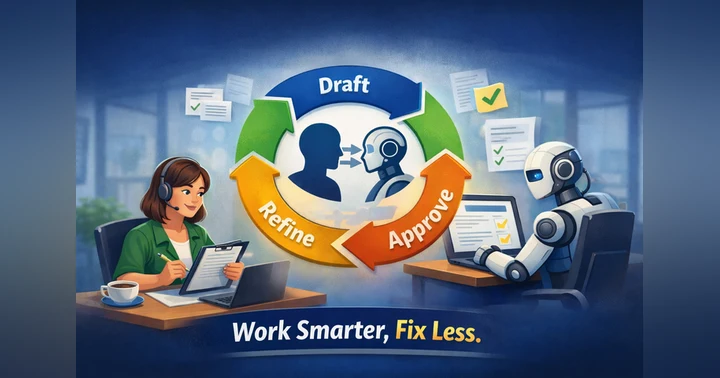
Jackie walks through a simple four-step workflow you can apply to almost any training asset: Draft, Verify, Refine, and Approve (DVRA). We talk about where rework really comes from, how to stop verification from happening too late, and why “verify before you beautify” protects your time and your credibility. Jackie also shares practical checks for SME accuracy, compliance alignment, learner job context, and accessibility basics so your training is clear, safe, and usable.
To make this immediately actionable, Jackie gives you a four-question review tool you can run before anything ships, plus a tiny definition of done you can paste into your next project. If you found this helpful, follow or subscribe, share the episode with a fellow designer, and leave a review so more instructional designers can find it.
🔗 Episode Links
Please check out the resource mentioned in the episode. Enjoy!
Join PodMatch!Use the link to join PodMatch, a place for hosts and guests to connect.
Disclaimer: This post contains affiliate links. If you make a purchase, I may receive a commission at no extra cost to you.
💟 Designing with Love + allows you to support the show by keeping the mic on and the ideas flowing. Click on the link above to provide your support.
☕ Buy Me a Coffee is another way you can support the show, either as a one-time gift or through a monthly subscription.
🗣️ Want to be a guest on Designing with Love? Send Jackie Pelegrin a message on PodMatch, here: Be a guest on the show
🌐 Check out the show's website here: Designing with Love
📱 Send a text to the show by clicking the Send Jackie a Text link above.
👍🏼 Please make sure to like and share this episode with others. Here's to great learning!
00:00 - Welcome & Series Context
01:16 - Trusted Content Beats Fast Drafts
02:40 - The Four Causes Of Rework
03:34 - DVRA: Draft, Verify, Refine, & Approve
05:08 - The Four-Question Review Check
05:48 - A Real DVRA Project Example
06:29 - Weekly Challenge & Human-in-the-Loop Tool
07:18 - Subscribe, Share, Support, & Closing Quote
Welcome & Series Context
Jackie Pelegrin
Hello, and welcome to the Designing with Love Podcast. I am your host, Jackie Pelegrin, where my goal is to bring you information, tips, and tricks as an instructional designer. Hello, instructional designers and educators. Welcome to episode 113 of the Designing with Love Podcast. As we continue through the 2026 lineup, we're also moving through the AI Ready Designer Series. Last time, we covered data literacy basics so you can work smarter and reduce risk. Today, we'll map a single workflow Draft, Verify, Refine, and Approve. So AI helps without creating a rework spiral. So, grab your notebook, a cup of coffee, and settle in as we explore this topic together. Before we jump in, a quick note. This is a 12-episode arc, and each episode builds on the last. In this 12-episode AI Ready Designer Series, we'll move through five AI ready checkpoints each time. So you always leave with something practical you can apply right away. Alright, let's jump into checkpoint one. Here's the shift. AI makes it incredibly easy to create a first draft. But if the draft is off, wrong audience, wrong tone, wrong policy, or wrong facts, you can lose all the time you saved in rework. So the new bottleneck isn't producing content, it's producing trusted content. And that's why human in the loop matters. It's not about slowing down, it's about preventing the repeat work that drains your week. So here's your anchor line. Fast drafts are easy. Clean approvals are the real speed. Now that we've named the shift, let's anchor it in what still matters most. Quality and trust. What doesn't change? The learners and stakeholders still expect training to be accurate, clear, aligned to the job, accessible, and safe. AI can accelerate the asset layer, but it can't have responsibility for what goes out the door. That's still on us. So our job isn't use AI or don't. Our job is use AI with a review workflow that protects quality. And when quality is the goal, the next question is, where does rework actually come from? Rework usually comes from one of four places. Number one, unclear intent. You start building before everyone agrees on the goal. Number two, unverified content. A draft sounds right, but it's not accurate or it conflicts with policy. Number three, too many reviewers too late. Feedback comes after the design is already built. And finally, number four, no definition of done. Stakeholders keep changing their minds because success wasn't defined early. So the risk isn't AI. The risk is using AI without checkpoints, which creates a draft, then panic, then redo cycle. So here's the upgrade. A simple workflow you can apply to almost anything, which consists of four steps. Step one, draft. Use AI to get a usable first pass fast. Outline, script, storyboard, quiz items, and scenarios. Here's the rule. Drafts are allowed to be imperfect. They're not allowed to be unclear. Step two, verify. This is your fact check, plus alignment step. Make sure to verify accuracy, which is the SME check, policy or compliance alignment, if needed, learner context, in other words, does it fit the job reality? And finally, accessibility basics. Here's the rule. Verify before you beautify. Step three, refine. Now you make it strong. Tighten the language, improve practice and feedback, adjust tone, remove fluff, and make it clear and easier to use. Here's your rule. Refine for learning, not for length. And finally, step number four. Approve. Make sure to complete a final sign-off using a simple definition of done. What exactly is being approved? This is the scope. Who approves what? This is the roles. And by when? This is the deadline. Here's the rule. Approval is a decision, not a brainstorming session. And to make this usable immediately, I'll give you a simple review tool you can apply today. Here's a simple review tool that keeps draft, verify, refine, and approve, also called DVRA fast. Here's the four question review. Before anything ships, ask yourself the following. Is it accurate? Is it aligned to the job? Is it accessible and clear? And is it approved by the right person? If one of those is no, you don't need more AI. You need one more pass at the right step. Here's a tiny definition of Dun line you can use. Done means accurate, aligned, accessible, and approved. Alright, so here's a quick real-world example I'd like to share with you. A team used AI to draft a learner guide and quiz questions fast. Great start. But they skipped verification, and later the SME flagged multiple inaccuracies and policy mismatches. That turned into a full rewrite. Next time they used DVRA. AI drafted the outline and quiz bank. The SME verified only the flag sections, ID refined for clarity and practice, and the stakeholder approved scope with a one-page checklist. Same speed, way less work. Here's your checkpoint challenge for this week. Pick one project and write a DVRA at the top. Draft, verify, refine, and approve. Then do one small upgrade. Move verification earlier, or define done in one sentence, or choose one approver per category, content versus compliance versus brand. Small structure changes prevent big rework later. Before you go, I made an interactive companion for this episode called Human in the Loop Compass. It's a quick interactive guide you can use as a review checklist, especially when you're working with SMEs and stakeholders. If this episode helped you, please follow or subscribe and share it with a designer who's tired of endless revision cycles. When AI makes drafting easy, the difference between fast and frustrating is your review workflow. Draft quickly, but verify early. Refine intentionally and approve with clarity. Before I conclude this episode, here's an inspiring quote by Peter Drucker. Quality in a product or service is not what the supplier puts in. It's what the customer gets out and is willing to pay for. Thanks for spending time with me today. Until next time, keep it practical, keep it human, and keep designing with love. Thank you for taking some time to listen to this podcast episode today. Your support means the world to me. If you'd like to help keep the podcast going, you can share it with a friend or colleague, leave a heartfelt review, or offer a monetary contribution. Every act of support, big or small, makes a difference, and I'm truly thankful for you.