Apple Podcasts
 Spotify
 Youtube Music
 Amazon Music
 iHeartRadio
 Podcast Addict
 PocketCasts
  Podchaser
  Deezer
  PlayerFM
  Castro
  Castbox
  Goodpods
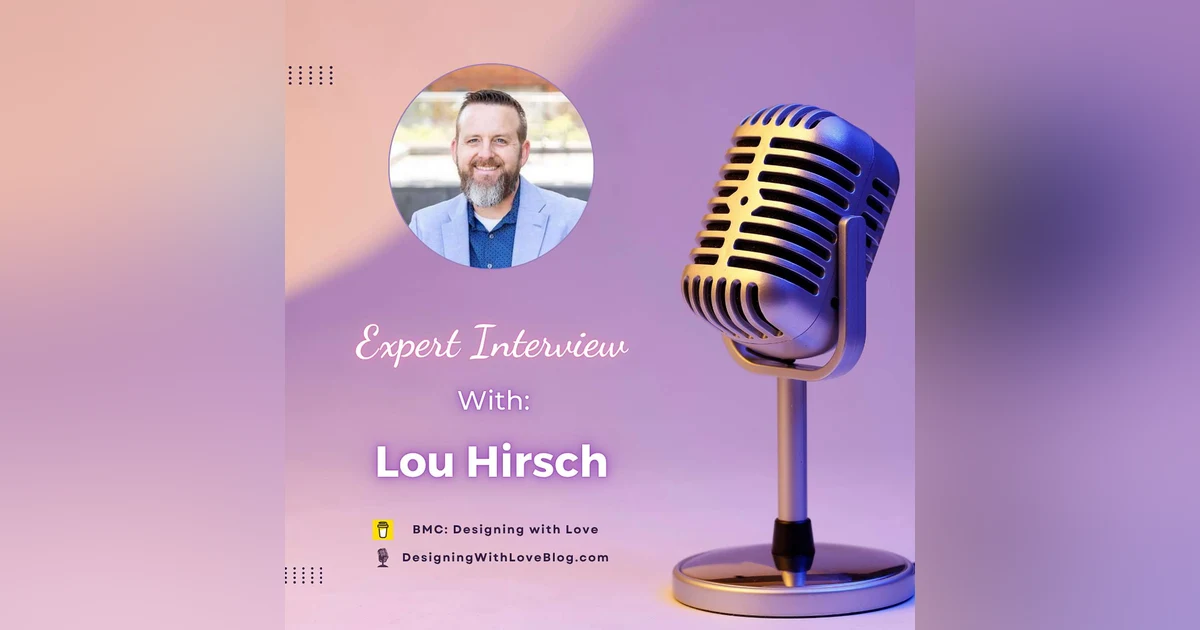
 Human Connection in Teaching With Lou Hirsch

Key Takeaways
- Prioritize human connection in teaching by focusing on intentional, one-on-one interactions that make learners feel seen, rather than just delivering content.
- Recognize that while traditional educational structures often emphasize speed and rigid deadlines, true student-centered learning requires space for reflection and creativity.
- Use technology as a tool for deepening engagement, such as hosting podcasts or virtual meetings, instead of allowing it to flatten the educational experience.
- Understand that students are more likely to carry the memory of a formative mentorship moment than the specific details of a lecture or exam for years to come.
- Encourage educators to step outside of purely prescriptive curriculum to foster unique, memorable experiences that resonate with individual student journeys.
Most of us can remember a teacher who noticed us, but we struggle to remember the worksheet, the lecture slide, or the exact content on the exam. That’s where this conversation with Dr. Lou Hirsch lands: the real unit of change in higher education isn’t another tool or another “coverage” strategy, it’s the small, intentional moments of human connection that create trust and make learning stick.
We talk about why modern systems built on speed, scale, and deadlines often squeeze out creativity, even though curriculum redesign and instructional design depend on reflection and iteration. Lou shares a vivid example from his own teaching that shows what students carry for years, and why being present with learners matters more than being the best content presenter. We also explore online learning and how purposeful use of technology can deepen connection instead of flattening it.
If you care about student-centered teaching, human-centered curriculum design, and building learning experiences that last, listen now, then subscribe, share the episode with a colleague, and leave a review to help more educators find the show.
🔗 Website and Social Links:
Please visit Lou’s website and social media links below.
📢 Call-to-Action: To learn more about Dr. Lou Hirsch and his work in higher education innovation, student-centered teaching, and curriculum redesign, be sure to check out the links in the show notes to connect with him and explore his work at the University of Kentucky.
Join PodMatch!
Use the link to join PodMatch, a place for hosts and guests to connect.
Disclaimer: This post contains affiliate links. If you make a purchase, I may receive a commission at no extra cost to you.
💟 Designing with Love + allows you to support the show by keeping the mic on and the ideas flowing. Click on the link above to provide your support.
☕ Buy Me a Coffee is another way you can support the show, either as a one-time gift or through a monthly subscription.
🗣️ Want to be a guest on Designing with Love? Send Jackie Pelegrin a message on PodMatch, here: Be a guest on the show
🌐 Check out the show's website here: Designing with Love
📱 Send a text to the show by clicking the Send Jackie a Text link above.
👍🏼 Please make sure to like and share this episode with others. Here's to great learning!
Frequently Asked Questions
How can I improve human connection in teaching?
Focus on creating small, intentional moments where you are fully present with students, listen to their concerns, and value them as individuals rather than just content consumers.
Does technology hurt human connection in education?
Technology can hinder connection if used solely for mass content dissemination, but it can enhance it when used intentionally to facilitate focused, one-on-one engagement and meaningful conversations.
Why do students remember people more than course content?
Memory is often driven by emotional connection and personal interaction; when a student feels truly seen and supported by a teacher, that moment forms a lasting, transformative memory that transcends the curriculum.
How do I balance strict curriculum deadlines with creative teaching?
While systemic constraints are real, educators can inject creativity by looking for opportunities to add their own unique 'flavor' to the curriculum and prioritizing student engagement over rigid adherence to content coverage.
00:00 - Welcome And Guest Introduction
01:19 - Lou’s Unlikely Path To Teaching
07:36 - How Deadlines Squeeze Out Creativity
14:54 - Why Students Remember People, Not Content
25:01 - Online Learning & Intentional Presence
30:49 - Making Student-Centered More Than Talk
37:14 - Inside FIELD & Faculty Innovation
43:19 - Students As Partners In Redesign
50:29 - AI Disrupts Assessment & Learning
57:24 - Final Message Links & Support
Welcome And Guest Introduction
Jackie Pelegrin
Hello and welcome to the Designing with Love Podcast. I am your host, Jackie Pelegrin, where my goal is to bring you information, tips, and tricks as an instructional designer. Hello, instructional designers and educators. Welcome to episode 134 of the Designing with Love Podcast. I'm thrilled to have Dr. Lou Hirsch with me today. Lou is a university professor, TEDx speaker, and the founding director of Field, a faculty innovation initiative at the University of Kentucky. I'm looking forward to you talking about that more, Lou. His work sits at the intersection of higher education leadership, curriculum design, and student-centered teaching. He spent his career proving that small intentional moments of human connection are the engine of transformative education. Best for shows on education, leadership, and instructional change. Welcome to the show, Lou.
Speaker
Thanks for having me on, Jackie. I'm really looking forward to our talk.
Jackie Pelegrin
Yes, me too. And I just want to give a little shout out to PodMouch because it's a great tool to connect wonderful hosts with just as equally wonderful guests like yourself. So I appreciate that we we got connected and we were able to reach out to each other.
Speaker
So Yep, and that platform makes this stuff real easy. I appreciate it.
Jackie Pelegrin
Yes, absolutely.
Lou’s Unlikely Path To Teaching
Jackie Pelegrin
So I did mention a little bit about you and your introduction, but can you just tell us a little bit more about yourself and share what inspired you to focus on the intersection of teaching, leadership, and innovation, as I mentioned in the introduction?
Speaker
Yeah, sure. So we're all products of our upbringing and environment. And um, Jackie, you and I are both uh native children of Arizona, uh, both born and raised there. I've m moved away the last 20 years or so, but I still have family in Phoenix. So spending time in the outdoors uh as a child was a big part of my life and identity. My grandpa wrote for he would he was this the state outdoor writer for the Gazette and then the Republic. Back we had two daily papers in Arizona, and then it went down to the Republic. And my dad was the um president of the charitable arm of the state game and fish. And through those and a very active uh life in in Boy Scouting, um, I was out maybe not every weekend, but almost every weekend that I remember doing something in the outdoors, hunting, fishing, camping, hiking, you know, whatever, exploring the state. And um I think about the stuff that I did in scouts as a senior patrol leader when I was like 12 or 13, like organizing meetings, mobilizing people to do stuff. Uh it's kind of the same thing I do now as a university professor. It it it I mean, it feels the stakes are like a little bit higher, but the job's about the same as it was when I was 12, just trying to get people to do things that they wouldn't do without me. Um, and uh I went to college at Tulane, where I majored uh in the humanities in in English and religious studies. And then um I was I've also been a scuba instructor um ever since I could when I turned 18. And I was gonna be a scuba instructor for my life. And after I graduated with my liberal arts degrees in English and religious studies, my future wife and I moved to San Diego, where I managed a scuba diving company and she uh did some stuff that would get her ready to grad school. Then we got into, or she got into grad school at the University of Arkansas, which was a bit of a move from San Diego. Um, so I took that fork in the road and stayed with her and took my English degree and maritime captain's license and scuba instructorship uh to uh Arkansas, where I was super unemployable. And I worked at a couple Mexican food restaurants serving margaritas for drunk undergrads, and that wasn't really inspiring me, you know. Uh, so I thought I would go back to school as a non-traditional student, major in biology, and do something with fish. It was very uh naive and ignorant. Um, but one morning there was a work study posting for a plant pathology dishwasher in a in a plant pathology lab, which is the study of plant diseases. And I thought, well, I could wash dishes with my, you know, liberal arts degree and my capital. Like I'm real good at dishwashing. So I went and it was a work study job and I made minimum wage and I washed dishes. And Jackie, I did such a good job washing those dishes. They were so clean and it was so good.
Speaker 1
Pristine.
Speaker
Yeah, pristine dishware. And uh, and then there was just like a little science thing that the professor said, Hey, can you just give this little science thing a shot? And it was just following instructions. I don't know what any of the words meant, but I was like, Yeah, I could follow instructions and read. So I did that, and then I did that pretty well. And then there was sort of just more and more increasingly complex science things that I was permitted to do until there was an opportunity for a master's degree program that was really just kind of like a blunt force trauma science project where just grind out 90 or 100 hours a week for a year and a half and just get it done, and I could do that. Uh, and I just kind of picked stuff up along the way, and I got my master's degree in plant pathology and then my PhD in plant science with a focus on fungal molecular genetics. So I studied the the way how microscopic fungi interact with their plant hosts when they connect, and then how that results in disease following infection and colonization. So all the little molecules that these microbes and their hosts shoot around. And then I followed my wife. I've always been co-tailing. That's my secret to success whenever anyone asks. I say marry someone smarter and more successful than you. But uh my wife uh got a job. She's a psychologist, they have to do an internship. She went to Charleston, uh, South Carolina, and worked at MUSC, the Medical University of South Carolina. I followed her there and did various academic or research jobs for a couple years. And then she went to the University of Kentucky. I was her plus one sort of, you know, ask for the hire. They were able to cobble together a weird postdoc for me for a year. Uh, and I guess I impressed them enough to get me a full-time teaching job. Uh, it was full-time uh faculty but non-tenure eligible. We call them lecturers here. And I was in that role for five years and then was promoted into a tenure eligible assistant professor position, which I've been doing now. This is the end of my fifth year. Um, and um, I guess I'm going up for tenure this year, so I'll know in a couple weeks. So fingers crossed. Uh and then if not, I'll be looking for the next gig because then you got a year to find another job. Um, and uh it's been a really cool journey going from my upbringing in the wilds of Arizona to a career in the scuba industry. Um to then, you know, and in the middle earning an English degree and then becoming a fungal molecular geneticist, and then not really following up on that career very much when I started my job. And now I just innovate new, what I think are, and the students seem to agree, exciting curricula that really focus on meeting students where they're at as people and putting content aside and focusing on developing processes. And then the content comes when it does, um, but it's a very process-driven approach toward curriculum development rather than something where it's very prescriptive and memorizes stuff for a test. So I think back to my time as a child, teaching other kids how to tie knots, to my career as a scuba instructor, which I still do. I'm actually doing a class this weekend at the pool and in a county pool in Kentucky. Um, all the hands-on stuff and making it fun, because that's that's when learning meant something and was memorable, was when it was fun. And boy, we beat that to death with textbooks, it seems, somewhere along the way. And it it really kind of extinguishes some of that passion that almost every child has when they're learning about the world the first time.
How Deadlines Squeeze Out Creativity
Jackie Pelegrin
Absolutely. I love that you brought that up. Your upbringing uh here in Arizona, and then the Boy Scouts and how that taught you to be creative and innovative at a young age, right? I was in Girl Scouts myself, so I remember all those moments of not just learning how to survive in the wild, right? And how to do those things like how to make a fire, right? From two sticks, rub them together. But all you know, not just learning how to make food and things like that with your mess kit, but learning how to what's teamwork about, what's leadership about, right? And you learn those in Boy Scouts and Girl Scouts. So it carries your adult ears.
Speaker
If you're not good at that, you have a terrible weekend. You you know, like like the weekend is ruined because you guys can't get along and it just sucks. It's real, yeah. There's like real repercussions for like not coming together and finding the joy in experiences that nowadays it seems like we could just say, ah, this isn't fun or us isn't more than just walk away. But like when you're in the woods with people, like you you kind of gotta deal with them for a while, and that is a is a tremendously beneficial experience and mentality for like a professional career when we're often or anyone is put into a group that may not be the most functional, but still must do something. Uh and uh yeah, I I think we're all we're all just big kids. I don't know. I I don't think anything changes much.
Jackie Pelegrin
I agree, you know, and I had someone on my podcast a few months ago, and he was talking about how we do lose that creativity when we get older, and it's so important to come back to the roots. And he even talked about, you know, just even if it's sitting outside with your bare feet and feeling the grass, you know, between your feet or something, and just those little things, writing down what you see outside in nature and things like that, and then coming back to it. And I thought, that's really great. Yeah, I love it.
Speaker
Yeah, I think the thinking about that, the concept of losing that, I would say it's not maybe it's passive, but there's a lot of systemic pressures that kind of dissolve that away. Um I think if if left to our own devices, without all the distractions of the modern era and without like crushing deadlines, I've found where I'm able to, people snap back to that joyous childishness pretty quickly. Uh it's like it's there. It's there for most people. We just don't we don't let it flourish. Or the worlds that we're in don't incentivize it or permit it. I guess those are two related but different things.
Jackie Pelegrin
I agree with you there. Yeah.
Speaker
So it part of what I try and do as an educator is to tap into that or to create an environment where, again, the content is kind of secondary. They can find that on the internet. My my my high hypothesis is yet to be proven incorrect. Um, but like what can we do in space and time together? And that's about like common human connection and developing those social skills that are decreasingly removed from like online asynchronous classes and these huge lectures that people take now in big universities. Not to say it's impossible there, but I mean, humans are social, social animals, and uh a lot of our modern technology challenges the way that we have historically communicated for 200,000 years.
Jackie Pelegrin
Right. Oh, that's so true. Yes, uh that's yeah, and you know what what really stuck out to me, Lou, what you said about the deadlines. It's true. When we have so much pressure and deadlines put on us, it it really does it can kind of hinder some of that creativity and and uh because we're just so constrained, right? With oh, I've got to get this done. And that's you know, I mean, it's I know they do it for a reason, but like my department with curriculum development, it's uh we have quarters and we work in quarters, and then each quarter, each curriculum developer gets a certain amount of courses, and then they have a deadline, they have to get it to the editor, and so it's we're we live in that that world of deadlines, right? And I have deadlines too, right? As an instructional designer, because I have to get that review done in a week back to them so that they can get it off to uh peer review and they can get it to QA and things like that. So there's all these systematic processes that are in place that are supposed to make us more efficient, but at the same time, it it can can can hinder that creativity for sure. Because you're like, well, I don't have enough time to put that in the curriculum. That's such a great idea, I love it. But let's do that the next time because we know it's gonna take too long to do it. I'm like, oh, that would be so great if we could put that media in there because it really would help them understand the concepts better.
Speaker
But but then we know something and like not to call not like not to call our bosses uncreative, I'm not. But like um, I think Conan O'Brien, who's a who's uh he has now is a really popular podcast, Conan O'Brien needs a friend, free pub, and uh he was a late night chauffeur, you know, host for 30 years of our generation, I think, Jackie. And he said um, in terms of like a writer's room, like an old-timey writer's room with like typewriters, and um, like sometimes there'd be like old studio exec would walk through, and if they didn't hear the clickety-clack of typewriter fingers, they thought the writers were not being productive. And Conan's argument was well, when you're in that writer's room and you're coming up with ideas and you're goofing around with your friends, you're trying to find that joke or refine the pitch to whatever they're writing, like uncreative people think productivity is what creating creating stuff is. Like they think that action is progress. And sometimes inaction is the most creative thing we can do. Like, if I was sitting on my desk with my feet up and I was reading a book and someone walked by, I could tell you some of the people in my world would walk by and think, why isn't that guy working? You know, what's he doing? Sitting here in his office reading with his feet up. Whereas, I mean, they don't know. I'm not reading my fun books at work. I mean, if it I do I do that on my porch at night. I may be reading a book that will help help me cultivate some new idea that may in six months result in something cool for my students. But they'll take that as like, oh, he's just being lazy, he's hanging out. No, that's what creativity looks like sometimes. We we gotta produce. I'm not saying that, you know, the world will grind to a stop if we're all just pie, you know, pie in the sky. But um, I wish we had more, I think in the pursuit of efficiency, we've we've lost, as we mentioned, the sort of childish joy of existing. Um, and we've also lost the ability or the time to really innovate creatively because that time that we spend deeply thinking and considering and iterating something that starts is probably fairly lame but could end up being pretty cool. That all doesn't result in anything immediately. And a lot of our systems, especially as they become corporatized, we need results yesterday. And creativity is tomorrow's game, and they're they don't sometimes play well together. So that's that's an that's always been the tension, I think, and it seems to be increasingly so in this era.
Jackie Pelegrin
Absolutely. That's so true. You know, I love how you mentioned Lou,
Why Students Remember People, Not Content
Jackie Pelegrin
uh, and I when I was researching for this interview and everything, how you talk about those small intentional moments of human connection that make education transformative. And we've been talking about that in a sense too. So for you, what do you think that actually looks like in practice for instructors like you and I who want to create more meaningful learning experiences for our students?
Speaker
I think about this a lot because I think about my own life a lot. So I went to college 41, so like you know, 20-ish years ago. And I don't remember, I remember two things. I remember that my philosophy press, my philosophy professor's extra credit question was always Renee Zellwigger, the actress, and there was one poli sci professor who passionately endorsed the idea of politicians dueling each other with Flint Locke handguns to resolve disputes. Oh wow. Yeah, I know. Which I can't necessarily argue against because I think it'd be nice for people to put up or shut up. Just my thought. Just my thought. Um but I went to college for a long time. I mean, I went to college for four years and seven years of grad school. I don't remember anything I learned in class, except those things, and they don't I don't think mat matter. So like like what so sure, all the stuff I learned, I guess it all built upon itself, you know. But like those moments in those classes, they don't resonate with me. They can't because I don't remember them ever happening. So I think about, you know, what makes a college education or a learning experience memorable. And I think the only way for memories to persist are to be governed by personal interaction almost exclusively, but to be in intense moments of attention to another human. See them and they know that they're seen and they remember the value in that. I'll I'll give you an example. Um there was um a student in one of my classes who was having a very existential crisis. She wanted to be a dentist, and it was her first semester in college, and everything was really hard. It was her first gen chem, you know, midterm. And she's had a really tough time in class. It was a big lecture class, and she stepped out. So I followed her because I knew that I kind of figured what was going on. And she was just outside, not crying, but like her eyes were wet and she was not having a good time. So I just sat with her for like 20 minutes when someone else was doing something in the class. It was a team talk thing. And we just talked about how like how everything's fine and she's doing fine in the class. And yes, this is really stressful, but like this is part of the process. And, you know, what what are all the things you're doing to prepare yourself for this? And she was preparing well, she's very smart, she, you know, and then everything was fine. But then I saw her. Uh, we have another class now, she's senior, she's going to graduate, so it's been like three and a half years. And um, she mentioned that to me, that that conversation we had, I happen to remember it too, as being one of the most formative experiences in her time at the university so far. And we talked about it. It was it was nice that we had that moment of connection. And then I asked her what class that happened in, and she couldn't remember what the name of the class was. And she'd taken another class with me, she did very well, and I asked her a question from the class that I knew the answer to. She just looked like I was speaking a foreign language, she had no idea the words I was saying. She didn't remember any of that stuff, and she did really well in those classes. It didn't stick, it didn't matter. But what mattered was that time that I was able to attend to her, and she was able to attend to me, where we had a moment of connection, you call a mentorship, belonging, whatever you want to call it, but we were two people there to support each other, and that's what she remembers. And our classes don't really do that. And I'm, you know, the more and more that uh technology is becoming ingrained in the practice of teaching and in the world, I worry that the more we lean on this concept of classes being a vehicle to disseminate content, the more we waste an opportunity to actually connect with people and form meaningful memories that will change the direction of their lives. I think 30 years ago, and and for all of human history mostly, it was education was a content-driven game. All the knowledge in the world was bound up in books, in journal articles, and libraries. They were very jargony. You had to be an expert to read them and interpret them. So it took nerds like you and uh you and me. Um I think I know you well enough now to say we're both, you know, curriculum nerds. I say that with all the love. Uh, you know, but nerds like you and me who could understand those words, to go in and read those books and spend a long time reading them and then make sense of them and then share that story with novice learners in the classroom. But now with AI and in the 90s, dot com and Google and all that stuff, all the information in the world is available to anyone who can query it well on the internet or through these, you know, AI platforms. So, like, we don't have a monopoly over content anymore. And learners can find it faster and probably better on the internet. Uh, I like to say I'm a plant pathologist, I teach about microbial diseases of plants. There's someone with a YouTube channel who can do my stuff way better. There has to be. I'm not the best person in the world. So, like, why would someone with that opportunity to get a better lesson for free on the internet, you know, pay all this money to come to the University of Kentucky or wherever and spend all this money and time um just to get like maybe maybe maybe I'm as good, maybe I'm having a good day and it's the best lesson in the history of mankind, but probably not. You know, what so like what about that experience is unique anymore? And and it's and it's not, it can't be. But what is unique about uh a residential college classroom is that young people don't come together anymore. People don't come together anymore. They interface through devices. I mean, and that's a broad statement. There's plenty of exceptions. But you know, people 30 years ago, there were you know, I I guess even uh we'll say TV. TV kind of started killing things. But you know, people used to hang out and spend time with each other. Now look at a group of people anywhere, everyone's on their phones all the time. Um there's no more connection. So if we can Get people to connect in a classroom, that becomes unique. Because by definition, that's not happening with technology. Technology, because it's free, so it monetizes our attention, it seeks to take our attention, monetize it with ads, and distract us from doing everything but looking at more ads. So if we are in a classroom with people and we could tell them to put down their phones because your grade depends on it, zip them up in your backpack, and just be present with each other for 50 minutes three days a week, that is a unique opportunity to connect with people and make meaningful connections between folks in a way that we cannot outsource and is impermissible with technology. And that only happens at university, or it only happens at scale at a university. So I think a lot about like what frame shifts need to occur in education to most effectively meet our students where they're at and empower them to excel in a society that we don't know what it looks like in a year from now, let alone five or ten years with AI. There's a couple hundred engineers in the world who know what's coming and they're bound up in non-disclosure agreements and can't talk about what our world is going to be in a couple years with these tools they're making. They know what's coming. Everyone else is just kind of guessing. And um I think the more we hammer home content on multiple choice exams and and you know, papers that students can use AI to iterate on and not develop their own thought or process, we're losing an opportunity to connect with people.
Jackie Pelegrin
Absolutely. I love that, especially now with online learning becoming so predominant. I teach online classes, so I knew well, I earned my second master's through an online university, online only. And I blue, one thing I did was I said when I was in that second master's when I got my instructional design degree, I made a list of all the things if I ever taught that I would want to do. Now, the podcast wasn't a thing that I thought of at the time, but I thought I would want to meet with my students online, right? Through some type of platform, Zoom or something. I think Zoom was around in 2013. But you know, have find a way to connect with them and meet with them and just find ways to go beyond what the curriculum gives me because so many
Online Learning & Intentional Presence
Jackie Pelegrin
instructors online will just take the curriculum for what it is, what they're given, because with GCU, it's it is that way. It's given to us. We don't we're not able to change the curriculum, but we can add to it. We can add our own flavor to it. And and I take each class that I that I get when I get a class section for a particular course that I teach, I look at every single one of them as unique individuals and it's a unique set of students. I don't teach each one the same, right? Because I know they're all unique and different. But it was funny because this podcast actually came from that that need that that I saw my students were having. I was like, well, in the traditional classroom on campus, they get to have guest speakers that get to come in and speak to them and say, you know, hey, here's this certain thing that you can do, or you know, because I I went to my undergrad and went to evening classes. So I had that opportunity to have those guest speakers. And I thought, but online students, they don't get that. They're missing out on some of that really good, rich, you know, connection and those types of content. So that's where the podcast came from, was that part of it. And I thought, well, if I can, you know, interview industry experts like yourself and have some of my students come on the podcast if they're willing to, right? And I've had some students that have come on and they told me at the end of the program, they said this was the most wonderful experience. Like you said, it's the one thing that they remember was coming on my podcast and actually doing that. Uh so it was really neat. And in the beginning of the podcast, what was really interesting is that I only would invite those that were either in the capstone class at the very end of the program, either they were in it or they had just getting they were getting ready to finish it. And then I realized, you know what, I'm missing out on something because I think I need to actually invite students that are early in the program too, because I need I want to be able to maybe have them come on at the beginning and then have them come on at the end and see what their journey looked like, right? So I actually did that for the first time with a student, and uh, and I want to I want to do it more and have that experience because she was in my my very first uh intro course to instructional design. She was in the 500 class, and then I had her again in the 590. So it was just a wonderful experience. And I had her three times, actually. I think I had her in in a third class, but it was nice because I was like, Caroline, you need to come, you know. She's like, I would love to come on your podcast. Uh, I know, you know, I'm not at the end of the program. And I'm like, no, actually, I think that would be a good idea. So she gave me the idea. It didn't come from me, it came from one of my students, and so I did that, and I said, Yeah, let's let's give this a try. So I did that, and then I said, get in touch with me again when you're at the end of your program, when you're in your capstone, just in case we don't get a chance to uh have me teach the capstone again. And I did, so it was nice, but I was like, Don't forget about the interview, and she's like, Yes. I was like, Let me give you my calendar link so you can go schedule it. And it was just a wonderful interview. I mean, the first one was great, but then I had her reflect back on what she learned along the way, and it was just amazing to kind of hear that growth and and have others kind of uh tap into that. So yeah, so that that's a great example too, right? Of that that human connection and something that you know will stay with her for I don't know how long, right?
Speaker
Yeah, no, but that's a good point. Like she's gonna remember the podcast journey. Yes, I mean 10 years from now, right? She's not gonna probably remember too many details of any one class, but she'll remember knowing you and being invited back three or four years, however long in the future, to kind of do a pre-post, you know, academic journey interview. Right uh because you I mean, she was valued, right? This is a this is, I mean, and as much as I was derailing technology 10 minutes ago, like this is an incredibly intimate way to talk to someone else because I'm in my my attic right now, my doors closed, I'm fully focused on your face on my screen. There's no other distractions. And there's nothing like in the real world, there's always people walking by and phones ringing and all this stuff. And uh, I mean, I think that this medium of communication, when it's very purposely uh structured for like an intensely focused engagement, that that's a great use of technology to do this stuff. Because otherwise, I'm in Kentucky, you're in Arizona, like we're not talking, or it's over a phone line and that's a little bit distant, you know. But this is uh, I think a great utilization of our new era to have a conversation that I'm gonna remember for a while because it's fun to talk about this stuff.
Jackie Pelegrin
Absolutely. Yeah, that's great. I love the examples uh because I think it really helps uh the listeners to really imagine what that would look like um and being able to be innovative and think outside the box. I think that's something we need to do a little bit more often as professors, as even professionals in the field. I think that's so good to tap into that. So I love that. So, Lou, I wanted you to talk a little bit about uh what you're doing there at the University of Kentucky as the founding director of field, uh, because you work in the curriculum redesign and that pedagogical innovation, which I love. So I hear this quite often with institutions. When they say they want to become more student-centered, um, where should they begin so that it becomes real and not just a buzzword? Because I hear student-centered and I'm like, are they really student-centered? Hmm, I wonder. Yes.
Speaker
That's a good question. Um You know, I don't I don't know what student-centeredness really means. I mean, and I don't think it probably has a definition. I think it's one of those sort of vibey phrases that that people use because it it is it's an ideal
Making Student-Centered More Than Talk
Speaker
that that we all should aspire to. I think some people want it more on the promotional uh pamphlet than in practice. But um you know, s and I keep using this word tension a lot because I think there is a lot of tension in higher education, but I think that that there is, and this is historic, but uh a tension between uh you know the educated disseminators of knowledge and the learners. And there's always been, you know, these darn kids nowadays, you know, with their phones, or before that it was their TVs, and then before that it was their radios, and then before that it was their hoops with sticks, and then before that it was the you know, they they they couldn't grip a quill anymore, you know, like it just people old people have been complaining about young people forever. Um but to not invite uh the students who are expert learners, especially in college, they've been learning for probably 80% of their lives in formal settings and 100% of their lives living, to not invite them in as partners to sculpt the way that classes are structured and learning and content mastery are assessed, I think is a really ineffective way to do our jobs because I think some people intuitively understand what the learners in their care need to reach their highest potential. I think some do. But that doesn't last forever, and I think the more detached people get from their audience, the less relatable they are in terms of how they structure a class, and the less they can relate to their audience in terms of what they can need. So at the University of Kentucky, um, we got a uh substantial gift from the estate of a donor named Bill Gatton, who gave our college $100 million, which is a ridiculous amount. Wow. I know, like, I mean, it it is I mean, truly a paradigm shifting gift. So everything I'm gonna say, it depends it has for us depended upon this large S that doesn't really exist in higher education. But I do think a lot of the ethos and programs that I'll explain to you today, and many more I don't have time to talk about that we're building out of this gift, um, are very replicatable with a lot less support almost everywhere. Um, I say our college got $100 million. We have a little tiny part of this. Uh it was spread to lots of different things, research. We have extension because we're a land grant institution. Um ours is under the umbrella of student success, and field stands for faculty initiatives in education, learning, and discovery. And uh I'm the director, there's two staff, an assistant director, and a program coordinator who work under me. And uh we work to uh in partnership with our college's administration to fulfill the strategic initiatives we've developed around uh increasing the quality of our education. So at a big land grant school like Kentucky, we have 30,000 students, 6,000 faculty. It's very, very big. We're in R1 on the Carnegie rating. Um not all, but a lot of our faculty teach for their job, but are in no way trained to be educators. Uh maybe they picked up a TA when they were in grad school. Um many are gifted and great in the classroom. Um, some I think could use a little bit more practice and support. And a lot are actually disincentivized to spend a lot of time innovating in the classroom because their jobs are predominantly tied to their research productivity for almost all of our faculty. And for those with extension appointments, which for the members of your audience who don't know, um our federal government has uh legally mandated extension programs for universities in almost every state where it was designed around the Civil War to uh create and disseminate knowledge to growers and producers in agriculture so that they can start producing more to support and increase population in our country. Um so that those are still going on in every state. Um so those folks, most of my colleagues, are gonna be hired or fired or given raises or not based upon their whole package, all of their job, but most of their job is research. So they need to do that more. Um so what we're trying to do is develop lots of programs and support systems, some very hands-on, stipended cohort, annual models where we're intensely doing stuff, all the way down to like lunch and learns, where we just have a theme and some sandwiches and we just talk for an hour. Um, all built around trying to build a community around valuing education, uh, which our college, the Martin Gatton College of Agriculture, Food and Environment, has always had, but there just hasn't really been the resources to like get people together. Um, but people have always cared. Um, the program that I think speaks most to what we've talked about so far is a students as partners program called Growing Graduates from the Ground Up. So if your audience isn't familiar, a student as partners program, we're the first at UK to do it, but we're not the first to do it. They've been around in that name for about 20 years. Um, but it's an idea of uh taking students and partnering them with instructors, um both staff and faculty instructors, to innovate a class in some way that is collaborative in nature, and based upon the idea that, yeah, the instructors are hopefully content experts, but the students are learning experts, especially for their peer group. Um so to have this sort of collaborative work where they can work together to innovate aspects of a class, make assessments multimodal, change the pacing or structure of classroom times, break down lectures, flip classes effectively. There's a lot of ways to ineffectively flip classes. Just do things in a way that is based upon student desire to have a better educational experience. And um we have we're wrapping up our second year of our, we call it Growing Grads from the Ground Up or G3U, um, where we have 10 instructors. They're
Inside FIELD & Faculty Innovation
Speaker
paired with two students each, so we have 20 students. And also uh my assistant director and I have two of our own um senior curriculum consultants helping us do this class because the students are enrolled in a class and we need help making the class good. Uh so our students are helping us to very much practice as we preach. And uh these classes have ranged from like an intro animal science class to like uh you know there's like an in-person seminar style class about how to succeed in college, all the way to like an online asynchronous graduate class in four-dimensional protein modeling for herbicide resistance and weeds. So very much a huge range of disciplines and specialties and ages and course modalities. And so you're a curriculum designer, you have like training and practice in this stuff. Yes. I don't really. All I bring is certainly good vibes and energy and encouragement to people who want to make something they have better and empower them to make those choices on their own. Um, I do provide a lot of examples, a lot of hands-on stuff. I do provide tons of resources, but I I would I say I'm like a curriculum designer because that I think describes what I do in practice or but like I don't know what curriculum design is. I couldn't define it, and I certainly don't know the primary tenets of it. Um, but I also am not in a position of having to do it for other people. I I can just put people in place and time together and encourage and incentivize them to innovate and trust them to do the good work of making a good class. Um and I I've always approached or always categorized myself as a well-intentioned ignorant. Like I don't know a lot of this stuff that I'm now obstenbly in charge of. Um, but I have a lot of documented evidence of doing it well enough, I guess, for people to continue to engage with me in this capacity and for my administration to continue to support this program. Um and uh it's been a really cool journey from someone who never, I mean, I never was gonna design. I mean, I love teaching. I think I was good at it. I have a pretty good record as a scuba instructor and I love scout stuff. Um, but in graduate school, it was very much like if you're not out of this program as a researcher, you've, you know, kind of failed as a person. Like, like the only successful route out of this PhD is a hardcore research career. And I wasn't good at research, I'm still not. It didn't speak to me. And it's cool that I found this position where I can get people together just as I did when I was 12. This time it's it's faculty and some students sometimes, and get them together and and and support and encourage and promote them to do the good work that they've always had in their heart, but never really had the platform to stand on to do it themselves. Or if they did, they didn't have the time and incentive and someone saying, Hey, what's going on today? Uh the accountability. Um, so it's a really cool system to be in. And also importantly, and this speaks to some educators, I'm sure, in the audience, you know, there's carrots and sticks to every sort of innovation, and change is hard. My group only has carrots. We're not administrators. We don't score faculty members. I mean, students, I guess they get a grade, but they get an A for just being present and trying because we have a very loosely structured curriculum. Um, and they all do a good job. But like for my faculty and staff colleagues, I can't make them do anything. Right. I got I have no I I have no sticks, only carrots. So it it's my style anyway, but the system forces us to be really positive and collaborative, or else no one's gonna do anything that that we're doing, and then we fail. Um so it's uh it's it's a really cool place to be, especially in the context as higher engine higher education changes and there's a lot more kind of top-down um measurement of what faculty are doing and how they're spending their time. That is very much a stick.
Jackie Pelegrin
Yes.
Speaker
Um so that stick is driving things in a lot of different ways. Um, but it is driving some people to us to say, hey, I'm getting some pressure here, like what can I do in this teaching space to like make them happy, but also like so like the so that's how some people come to me like, I'm getting a lot of pressure here. This class is underperforming, whatever. What do I do? So they're coming to not get sticked. I'll help them do that for sure. But also my goal is to permit them through structure or time or support or collegiality to experience that class in a joyful way, to approach the spirit of innovation from a place of excitement and passion and love, and not from trying to avoid a stick. Um, I'm somewhat effective at that, but that's cultural change, and that takes a long time. We're only in our second year. Um, but I think having this sort of, I call it a center. It's not a center that has a very specific definition at UK and other schools. We have that's why we're an initiative. We can't be an institute, an office, or a center. Those are very special things. But I'll call it a center because that's what effectively it is. Um, where we can be there as kind of the good cop to help our colleagues move forward in a way where we're not administrators. I'm a faculty member. My my colleagues are staff, we're just
Students As Partners In Redesign
Speaker
here to help them. And we have no sticks. And it's really created a really cool place for people to come and be and belong to, where they can start working with each other to innovate and share ideas, very much like how kids, when they're making up their own games in kindergarten and first grade and second grade, just figure it out and it's good. We're permitting those spaces to happen now in our college where just because everyone's so busy with their deadlines and schedules and all this stuff, that wasn't happening. Um, but it is now because we have these platforms to get people together, some more supportive than others, but um it's real cool.
Jackie Pelegrin
Wow, that's great. And I think too, it it helps the faculty, Lou, to to learn more about what goes into curriculum design. Because um, you know, I truth be told, I've been working in curriculum design as an instructional designer for 12 years. So I've I've seen the back end of it. And now as faculty, I see what happens right after it's created and in the classroom. And I'm like, hmm, uh yeah, that that you know, sometimes faculty will give great ideas, and I'm like, that's great in theory, but in practice, how's that really gonna work? Especially when uh when they're I can tell when they're ground faculty and they're like, oh, let's do this think, pair, share activity, or let's Get them into groups, and I'm like, well, we have to think about the online students. How are they going to be able to do think pair-share? They can't do that if it's if it's asynchronous. So it's it's really um one of those things where we bring awareness to the faculty in in our department. So it's but I would love to have something like that at GCU too, where the students feel like they have a voice all throughout the process because I think it helps them to have that buy-in, right, to the curriculum and to their learning experience, right?
Speaker
Well, they're they're seen and they're and they're valued, like they're powerful. And something that that happens in all these classes that that surprises some people is that the classes don't get easier, they they get harder. Like these students they want to be challenged. They really do. But they want, they they only want to be challenged when that challenge results in something meaningful. So when that challenge, when a class is real hard and it's just memorizing stuff that they're gonna forget and can pull up on the internet later, that that that's a challenge that isn't really worthwhile now that all the information is on the internet. Um but to challenge the students, well, A, in this in a class like this, to develop a curriculum because they get to see the see how the sausage is made, and that really blows their minds too. Right. Um, because like they don't, they there's a lot of things that go on that they don't see. How could they? Um, and it's also been really good for the faculty for the reasons you said, like, oh, I got this good idea, and the students are like, ooh, I don't, that's not gonna work for these reasons, or like, oh, that's a cool idea. What about for the 20% of students who aren't gonna be down for that?
Jackie Pelegrin
Yes.
Speaker
Like, that's a good idea for most, but not for all. So then how are you structurally in this time and place gonna not alienate the 20% who are gonna be sitting with their arms crossed in the corner?
Speaker 1
Right.
Speaker
Um, and I think those sort of things really help instructors think through, like, oh yeah, that like what how can I shape this time to try and cast a wide enough net to get everybody? And also, too, with AI, which is changing everything all the time, like most people and most systems in higher education are purely reactive to what's happening with AI. We're not leading the charge really. Um, certainly not at the individual faculty member on odds because we're we're too old and aren't hipping with it with all the ever-evolving AI things. So we're being reactive to a technology that not all, but a lot of our students are utilizing that cause us to react to it. A lot of times we think about it in terms of just like cheating or academic dishonesty. So using AI to generate whole papers, having open claw-derived software complete an online asynchronous Canvas class for you automatically in 10 seconds. Like, you know, that is happening all the time and increasingly more so. So to have students who are in that world, maybe you're maybe not utilizing those tools in those ways, but they're aware of it, far more so than most instructors are, to say, like, hey, you have this term paper at the end, that's not gonna do what you think it's gonna do, because a lot of students are gonna use AI to do either write it outright or do these various things to build up that uh paper so that way the product doesn't represent what you, instructor, thinks it does. Um, and that's been really helpful too for a lot of my colleagues who cherish uh aspects of their courses to think deeply about does this work anymore? Can this work anymore? And I think increasingly the answer is no, or not in the way that you think it does anymore. And that's been hard for a lot of people to deal with because you know, the audience knows, and I could we're like an oil tanker in the ocean. It takes a long time to change. And this is rapid fire, right angle, high pivot changes that we cannot do. We're not equipped for. And it's a it's a huge existential challenge for what we're trying to accomplish as educators to prepare the next generation of people to leave this country.
Jackie Pelegrin
Right. Yes, that's where the authenticity really comes into play, right? Um, and allowing us to be able to, as I mentioned earlier, think outside the box because, like you said, those term papers, they don't have they don't hold the same meaning they used to hold. Uh yeah, especially now with the technology and AI. Absolutely. Yeah. So we have to really rethink it, right? Yes.
Speaker
I mean, but like writing well is still incredibly valuable because writing well is thinking well. And writing a paper is a product of creative thought. And that they're the critical thinking, creative thinking are the same thing. Like that's hugely important, ever more so now with AI. Um so you know, the paper doesn't exist, the paper doesn't do that anymore.
Speaker 1
Right.
Speaker
I don't I don't really think it does most of the time.
Speaker 1
Yeah.
Speaker
And maybe if it does, instructors are often too under-resourced to meaningfully assess a paper anyway. We have too many papers, not enough time. So, like, but the thing is still important, yeah, right? I mean, like, oh my gosh. Um something this isn't my idea, so but uh so I won't take credit for it, but I can't remember who said it. It was like, so intelligence is not as important as it used to be. And I'm not saying like being smart isn't important, but like the concept of intelligence knowing stuff, a you know, the internet can do a lot of that now. So, like, what can a human do in this era of ever-changing tools where intelligence becomes devalued? And uh it's having wisdom, which is intelligence
AI Disrupts Assessment & Learning
Speaker
with experience, that is where I think our learners can be well positioned for jobs that we cannot even imagine in five years. Uh because uh w w wisdom is an inherently uniquely human thing. Knowledge, uh the existence of knowledge is not uh human. It's derived by humans, but it is just a thing that exists on a chip somewhere in a data center. That's where knowledge exists now. But the wisdom to use that knowledge and to interpret the knowledge or to have information literacy skills to determine which knowledge is uh worth calling knowledge and which is worth deleting, that is born from wisdom. So how can we change our knowledge economy in higher education to a wisdom economy? And that's hard to do because that is an entire flip-flop change of how higher education has been structured since I mean forever, but like since Harvard Divinity School gave their first degree in divinity in the 1600s. It's been that sage on the stage model, and uh technology has flipped that upside down. Yet not all of us, but a lot of us are still clinging to that antiquated model that I don't really think serves our learners well for jobs 10 years from now, because we do not know what those will look like.
Jackie Pelegrin
That's true, and especially with this generation coming up, the Gen Alphas, right? They they were born with technology, they're digital natives, so yeah, so we need to be aware of that as as professors and curriculum developers like myself um and instructional designers, because I I kind of think of myself as like all-inclusive um with that. So it's neat. Yeah, absolutely. So, Lou, as we wrap up this episode, this has been so fun. I've I've enjoyed this. This is one of my favorite ones.
Speaker
Oh, thank you.
Jackie Pelegrin
Yes. So, what's one message you would want educators and instructional designers like myself to carry with them if they want their work to be more human, more intentional, and more transformative for learners, like we've talked about through this whole episode?
Speaker
You know, this may sound like a unattainable platitude, but it it's truly not. It's like an authentic wish that I wish we were able to embed in all of our offerings. But it's it's to develop or permit the space to occur for instructors to get to know their students as people and to form moments of real human connection. Because uh those are the things that uh will I always kind of think about it in terms of this flow chart. Have attention, have attention to people. Uh and then when you can attend to people, you can form a connection with people. And then once you have a connection, you can form a relationship. And then, and only then, once you have a relationship, that is the condition that permits meaningful learning. Everything else I think is in one ear and out the other. Because with a relationship becomes patience, trust, respect, and that helps things get underneath that garage door that closes over our brains the older we get. Um and if we can permit the environment where people can truly know each other and trust each other and have those relationships, then we can actually make some meaningful change. I worry that as our curricula become increasingly scaled and this industry of higher education becomes more and more of a numbers game, we're losing that personal connection that has underpinned education throughout humankind forever. And it's now starting to go away. And I don't think that does us well as people because we have never once learned like that. But now we're our systems are forcing us to, and I don't think it's gonna be very effective.
Jackie Pelegrin
That's true. Yeah, because in the in the industry I'm in, in instructional design and then in higher education too, yeah, it's so important to keep that human connection because if we lose it, then we're not creating good curriculum for our learners at all. Uh yeah, or workplace learning or anything that requires learning, right? So yeah, that's so important. Wow. That's amazing, Lou. Thank you so much again for being here and sharing such thoughtful insights with my listeners. I really appreciate your perspective on human connection and leading that meaningful change in education. I appreciate that that meaningful change that we can make, as you just mentioned. I know this conversation will encourage and spark educators and instructional designers like myself even more who want to create that learning experience that truly makes an impact. So, for anyone, Lou that wants to follow you, what's the best way to connect with you?
Speaker
So I despise social media for all the reasons that I think it's destroying this country, but I know it's really important. I found LinkedIn to be a fantastic platform, uh, especially for these sort of professional discussions amongst other academics and leaders in higher education. Um, so follow me on LinkedIn. Um, I'm the only Lou Hirsch at the University of Kentucky, and uh you'll see a picture of me in a blue sport coat and uh Martin Gatton College of Agriculture, Food and Environment up on the platform. I post every week or so about um my programs and what we have going on. Uh if you log in here soon when you hear this, you'll see that I uh subjected myself to an Ariel Silks uh class today uh to talk about the um uh the the the learning of uh you know interpreting body movement as an expression of self, which we did with our students today. So I didn't tear any muscles and I don't have any bruises, but everybody thought it was pretty funny me up there trying to do stuff.
Jackie Pelegrin
Oh, that's cool. Well, I'll make sure I'm pretty active on LinkedIn, so I'll make sure to to hit you up on LinkedIn and we'll we'll make sure to stay connected. And and you're always welcome to come back on the show anytime and share more of your insights.
Speaker
How about four years? I'll be done with something in four years. You do a pre-post thing. How about that?
Jackie Pelegrin
There you go. Exactly. Yeah, so we'll see. Yeah, maybe we can do another like maybe 90 days out and then maybe a year out or something. Yeah, we'll see. Yeah, see where life takes us, right? And go from there.
Speaker
Jackie, thank you for doing this. This is a great effort. You bring great energy to the space. We all need more conversations like this. So thank you for doing the good work.
Jackie Pelegrin
Thank you so much for your time. I appreciate it. And come back on anytime. You uh whenever you feel like the the creative spark coming, and you're like, oh, I gotta share
Final Message Links & Support
Jackie Pelegrin
this with Jackie's audience. Just come on, come back on and and we'll uh we'll have a good conversation.
Speaker
Those are the sort of threats I love hearing. You will hear from me again.
Jackie Pelegrin
I love it. And then plus it keeps keeps my podcast going too, because then I'm like, oh, this is great. I have I and you know, and honestly, Lou, I love doing mini-series. I started doing mini-series with um just with my solo episodes, but then I started doing series with my guests too, and that's really great. And I it's uh we're able to actually dive deeper into the content and we're like, oh, let's do you know, 10,000 foot view. Now let's focus on these little things here and there. So yeah, so I recently had a guest on. He lives in Turkey, and he's gonna know who he is if he listens to this, because he listens to the podcast. But we connected, uh, he was listening to the podcast for a while, and then he connected with me on LinkedIn and sent me a private message, and he was like, I love your podcast and I'm sharing it. And I'm like, This is great. He's like, Come on my podcast and you can share because he's in higher education too. And we ended up doing a three-episode mini-series all about AI, higher education, and um yeah, and being able to assess students in meaningful ways using um Viaski and all that stuff. So it was amazing. I loved it.
Speaker
So well, I love talking about this stuff, so any avenue, I'm game.
Jackie Pelegrin
Love it. Well, thanks again, Lou. I appreciate it.
Speaker
And I know my listeners will love it too.
Jackie Pelegrin
Great, great, thanks. Thank you for taking some time to listen to this podcast episode today. Your support means the world to me. If you'd like to help keep the podcast going, you can share it with a friend or colleague, leave a heartfelt review, or offer a monetary contribution. Every act of support, big or small, makes a difference, and I'm truly thankful for you.
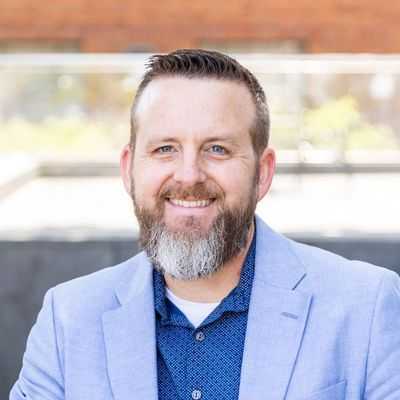
University Professor, TEDx Speaker, and Founding Director of FIELD
Dr. Lou Hirsch is a university professor, TEDx speaker, and the founding director of FIELD — a faculty innovation initiative at the University of Kentucky. His work sits at the intersection of higher education leadership, curriculum design, and student-centered teaching. He's spent his career proving that small, intentional moments of human connection are the engine of transformative education. Best for shows on education, leadership, and institutional change.