Apple Podcasts
 Spotify
 Youtube Music
 Amazon Music
 iHeartRadio
 Podcast Addict
 PocketCasts
  Podchaser
  Deezer
  PlayerFM
  Castro
  Castbox
  Goodpods
 A Name Can Be the First Blueprint for Identity With Dr. Tamara Nall

Key Takeaways
- Dr. Tamara Nall created the Junia movement to establish a formal, visible naming tradition for daughters, mirroring the legacy marker that "Junior" has long provided for sons.
- A name serves as a child's first sustainable gift and carries deep significance beyond mere identification, fostering a sense of pride, courage, and purpose.
- The Junia movement includes formal components such as declarations, naming certificates, and a global registry to help families normalize maternal legacy without judgment.
- Instructional designers and educators must recognize the "invisible backpack" of experiences, backgrounds, and diverse identities that every learner brings into the learning space.
- Exploring your ancestry and family history can deepen self-understanding and reveal unexpected connections to your lineage and personal identity.
A suffix can look like a tiny detail on paper, but it can carry an entire family story. Jackie sits down with Dr. Tamara Nall to talk about Junia, a formal naming tradition designed to give daughters the kind of visible legacy marker that “Junior” has long given sons. The conversation starts with naming, then opens into something bigger: identity, representation, and what changes in a culture when we finally give language to what has been missing.
Dr. Nall shares the personal roots behind the movement, including grief, fertility challenges, and the moment she realized there was no widely accepted, formal way for a mother to pass her full name to her daughter with the same status society grants fathers and sons. We unpack what a name can hold beyond identification: pride, courage, lineage, and a sense of purpose that grows when you understand the story you carry. We also dig into why Junia includes ceremony and documentation, such as declarations, naming certificates, and a global registry, and how those formal pieces can help families normalize maternal legacy without shame or fear of being judged.
From there, we connect the theme to education and instructional design, where belonging and representation shape how people learn. We talk about the “invisible backpack” every learner brings, why inclusive learning experiences are legacy work, and how curiosity about ancestry can deepen self-understanding even when family history is complicated. If you care about women’s history, cultural change, naming traditions, identity, or maternal legacy, this one stays with you. Subscribe, share with a friend, and leave a review with your biggest takeaway or your most meaningful family name story.
🔗 Website and Social Links:
Please visit Dr. Tamara Nall’s website and social media links below.
📢 Call-to-Action: To learn more about Dr. Tamara Nall and the Junia movement, visit the Junia Legacy website, where you can explore the naming tradition, ceremony resources, certificates, and ways to support the movement.
Join PodMatch!
Use the link to join PodMatch, a place for hosts and guests to connect.
Disclaimer: This post contains affiliate links. If you make a purchase, I may receive a commission at no extra cost to you.
💟 Designing with Love + allows you to support the show by keeping the mic on and the ideas flowing. Click on the link above to provide your support.
☕ Buy Me a Coffee is another way you can support the show, either as a one-time gift or through a monthly subscription.
🗣️ Want to be a guest on Designing with Love? Send Jackie Pelegrin a message on PodMatch, here: Be a guest on the show
🌐 Check out the show's website here: Designing with Love
📱 Send a text to the show by clicking the Send Jackie a Text link above.
👍🏼 Please make sure to like and share this episode with others. Here's to great learning!
Frequently Asked Questions
What is the Junia movement?
The Junia movement is a cultural initiative created by Dr. Tamara Nall that gives mothers a formal, visible way to pass their full names to their daughters, establishing a maternal equivalent to the traditional "Junior" naming convention for sons.
Why is maternal legacy naming important?
Maternal legacy naming helps bridge an absent feminine equivalent in naming traditions, offering daughters a visible marker of lineage, pride, and purpose while acknowledging the maternal line.
How does naming tradition connect to instructional design?
Both naming traditions and instructional design center around identity, belonging, and representation, shaping how individuals perceive their self-worth, history, and place in the world.
00:00 - Welcome & The Junia Idea
01:39 - The Personal Story Behind Junia
03:40 - Family Naming Traditions & Hidden Lineage
07:50 - What A Name Carries Beyond ID
11:10 - Making Junia Official With Ceremony
17:55 - Representation, Learning Design, & Legacy
24:29 - For People Without Daughters
31:40 - Ancestry Research & Finding Your Roots
32:19 - When Family Legacy Holds Pain
34:40 - The Movement Goal And Cultural Shift
37:28 - How To Join The Junia Movement
41:53 - Closing Thanks & Support The Podcast
Welcome & The Junia Idea
Jackie Pelegrin
Hello and welcome to the Designing with Love Podcast. I am your host, Jackie Pellegrin, where my goal is to bring you information, tips, and tricks as an instructional designer. Hello, instructional designers and educators. Welcome to episode 144 of the Designing with Love Podcast. Today's guest, Dr. Tamar Nall, is reimagining one of the most overlooked yet powerful tools of identity, which is naming. As the creator of Junior, she is building a cultural movement that gives mothers a formal, visible way to transmit purpose, honor, and lineage to their daughters. I love that. In a world where Junior has long signified legacy for sons, Junia establishes a long-absent feminine equivalent, creating a space for matrineal inheritance to be recognized, celebrated, and sustained. And while today's conversation begins with naming, it also opens the door to something much bigger: how identity is formed, how legacy is preserved, and how culture changes when someone is willing to name what has been missing. Welcome to the show, Dr. T. I'll call you Dr. T as well.
SPEAKER_00
Thank you, Jackie. So happy to be here. I'm really excited about the conversation. So again, thanks for having me.
Jackie Pelegrin
Yes, absolutely. And I always like to give a little shout out to Podmatch when I get to connect with guests and uh another host on PodMatch. So I would love to do that as well because it's a great way to bring in that connection and that uh way to be able to continue it as well. So that's it.
SPEAKER_02
Absolutely.
The Personal Story Behind Junia
Jackie Pelegrin
Yeah, so I would love to begin at the heart of Junior. What first led you to ask the question, why is there a formal naming tradition for sons, but not an equivalent for daughters?
SPEAKER_00
Yes, you know, Jackie, I feel like every innovation comes from some gap, or in my case, it came from pain. And I was raised not to complain, but to do something about it. So I actually went through a time of fertility issues. So I was so focused on my career for over two decades. No one had a conversation with me that as a woman gets older, that her eggs can get bad. No one ever said that to me. So I didn't know it. You know, I had the career, I was advancing. Why couldn't I have a family? So, you know, hubby and I just tried and tried, and it we could never get viable embryos. At the same time, or a little bit after I lost my mother, and I dealt with that grief for many, many years. I did it was unexpected, I couldn't explain it. But my nephew was born, and they were like, Okay, well, what are you gonna be called? And I said, Aunt T, because that is what my mother's name was. And she was alive then, and I had no earthly idea like the significance of having her um, you know, auntie name, given the fact that she passed away. And so going back to the fertility, my husband and I um at the time agreed that if we had a daughter, I would name or we would name our daughter after myself. And then I started thinking, okay, well, how do you formally do that in the same way as Junior? And my research showed that there was no, you know, formal naming convention. And again, rather than complain about it, I just sat there and was a little shocked. And rather than complain about it, I just said it's well, I'll just start it. And it was a lot of research in in terms of what makes sense and outbirth Junior.
Family Naming Traditions & Hidden Lineage
Jackie Pelegrin
Wow, that's amazing. I love that because, like with my mom and I, we both have the same middle name, not the same first name. So that's kind of that legacy, right? Being passed on now, you know, that we both have the middle name of Marie. And it's very interesting, uh, Tamara, because you know, my I found out through doing the ancestry DNA and then going through and doing the family tree that my grandmother or yes, my grandmother and my great grandmother, her mother had the same first name. Yeah. And I didn't realize that until I did that. I was like, wow, and I I told my mom, and I was like, mom, guess what I found out? Because I looked at the the ancestry records of the uh what do they call that when they do the census, right? Yeah. So I was like, oh, is it no, those are two different people because they list who the family member is, right? You know, mother, daughter. And I saw it in multiple records, and I was like, okay, this is not a mistake because they write it themselves. At that time, they did, they wrote it themselves. So then I just looked at and I looked at birth certificate records and death certificate records, and I'm like, yep, I'm seeing a connection. Come to find out that my grandmother, her name was Alma, and then my great-grandmother called herself Rose, and they were Alma, they were both Alma Rose, and I was like, Whoa, that's really interesting. But my grandma great-grandmother called herself Rose because they didn't want to call both be called Alma and get each other mixed up and go, which one are you talking about? So but I thought, wow, that's interesting. So that's kind of the same thing that you're talking about. Very similar. That legacy, but there's there was no way even right then back then, even to do it formally. So it's just Alma Rose, Alma Rose, you know? Yeah. Wow.
SPEAKER_00
Yeah. Absolutely. And even in your case with your mother giving you her middle name, there's a story behind that, right? Right. Um, there's a story behind that, and that's something that both of you can cherish and hold close to your heart and share the reasoning and rationale if you're comfortable or in the future, or you know, whatever. But there's something there. And I tell people, what's the first thing that anybody who is born is given? It's a name. That's the first gift that you're given. And so I just think it was it's so precious that your mother would think enough of you to continue that legacy that she has and then give you that torch with her middle name.
Jackie Pelegrin
Right, exactly. And then I I thought if I ever have a daughter, I would want to do the same thing, carry it on, you know, into the middle name and just kind of carry on Marie, you know, from generation to generation. It's like uh when it's like when mothers pass on a recipe or something like that to their daughters and then gets passed on generation after generation. You know, I have a recipe I don't actually have the recipe written down, but I have a recipe that I know in my head that my grandmother taught me. I think I'd have to recreate it in my head and kind of get it down, but it's uh of a French dressing because they were French, but it was passed on six, I think five or six generations of women through the year. So yeah, so I'm like, wow, that's amazing. So that's what this is like, but it's more concrete, right? It's uh it's not something like a recipe. Recipes are nice, but naming is just it's identity, right?
SPEAKER_00
Yeah, it's it's about identity. And actually, my research also found that there are approximately 30,000 daughters named after their mothers and carry their mother's full name, you know, here in the US. Um, of course, they're not junias because they don't have the suffix of junior or comma J-N. However, you know, this is something that mothers have thought about, um, just not in a formal way. And it is very cultural. There are a couple of cultures that actually become juniors when they give their daughters their full name. So it's not new in the sense of naming, it is new in the sense of it being a formal naming tradition that elevates it and consider it just as significant as when a father names his son after himself.
Jackie Pelegrin
Right. I love that. That's great.
What A Name Carries Beyond ID
Jackie Pelegrin
Wow. So when people hear about Junior for the first time, they may think this is about a name, but your work seems to point to something much deeper. What does a name carry beyond identification in your eyes?
SPEAKER_00
Yeah, to me, it's about legacy. It's about, and people actually don't think about this now because, you know, like for instance, in my case, I I just never thought my paint my mother would pass away, you know. Um, but at some point that will happen with all of us, and we too will. But it kind of speaks to legacy and the story. And then once you find that out, then you become curious about, well, why and what does it mean? And for many people, I'm not gonna say all, but for many people, it in their minds give them, gives them or gives her in this case, courage to to fulfill whatever mission or passion she is supposed to have in life, is what I believe happens. Um, it's also a sense of pride. I've yet to meet a junior that wasn't proud to be a junior. I've yet to meet a father that wasn't proud to name his son after himself. And so it's exciting to know that there's now that opportunity for, you know, females as well. Um, and as I mentioned before, your name is the first thing you receive when you're born. I mean, even if it's not immediate and your parents want to think about it, it still is the first real, like, sustainable gift you'll get. Yes, you can get a little blanket, you can get a little um teddy bear, but those things fade after time. You lose those things. You become an adult, and so that that little uh teddy bear that you rub on your cheek probably isn't as accepted when you as an adult when you go into the workplace or something like that. But your name it stays with you um and can stand with you forever. Right. I love that. That's great.
Jackie Pelegrin
Yeah, it's definitely about that legacy. Yeah, absolutely. I love how Junia includes ceremony recognition and documentation. So that that really formalizes it in so many ways. And like you said, it takes it beyond that naming. But um what are those formal pieces? Why are those formal pieces so important when it comes to honoring legacy?
SPEAKER_00
Right. I think that the thought behind it was that we wanted it to be a little bit more formal because it was so new, and because the concept of junior has been around for centuries. And I will say that everybody whom I speak to or have spoken to about this, their first shock, like, really? You're right. Why
Making Junia Official With Ceremony
SPEAKER_00
hasn't this been done before? And there kind of is a barrier sometimes for people to necessarily accept it. People are excited about it. But for instance, I've talked to a handful of mothers who said that actually when they were coming up and of names to to give their daughters, their spouse or their partner recommended. Well, why don't you just give them your name? And they were like, no, I don't want to be seen as arrogant. I don't want to be um anybody that is, you know, it's not really normal, so I don't want to do it. It wasn't like the spouse, it wasn't the family, it was the mother herself. And so with that, I felt that having some formal um practices, if you will, and it's not necessary, you don't have to do it, but it really kind of elevates the significance of this and the significance of it being the first formal naming convention. And so I wanted to have it just in case. Um, and these days, there's so many ways that you can start a family. And so for those individuals that wanted this to be something sacred and accept it, and their their family and friends come on board, we wanted to offer that. Um, and so that's why we made it more, you know, the declaration. Um we also have the naming certificates, so you can put in the mother's name, the daughter's name, they have to match and the date of birth, and then you can get your certificate that you can download. And so we wanted to make sure that we had it to be um around a ceremony and more uh formality than not. And it also it was very, I was very thoughtful about Junior. Um, just an example, naming your daughter, it couldn't be, you know, your full name and then cricket or I don't know, horse or statue. It, you know, I wanted it to be something that was very similar to junior, so it could be accepted. Um, about the same letters. I think it might be the same letters, and it almost sounds alike junior junior. You know, it's a little bit, it's a it's different enough to know that there's a difference. Right. And so I was very thoughtful about what it should be because I felt that that would decrease kind of the um resistance that people could have and it being different. But I've been so happy that I haven't received any resistance, and maybe that's just bias and who I talk to, but I haven't haven't received that at all. And so um I'm just honored to have thought of it, and I wanted it to also be regardless of the type of family, I wanted it to be um for those who are religious or etc. I wanted it to have um uh a correlation to the Bible, and if you're not, then you don't have to think about that. But for those who are, you know, that's important in the Bible in Romans 16 7, there was the Apostle Junia. She was only mentioned once. She was said by Apostle Paul to be outstanding among many. She was imprisoned with the male um men throughout history. There have been theologians that have tried to dismiss her and say she didn't either didn't exist or she was a man. But those of us who study it know know that she absolutely did exist during a time when there was persecution and she stood firm. And to me, like, wow, it sounds like Junia is similar in terms of the number of letters. If you're a biblical or Christian or you know, religious or whatever, you can go there. If not, it can just be about legacy. And so it was very, it was a very strategic, thoughtful um process. And for me, related to that, she was only named once and she left this legacy. So all right.
Jackie Pelegrin
Oh, I love that because I I I love those stories in the Bible too. Even if someone's only mentioned once, I was like, there's a reason that they're in there, even if it's only once.
SPEAKER_00
Yeah, so I love that. All those many, many years ago, I'm sure she had no idea that there'd be this formal naming convention after you know, named after her.
Jackie Pelegrin
So yeah, right, exactly. Because I think it's I think someone like her, you know, is just as important to legacy as all the the two Marys, Mary Magdalene, you know, and Mother Mary and all the others that more people know about. Because it's interesting to see believe people that are not even religious will know about those those two women, right? Yeah, even some other women that were part of the the disciples and and traveled with them and supported them financially. So that's great. I love that. You know, it's interesting how you mentioned about some mothers that you know, where the the partner or the spouse said, hey, do this, and they're like, it's almost like we're just taught to not fight things or to not not really fight, but just not stand up for ourselves as women. And and so it's like, wow, you know, it's like culture and norms really have shaped so many things. And it's like we want to break the glass ceiling and say it's it's okay to to ask for this and to want it. And yeah, and for our legacy and for our family's legacy, I think it's really great.
SPEAKER_00
We should be um forward, we should be bold about naming, we should be bold about our accomplishments, be it educational, work, family, we all have different roles. We should be bold and we should not be embarrassed about any of those and be just as vocal about those as anyone would.
Jackie Pelegrin
Right. And uh yeah, and and we can still have that equal representation, right? And exactly knowing that the that the family each part of the family has a role and and in that way, whether it's biblical and or however they view it, but yeah, it's really nice to know that that we have a place in the in the family as well as women. So that's great. Absolutely, yeah.
SPEAKER_02
Absolutely.
Jackie Pelegrin
Yes. So many educators and instructional designers like myself, we think about identity, belonging, and representation in learning spaces. So, how does seeing yourself represented in family history, culture, or tradition shape a person's confidence and sense of purpose in that way?
SPEAKER_00
Yeah, naming is so important because and I think I I hinted at this earlier in terms of in for many people, it is something to look forward to. My mother was a wonderful person. Um, she chose to be an administrative assistant forever because she wanted to stay at home and raise us when my father went out. She then did work, but when she started working, when we went to school, she actually worked as a teacher in the same school
Representation, Learning Design, & Legacy
SPEAKER_00
up until we actually moved um into elementary school. So she was always there. And she was just like a superwoman. You know, she could hold an organization meeting over here, be at home, do all those things. And so that's important, and that shaped me in terms of, you know, there are people who say you have to, as women, we have to give up something, and maybe we do. I've just never viewed it because it wasn't how I was raised, because I had a mother that made it just look so easy. She could do everything. Um, she probably didn't get as much sleep as she should have, but I do. So that isn't necessarily something that I picked up from her. But this idea of wearing a cape and knowing when to put it down and rest and self-care, she was really big on that. She loved to garden. Now, when it comes to instructional designers, curriculum designers, et cetera, um, I think it's so important because you're designing programs, courses, etc. that will shape many people. So you too are building legacy, correct? And you have people who have different learning abilities and are different levels. You have people that come from all different types of families. Um, you will eventually, as this movement grows, your what you develop will shape that young woman who will be a formal junior, who will be a junior. And so that's very, very important. I always say this and I do this with my businesses, we all come in wearing an invisible backpack. So I have stuff that I've gone through today in the past week. You have stuff, Jackie, that you've gone through. And um be and so while we could be delivering this podcast or working, et cetera, there's still that stuff that's in our invisible backpack, whether good or bad, whether burdensome or uplifting, that impacts how we sit down and we learn in the case of instructional design, et cetera. And so how you learn it and it being in a way that can be um understood by a diverse population is very, very important. And so the work that you and your colleagues are doing is is so, so great because people come from different backgrounds and you will eventually um develop work that juniors will learn from, um, et cetera. And I feel like in my academic career, um, what I learned in terms of you know different trainings or different classes, et cetera, there was always something where I'm like, ooh, that's interesting. That's very, very interesting. Well, little did I know, and I'm actually thinking about it now, there was somebody behind that that had to develop it that taught me something that shaped who I am today.
Jackie Pelegrin
Right. Yes, it's amazing. Like any interactive experience that was in a class or the materials that were developed, right? You're you're right. There's always someone behind the scenes or people behind the scenes that were the ones that uh that were creating it. I like to call myself even today like a learning architect because I don't want to be just a course creator, especially with AI now. Um I so I could I call myself and my colleagues we're learning architects because we're really shaping it and we're building it from the ground up, right? From the ground up, from the ground up, getting it off and saying, here you go, to the instructor, to the educator or trainer, and saying, Okay, now now I'm gonna, you know, give this to you, you're gonna deliver it in your style, right? Exactly. Yeah, and you're right, there's there's such diverse learners and diverse styles of learning. So important.
SPEAKER_00
It's very important. And you know, I've actually because um uh aside from junior, I do a lot in AI, and the precursor for that for me, my entire career has been predictive analytics, which to me is the precursor of AI. And there are professors that I've talked to that are like, oh, I'm so disturbed, my students are using AI. I'm like, look, AI is here and it's not going anywhere. Um, I think that you should challenge yourself to figure out how you can make sure that your students are become authorities in whatever area or whatever subject and incorporate that. So maybe you're not testing from a textbook, which I never liked anyway, but you're testing based on um case examples where there's a protagonist that has to make a decision. And maybe there are more group projects, et cetera. Maybe you you you know, you do it based on their use of advocacy. AI and trying to understand it. Like for instance, in um my my main company, we change their performance appraisals where 20% of their bonus is um is dependent on how they use AI and whether or not they use AI. If you're not using AI, then you this you know you're behind, and I need you to be able to release the friction of administrative tests so that you can focus on the core function areas that you need to.
Jackie Pelegrin
So all right, that's exciting. I love that. Wow, I love that conversation, and we'll definitely dig into that a little bit more in another uh another podcast, which is great because I I'm I'm looking forward to that conversation just as much as this one that we're having now. So that's great. So a little teaser for for the listeners, you know, that we're gonna do a future one, which I love. I love doing more than one with my with my guests because it's always fun to explore those different elements together. And you've created some some great organizations, so I always love to be able to learn about that. So that's great. So for our bonus question today, uh, I wanted to just kind of see, you know, if a listener does not have a daughter, uh, even someone like myself, I don't have a daughter, or is not directly connected to this type of naming tradition, what can they still learn from Junia about honoring the women who shape them, like mothers and aunts and things and people like others?
SPEAKER_00
Yeah, you know, I would love to just promote, promote, promote Junior, but at the end of the day, that's not like the most important thing in my mind. It's about you understanding who you are, it's about making sure that you free up space in your life to fulfill whatever your reason is for being born and think
For People Without Daughters
SPEAKER_00
about when you move on, whatever that is, um, and you know, pass away because you know, as for my family, we talk about it because we know that's gonna happen. Um what do you want your tombstone to say? What impact did you make? What people did you um influence and help? How did you serve your community? Did you just take or did you give back? Did you say, okay, I'll take uh, you know, I'll take one cookie, but I'll put three in. That to me, that's you know, more important than the naming itself. But then there's another part of your question. I don't know if it was intentional, but it's kind of what I've been thinking about is that as women, if you don't have children, I'm gonna be honest, I don't have children. I've had fertility issues, but I'm going, I'm continuing that process. Um, I will have a daughter, whether, you know, natural through me or through adoption, and she will be a junior. And I'm okay if I'm if my daughter isn't the first, is if there are many juniors before mine. I'm totally okay with that. Um, because it was about filling a gap. But I want every woman out there to know it's okay what your journey is. If right now you wanted a family, you wanted children, it's just not there, it will happen when it happens. And don't be embarrassed about it. Um, but I would encourage you to have conversations. I truly believe that if there was just a group of friends I had that would have talked to me about freezing my eggs or earlier or something like that, then um who knows? Maybe Junior wouldn't have been born. So while it wasn't, while in some places it was a very emotional fertility journey, I think about it. And had I not had issues or had I frozen my eggs earlier on, Junior might have never birthed, if you will. And so I mean everything happens for a reason. And for those of you who, you know, don't have children, don't have daughters, be an advocate, be a supporter, um, encourage, but if you have a friend or something that is that is going to, you know, have a child, just say, Have you thought about naming her after you? Um, and then also tap into your family history to learn, you know, similar to what you were talking about, Jackie, in terms of learning about your grandma and your great-grandmother and their first names. I mean, it's so exciting to like learn where you where you came from, you know, and the traditions. And a lot of times it begins to explain why our parents made the decisions that they made, why I like something over, you know, a certain type of music over another. Um just knowing that as you create your own story is just so important.
Jackie Pelegrin
It is, it's amazing, yes. And uh yeah, that journey of being able to look at the ancestry, just uh, you know, not only the DNA of my mother and I, and seeing the differences because I, as we know, we only get so much from our mothers, and yeah, you know, and then we get the other part from our fathers. So it was very interesting to see the dynamic and the percentages of what our ethnicity was. And I'm like, oh, we're about the same French, but I ended up having Jewish in me and I had not realized that. And then I had you know, Spanish in me. I'm like, where did that come from? And I'm like, oh my goodness, that's interesting. So it was it was very, yeah, very cool to see that. And then of course to you know see the the ancestry of me going back in the family tree. And I got further with my grandmother. I was able to go back seven generations back to all the way to France, and I was like, oh wow, this is amazing. Now I want to go to France and visit those areas, right?
SPEAKER_00
Of course you do, and see and I feel um, you know, similar in terms of me. I'm obviously a black woman, you know, um, and so my history is route with some stuff, but um, but I long to go to my village in Africa right now, based on my ancestry. It's either Ghana or Nigeria somewhere, we'll see. And I want to just like look in the eyes of like my cousins, you know.
SPEAKER_02
Right.
SPEAKER_00
So I long for that. And then when I find my people, like the exact, I mean, I want to know more than just the country. I want to know the exact village. Where was it next, you know, where was it located? Then I want to do great. I want to build a hospital for them and have education. Um, because they are my four mothers and my four fathers, and I'm just blessed to be able to want to give back. And so it becomes a very interesting discovery um journey. So, yes, I get it. You want to go back to France. Absolutely. Like, who wouldn't?
Jackie Pelegrin
It's like it's like you're getting a piece of not just a piece of history, but like you said, your legacy, a piece of your legacy that you didn't know about before. Yeah, uh yeah, and walking in the footsteps of your ancestors. I mean, there's absolutely there's there has to be nothing greater than that. I remember when there was this show on I think it was TLC, and I don't remember the name of it, but it was sponsored by Ancestry, and they got all these celebrities. I don't remember that show. I wish I could remember the name of it, but it's not on the air anymore.
SPEAKER_00
I know exactly which one you're talking about. I was like, Well, I'm not a celebrity, but can you do it for me too?
Jackie Pelegrin
Yeah, exactly. I remember they did one for Julia Roberts, and she she was uh she went all the way back, I think like 14 generations or something like that. And the guy that did it with her, the uh expert, he unrolled like the scroll of all these and it went back to like the Queen of England and or some something like that. So it was amazing and kept going. Finding your roots, finding your roots by Henry Lewis Gates Jr. Or was it? It might have been that one. Yeah, I think so. Yeah, it was exciting to kind of go on that journey with them and go, wow, this is so cool. And they would do it over, I think, two episodes or or three, depending upon how far back they went. But it I mean, you could see the emotion in them and do seeing that for the first time, and I was just like, Wow, I want to do that someday.
SPEAKER_00
You know what? I saw I couldn't watch all the seasons, but I saw about two, and then I had to stop because they were be crying, I'm boo-hoo crying myself, yeah, you know. So I was like, oh my goodness.
Jackie Pelegrin
Yeah, exactly. And some of them, yeah, because I agree. Some of them were uh some of the information that they got from some of their ancestors that they learned was pretty hard to to take sometimes. And you could tell that they were like, Okay, I need a moment off camera here. It's like, yeah, that's a little rough. So yeah, it's it's tough because I I've had some some tough moments that I learned from my family, and that's why my grandmother, my or my grand both of my grandparents on my mother's side didn't really talk much about family history, and that wasn't that wasn't something they did in that that era, anyways, because my grandmother was born in 1925 and my grandfather's born in 1929, so that was just not something they used to do, but I heard some things about my my grandmother and my great-grandfather that I was like, oh, that's ooh, that's crazy. And I'm like, So yeah, so it's tough sometimes when you hear those tough ones where you're like, ooh, yeah, yeah, that's sting.
SPEAKER_00
I'm gonna tell you, I I was interviewed once by someone, uh, it was earlier this year, who said, Well,
Ancestry Research & Finding Your Roots
SPEAKER_00
I get about Junior and having your mother's name, but what if having your mother's name is painful because she went through a painful life? And I said, and that is a great question. And that has to be um a journey that that individual has to has to go through in terms of like, for instance, and I'm sure my dad wouldn't mind, um, he wasn't in the his his father, he and his father um his father wasn't there for him when he wanted to, when he needed him, he made promises, you know, uh my my grandmother and my grandfather got divorced, you know, that kind of stuff. And he was very,
When Family Legacy Holds Pain
SPEAKER_00
very angry at that. And it was my mother who said, This is your father. Let's get to know him that he needs to know his grandchildren. So we ended up meeting him. But the beauty that comes from this, and that's why I encourage people in life, we're gonna have pain. We're humans, it's gonna happen. The question is, how do you take that pain and turn it into something positive? And what my dad did was he would have loved to have his father there all the time, but he just wasn't. So my dad vowed himself to be the best husband and the best father he could be, and he wanted to be 180 degrees different than his father because basically my grandmother raised him as a single mom. And like it took my my mother to kind of help him get there, but he got there, and I tell you, he's he he has been the best. And so, um, and maybe that people need that kind of help through therapy. Maybe of their own, they can't, and that's fine. Um, and if it is too painful, then just don't dwell on it and and and move on. But I encourage people to try to take pain and and make it into what do they say, make lemonade out of out of lemons, you know, that kind of thing. Right. And if nothing else, just say, I vow to not be that person. I'm gonna be better than that.
Jackie Pelegrin
Right. Take that mess and turn it into a message or that you know, that painful part. And there's a way to make it a blessing, you know, and it's something we can learn from and yeah, carry carry on that positive side of it. There's always something good that comes from from a bad situation. Yeah, yeah, absolutely. Right. Yep, I love that. So, as we wrap up, uh Dr. Tamara, as Junior continues to grow as a movement, what is your hope for how families, communities, and even future generations will think differently about maternal legacy?
SPEAKER_00
Oh yes, I I love this question. Thank you for that. My vision and my hope is that Junior becomes to the that it grows to the same level as junior. And what do I mean by that? I mean that when a daughter is born, that being a junior becomes an option. Do you know it becomes an option? So you you have a piece of paper, you have your iPad, your phone, whatever, with five names, potential names. My hope is that
The Movement Goal And Cultural Shift
SPEAKER_00
one of those five um is the name of the mother. That is just under consideration, like it is for junior. Um, I'd be great, it'd be great if it was even more, but that's all I want. Do I expect every daughter to be a junior? Absolutely not. I just want it to be under consideration, and I want mothers to consider it an option with pride and not think, oh gosh, people think I'm arrogant, etc. And then I also hope that spouses, partners, friends actually support that mother if that's what she wants to do. So that's my vision to just be a consideration.
Jackie Pelegrin
Right. I love that. And know that that option's there. And yeah, and there's nothing wrong with that.
SPEAKER_00
Yeah, and there's nothing wrong with that. We shouldn't make it, we should not make excuses for that. I mean, we find that now women um are are thinking about that. They're thinking about like, why do we why do we have this tradition? Why is it only for for for men and not for women? And I love that about you know, this new generation and they're challenging traditional perspectives and norms.
Jackie Pelegrin
Right. I love that. Wow, that's beautiful. Well, thank you so much, Dr. Tamra, for joining me today and for helping us think more deeply about the power of names, identity, and legacy. This was a beautiful conversation. Yeah. But I think reminds us that design is not limited to courses, classrooms, or digital learning experiences. Sometimes, and in my experience, design shows up in the traditions we create, the stories we preserve, and even the language we give something people have always felt that may not have had the words to name. So I love that. You bring that forth. So that's that's great. So I appreciate the way you are doing this with Junia and inviting families to recognize maternal legacy with intention, dignity, and love, because there's love in my podcast theme. So I love that. So for I do too. I love it. Yes. For anyone who wants to keep learning from you, what's the best place to follow you and and connect?
SPEAKER_00
Yeah, so I'm on all social media platforms, I'm on LinkedIn the most. So that's Tamara, T-A-M-A-R-A, last name Nall, N-A-L-L. But I'm on Instagram, Facebook, TikTok, either as Tamara Knall or I am Tamara Nall. And if you want to learn more about Junior itself, there's always the website junialegacy.com. So Junia is spelled J U N I A Legacy.com. And we have um social media uh tags and accounts for Junia as well. So if you're interested and you want to join the movement, please go to the website. If you name your daughter, register her in our global registry. Um, also, if you want to volunteer, please do
How To Join The Junia Movement
SPEAKER_00
that. We accept donations too. That's important. And because we're about to actually go down this whole congressional route so that we can um get it added to an omnibus so that it can, you know, be a part of social security and vital statistics. And if you have any Congress people that you know, please connect with me. We can go together. I'm I'm in the heart of DC, so I'm right there. We can go meet with your local congressperson um to help and show that Junior should be there and treated the same as Junior.
Jackie Pelegrin
Wow, I love that. Because I would love to be part of that movement. I think that's great. We would love to have you. Exactly, because I I think it's never too you're never too old to adopt. Um, so even though I can't have a child on my own, uh, you know, I I'm uh well, I mean, women can can be a little older and have a child, but it because of a medical reason cancer, I I can't have a child, you know, naturally, but I can always adopt. So there's always that ability to do that. And I love that being able to carry on a legacy and a name. So yeah, I would love to do that. Anytime I'm in the DC area, I'll be like, hey, let's let's meet up and let's do this because I think that'd be great.
SPEAKER_00
Yeah, please, Jakey. You're family now. I'm on your podcast. So you're family now. Network is your network. Let's get together with the family. Exactly. I even have a great home. I'll host you at the house. Yes, you are family.
Jackie Pelegrin
That is wonderful. I love that because I always say to my guests, you're not just a guest when you come on my podcast. You we're connected, we're we're family in different in a different way, but uh just as much of you know any any other way. So it's like you're you're always welcome. So it's great. I love that. Yeah, because I think you know, that's the thing too, is in government, you know, they don't they don't really tap in, they don't realize the significance of these things. And sometimes you have to go multiple times, right? To get that there. Um yeah.
SPEAKER_00
And I've been warned that this could be a multi-year journey, but what the good news that I've heard from the lobbyists whom I'm spoken with is that they said that it doesn't require any money and it could be a win regardless of which side of the aisle, and and that's encouraging. I mean, it literally is just a little thing that it could be added, it doesn't require money, and why not?
Jackie Pelegrin
Yeah, so if they if there's a way that it could be uh what do they call it, where it's both both sides of the aisle. Yeah, exactly. We're nonpartisan, yep, exactly. That would be great.
SPEAKER_00
The thing is you can go ahead and name your daughter Junia, you can put it on your birth certificate, their birth certificate, you know, comma Junia, comma JN, etc. The issue will be when you go into one of the, you know, a government or even a commercial database, and if there's a drop down, JN will not be an option like it is for JR. That's why we've got to go down this whole legislative journey and this that make it formal in the in every way, shape, and form.
Jackie Pelegrin
In every way, yes. Yes. That's great. I love that. So if anybody out there is interested, yeah, I'll I'll uh we'll make sure to that they can connect with you.
SPEAKER_00
Thank you. I appreciate that, Jackie.
Jackie Pelegrin
Yes, and I'm looking forward to having you back on the show to talk more about your other organization, Human AI. So that'll be wonderful. Uh all right. Well, thanks again. I appreciate it, and uh we'll we'll have more conversations down the road.
SPEAKER_00
Sounds good. Thank you for having me.
Jackie Pelegrin
You're welcome. Thank you as well. Thank you for taking some time to listen to this podcast episode today. Your support means the world to me. If you'd like to help keep the podcast going, you can share it with a friend or colleague, leave a heartfelt review, or offer a monetary contribution. Every act of support, big or small, makes a difference, and I'm truly thankful for you.
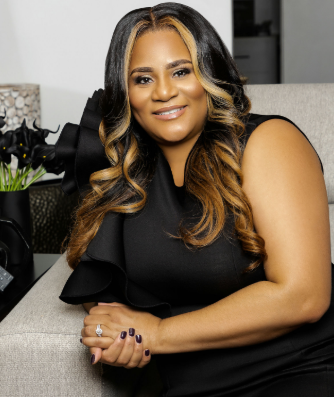
Founder and CEO of Junia
Dr. Tamara Nall is reimagining one of the most overlooked yet powerful tools of identity: naming. As the founder and CEO of Junia, she is building a cultural movement that gives mothers a formal, visible way to transmit purpose, honor, and lineage to their daughters. In a world where “Junior” has long signified legacy for sons, Junia establishes a long-absent feminine equivalent—creating space for matrilineal inheritance to be recognized, celebrated, and sustained.
Born out of Dr. Nall’s deeply personal journey through fertility challenges and reflection on what truly endures beyond biology, Junia is more than a naming convention. Through certificates of legacy, intentional naming ceremonies, and a growing registry, it is becoming a structured pathway for women to pass down identity—regardless of circumstance.
Today, she brings rigorous strategic thinking to deeply human questions about motherhood, faith, culture, and what truly remains after we’re gone.