WEBVTT
00:00:01.040 --> 00:00:04.107
Hello and welcome to the Designing with Love podcast.
00:00:04.107 --> 00:00:11.753
I am your host, Jackie Pelegrin, where my goal is to bring you information, tips, and tricks as an instructional designer.
00:00:11.753 --> 00:00:22.682
Hello, GCU students, alumni, and fellow educators, welcome to episode 57 of the Designing with Love podcast.
00:00:22.682 --> 00:00:33.103
Today, we're diving into a fast-paced, flexible, and feedback-friendly instructional design model that just might become your new favorite approach to rapid prototyping.
00:00:33.103 --> 00:00:44.484
If you've ever found yourself working on a tight deadline, facing unclear expectations, or needing to test an idea before it's fully developed, this episode is for you.
00:00:44.484 --> 00:00:49.284
So grab some coffee, your notebook, and let's get started.
00:00:50.468 --> 00:00:54.302
Rapid prototyping is all about designing smarter, not slower.
00:00:54.302 --> 00:01:12.253
Instead of waiting until the end of a project to test a final version of your learning product, rapid prototyping encourages you to start with a rough draft, or what we call a low-fidelity prototype, and refine it over time, using real feedback from stakeholders and learners.
00:01:12.253 --> 00:01:23.230
It's a continuous loop of design test, tweak and repeat until you've created something that not only looks good but actually works for your learners.
00:01:23.230 --> 00:01:29.867
Here's the best part you don't need a fully fleshed out plan or polished slides to begin.
00:01:29.867 --> 00:01:38.691
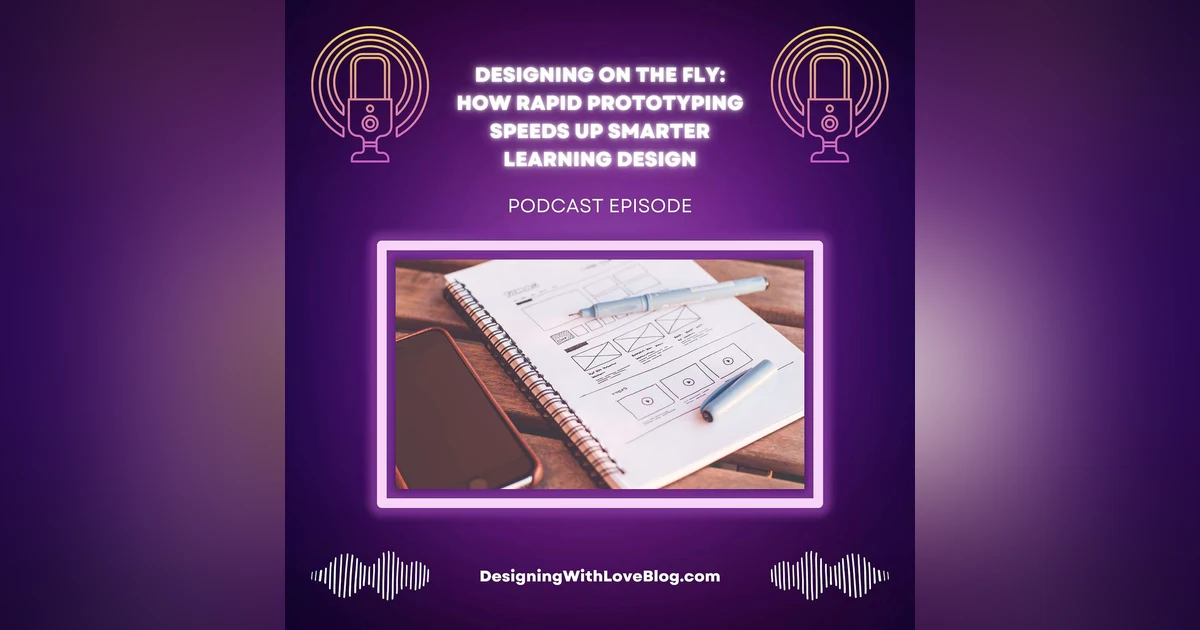
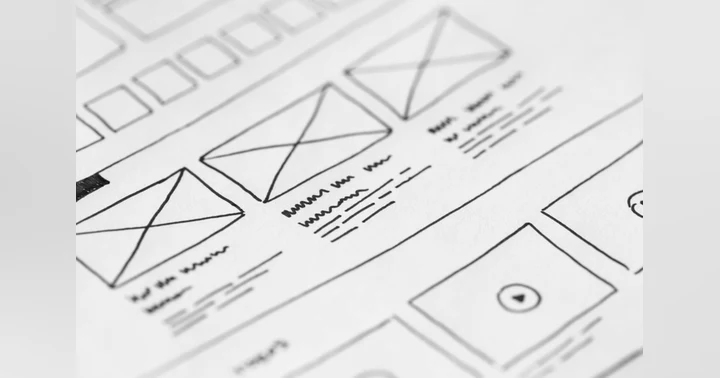
Sometimes all it takes is a sketch on paper, a simple storyboard or a sample interaction built in your favorite authoring tool.
00:01:38.691 --> 00:01:46.908
All right, so now that you have a better understanding of what rapid prototyping is, let's take a few minutes to outline how it works.
00:01:46.908 --> 00:01:51.121
Here's how the process usually flows Step 1.
00:01:51.121 --> 00:01:53.088
Identify the learning need.
00:01:53.088 --> 00:01:57.531
What is the problem you are solving and who are your learners?
00:01:57.531 --> 00:01:58.882
Step 2.
00:01:58.882 --> 00:02:00.950
Build a quick prototype.
00:02:00.950 --> 00:02:03.968
Think just enough to communicate your idea.
00:02:03.968 --> 00:02:05.501
Step 3.
00:02:05.501 --> 00:02:07.509
Share and gather feedback.
00:02:07.509 --> 00:02:12.228
Ask questions like what's working, what's unclear, what's missing.
00:02:12.228 --> 00:02:18.062
Step four revise and test again, repeat until it's refined.
00:02:18.062 --> 00:02:21.770
Step five develop the final product.
00:02:21.770 --> 00:02:24.034
Now you can build with confidence.
00:02:24.034 --> 00:02:35.000
No-transcript.
00:02:35.000 --> 00:02:39.848
Now here's where things can get confusing, especially if you're new to instructional design.
00:02:40.735 --> 00:02:48.109
If you've heard of the SAM model that's the Successive Approximation Model you might wonder aren't these two models kind of the same?
00:02:48.109 --> 00:02:54.360
They do share similarities Both are iterative, both emphasize feedback and both aim to reduce the risk of major redesigns late in the process.
00:02:54.360 --> 00:02:58.284
And both aim to reduce the risk of major redesigns late in the process.
00:02:58.284 --> 00:03:00.187
But here's the difference.
00:03:00.187 --> 00:03:04.311
Rapid prototyping is more of a technique or design approach.
00:03:04.311 --> 00:03:10.912
It's fast, informal and very flexible.
00:03:10.912 --> 00:03:16.606
Sam, on the other hand, is a full-fledged instructional design model with defined phases, team workflows and a more formalized process.
00:03:16.606 --> 00:03:23.961
So you could say that rapid prototyping lives inside SAM, especially during the early design and development phases.
00:03:23.961 --> 00:03:28.936
One is a tool, the other is a blueprint Great.
00:03:28.936 --> 00:03:37.727
So now that you know the differences between rapid prototyping and the SAM model, I'll take a few minutes to provide a real-world example so you can hear it in action.
00:03:39.179 --> 00:03:46.127
Let's say you've been asked to design a new data privacy training course and you've got two weeks With rapid prototyping.
00:03:46.127 --> 00:03:54.036
Instead of writing a full script and building out all the interactions up front, you could do the following Number one create a quick outline.
00:03:54.036 --> 00:03:57.717
Number two mock up a few sample slides.
00:03:57.717 --> 00:04:00.819
Number three add placeholder content.
00:04:00.819 --> 00:04:05.483
Number four send it to the legal team and a few learners for feedback.
00:04:05.483 --> 00:04:13.127
Number five from their responses, you realize some terms are too technical and you need to include a scenario-based quiz.
00:04:13.127 --> 00:04:21.973
Great, you adjust, test again and then build the full course without wasting time or guessing what your audience needs.
00:04:23.535 --> 00:04:28.668
All right, so here are some of the key strengths of the rapid prototyping model and when you should use it.
00:04:28.668 --> 00:04:33.346
Here's a quick list of when rapid prototyping really shines.
00:04:33.346 --> 00:04:36.202
Number one you're short on time.
00:04:36.202 --> 00:04:41.146
Number two you're not 100% sure what your learners or stakeholders want.
00:04:41.146 --> 00:04:46.326
Number three you're working with a team that values speed and collaboration.
00:04:46.326 --> 00:04:52.387
Number four you're developing e-learning, mobile learning or micro-learning content.
00:04:52.387 --> 00:04:58.644
Number five you want to test ideas early and often before finalizing anything.
00:04:58.644 --> 00:05:03.312
You want to test ideas early and often before finalizing anything.
00:05:03.312 --> 00:05:07.615
It's perfect for e-learning, corporate training, startups and anywhere.
00:05:07.615 --> 00:05:08.396
Agility is valued over rigid planning.
00:05:08.415 --> 00:05:13.538
All right, so let's wrap up with a short reflection you can jot down in your journal or planner.
00:05:13.538 --> 00:05:17.600
Think about a past or current instructional design project.
00:05:17.600 --> 00:05:23.682
What part of that project could have benefited from faster feedback or early prototyping?
00:05:23.682 --> 00:05:28.745
How might rapid prototyping help you streamline your workflow in future projects?
00:05:28.745 --> 00:05:34.067
Write down three ways you could incorporate prototyping earlier in your process.
00:05:34.067 --> 00:05:40.709
Even small shifts like sketching before scripting, can save time and lead to better learning outcomes.
00:05:41.990 --> 00:05:47.252
At its core, rapid prototyping reminds us that we don't have to get it perfect the first time.
00:05:47.252 --> 00:05:49.132
Designing is a journey.
00:05:49.132 --> 00:05:50.334
Remember.
00:05:50.334 --> 00:05:57.740
With every quick test, tweak and conversation, we move closer to building something truly meaningful for our learners.
00:05:57.740 --> 00:06:10.372
As a recap, we covered what rapid prototyping is, how it works, how it is different from the SAM model, a real-world example, key strengths and when to use it, and a reflection activity.
00:06:11.555 --> 00:06:19.216
You are welcome to review the resource I created at the link provided in the show notes, which includes an overview of what was covered in the episode.
00:06:19.216 --> 00:06:24.319
In addition, please check out my blog site, which is also provided in the show notes.
00:06:24.319 --> 00:06:32.122
As I conclude this episode, I would like to share an inspiring quote by Joyce Meyer step out and find out.
00:06:32.122 --> 00:06:35.245
You don't need perfection to make progress.
00:06:35.245 --> 00:06:37.286
You just need the courage to start.
00:06:37.286 --> 00:06:42.749
Keep testing, keep learning and, as always, keep designing with love.
00:06:42.749 --> 00:06:47.110
Thank you for taking some time to listen to this podcast episode today.
00:06:47.110 --> 00:06:49.411
Your support means the world to me.
00:06:49.411 --> 00:06:59.822
If you'd like to help keep the podcast going, you can share it with a friend or colleague, leave a heartfelt review or offer a monetary contribution.
00:06:59.822 --> 00:07:03.672
Every act of support, big or small, makes a difference and I'm truly thankful for you.


 Apple Podcasts
 Spotify
 Youtube Music
 Amazon Music
 iHeartRadio
 Podcast Addict
 PocketCasts
  Podchaser
  Deezer
  PlayerFM
  Castro
  Castbox
  Goodpods