Apple Podcasts
 Spotify
 Youtube Music
 Amazon Music
 iHeartRadio
 Podcast Addict
 PocketCasts
  Podchaser
  Deezer
  PlayerFM
  Castro
  Castbox
  Goodpods
 Creativity Over Compliance With Michaell Magrutsche

Creativity isn’t extra; it’s how we unlock potential. That’s the heartbeat of this conversation with Austrian‑Californian multimedia artist and creativity awareness educator Michaell Magrusche, whose neurodiversity shaped a human‑centered approach to learning, design, and life. We talk candidly about why people must come before systems, how to balance money, meaning, and voice in design, and the simple habits that make creativity a daily practice instead of a once‑a‑year workshop.
Enjoyed the conversation? Follow the show, share it with a colleague, and leave a review to help others find it. Your support helps us keep these human‑centered stories flowing.
🔗 Website and Social Links:
Please visit Michaell Magrutsche’s website and social media links below.
You can also read the following white papers Michaell has published on LinkedIn:
What is Living a Human-Centric vs. System-Relevant Life?
DYSLEXIA from SHAME to FAME Part 1: An Introduction to Grasp Dyslexia’s Impact
DYSLEXIA from SHAME to FAME Part 2: Getting a Grasp on Dyslexia
📢 Call-to-Action: Feel free to check out Michaell’s podcast, “THE SMART OF ART – The Power of Art and Creativity” on Spotify and “Humanity Unboxed (Wisdomseekers)” on YouTube Music for more inspiring content!
Join PodMatch!Use the link to join PodMatch, a place for hosts and guests to connect.
Disclaimer: This post contains affiliate links. If you make a purchase, I may receive a commission at no extra cost to you.
💟 Designing with Love + allows you to support the show by keeping the mic on and the ideas flowing. Click on the link above to provide your support.
☕ Buy Me a Coffee is another way you can support the show, either as a one-time gift or through a monthly subscription.
🗣️ Want to be a guest on Designing with Love? Send Jackie Pelegrin a message on PodMatch, here: Be a guest on the show
🌐 Check out the show's website here: Designing with Love
📱 Send a text to the show by clicking the Send Jackie a Text link above.
👍🏼 Please make sure to like and share this episode with others. Here's to great learning!
00:00 - Welcome And Guest Introduction
01:01 - Neurodiversity Shaping A Creative Lens
03:23 - Design Balance: Money, Voice, Meaning
06:20 - Educator As Learner: The Win‑Win‑Win
08:50 - Bringing Creativity Into Lesson Design
11:30 - AI’s Limits Versus Human Context
16:04 - The Hidden Problem In Education Systems
20:24 - Learn To Dance With Humans, Not Jobs
24:54 - Four Human Subjects For Life
30:04 - Human-Centric Learning Beats System Relevance
34:24 - War, Collaboration, And True Sustainability
38:44 - Creativity As Daily Practice
41:54 - Process Over Perfection: Keep Your Drafts
45:54 - Play, Games, And Cooperative Learning
50:04 - Authenticity In Podcasts And Teaching
53:44 - Habits To Sustain Creative Energy
Welcome And Guest Introduction
Jackie Pelegrin
Hello, and welcome to the Designing with Love Podcast. I am your host, Jackie Pelegrin, where my goal is to bring you information, tips, and tricks as an instructional designer. Hello, instructional designers and educators. Welcome to episode 110 of the Designing with Love Podcast. I'm thrilled to have Michaell Magrutsche with me today, an Austrian Californian multimedia artist, turned creativity awareness educator, whose neurodiversity shaped an out-of-the-box human-centric approach to learning. He's the author of five books, a podcaster, speaker, and fluent in German and English. Welcome to the show, Michael.
Michaell Magrutsche
Michael Wiegates.
Jackie Pelegrin
I love that. I love that. Hello, Vigids.
Neurodiversity Shaping A Creative Lens
Design Balance: Money, Voice, Meaning
Michaell Magrutsche
Yes, I'm uh I'm uh bilingual because I'm constantly together with Europe and America. I live in America, in Laguna Beach, but uh I uh I constantly speak both languages. And I was born in Vienna and I was a sick child, and I was everything could be wrong, wrong guys. So I went to it's with they held me back in school. Uh and you know, uh 50 years ago, nobody cared about uh neurodiversity, and nobody cared. I said, what I went to a doctor, the doctor I was thinking I was in second grade, and the because they couldn't make anything out of me, you're right. And I went in second grade, I went to a doctor and they said, uh, you are you're dyslexic. But you know, at that time, today it says, okay, I understand why he cannot read, I cannot, I understand why he cannot speak. Right. But then it was, okay, you're dyslexic, and you have to, you have to do the same still. We just know that you're dyslexic, so we might be more forgiving, but basically you have to speak the same, write the same, all the stuff. And I would have said, why don't you give me other, you know, this today we can say, give me the strengths. You you don't have to do the perfect reading or speaking, but show me, show the class too. You see, it's it's not all just show me the teacher. What that what the teacher's gone when when you're when you're graduate, he might be dead already. So you need to give the class that that every human, that every dyslexic or neurodiverse can actually function just in a different way. Women function different than men. Uh, you know, everybody functions different. We are 8 billion, this is my essence, 8 billion one-of-one humans and that nature made us. Nature doesn't make mistakes. So we can 100 times go against nature. You see how how how far we came when when industry goes against nature. Right. It's we are the most powerful thing, and in that one-on-one-ness, we learn my perspective, your perspective, and we we don't judge it. We just say, Oh, it's interesting. That's this uh view and that's that view, and you put it all together for yourself, and they put it together for yourself. And that's something very interesting. When you don't judge, uh, and you look at your perspective, and you talk about designing, right? You talk about the education of designing, right? And and we talked about before, and you see what I did. I said, Oh, balance is very important because I know design and I know art. And I and if I had to focus on design, I need to get the balance, and the balance is between money and what you create, and your voice is uh uh given in. So when you have two perspectives, right or wrong, you might see both and do a third one. So you you you you might listen to two people and say, I don't agree with us at all. You can say that, but what is your thought? What is your perspective about the context of the two people talking about? And this is what the superpower of human and the limitlessness is. You talk to scientists, two scientists, I mean I talk about quantum physics with two scientists, and I have my human-centric way and say, okay, what does that how the c can that work in human in a in a uh common sense? So common sense is very important, you know, and it's common thought. So something that you also experienced can be very uh and and and I didn't I don't still don't know anything. I'm not an expert, I'm not an authority. I never want to be called that either. I am just me. I'm my contribution to you, my one of oneness to you. And we dance together and we both grow. Right. I am for win-win-win, not win-lose, win, lose, lose. I'm I'm for win-win-win. Always.
Jackie Pelegrin
I love that, Michael, because when I teach my students, it's not about me being, I I mean, if I'm you know giving them the grade, and you know, in that sense, but I look at it as a as a as like you said, a dance and it's a it's a relationship back and forth. So I'm not just giving them information and helping them learn and grow, but they're also helping me learn and grow as an educator and uh and in the profession that I do, because in the in the last four years I've been teaching, I've learned so much. Uh it's been so it's been uh you know a blessing in that way. So I love how you brought that up. That's great.
Michaell Magrutsche
Philosophers say that that the teacher always learns most, which I totally agree. Yes, because I teach a lot too. I did the first uh self-aware art movement in 20 whatever 2015. Uh I did a whole movement of self-aware artists that know their voice. So I cannot compare myself to you, but I can look at your voice and you can look at my voice, and we can say it does the come across, you know.
Educator As Learner: The Win‑Win‑Win
Jackie Pelegrin
Right, exactly. So it sounds like you know, you're you know, what you were what you were faced with early in life with your neurodiversity and your dyslexia, that that really helped you to really hone in on your creativity, it sounds like. Um and that's that's great. So how do you think with you know that day-to-day design, uh, you know, like for example, you know, a teacher that's trying to plan a lesson or someone like me that's in higher education trying to plan that curriculum, how do you think we can kind of take that um creativity and bring it back to that education without overwhelming students? Because, right, we don't want to overwhelm anyone, right?
Michaell Magrutsche
So, how do you think we can kind of bring that back to design is always needed, right? Right. Unless you give it to AI. That's you know, and people, you know, people will hand it over to AI because it's cheaper, but it will not be a design that is human-centric, it will be uh abstract uh because our collective knowledge, not the consciousness, the knowledge is in AI. Right. Right, our collective knowledge is in the eye. So everything that has been done in the past will be AI will probably be better because they they can access, and but still there's something to vibrate, you know. So when the AI puts together, this was successful, when when I puts together that forest green and uh rosy, you know, a very pink light uh uh uh uh uh skin color is really, really good. And we look at it and say not for a car, you know. It's it there's so many contexts in in designing and in creating anyway. So when you create with uh intent, when for example, I loved in New York when you had all these super artists do these eggs or the and the cows. Can you remember?
Jackie Pelegrin
Are you old enough to yes, yeah, yeah, yeah.
Bringing Creativity Into Lesson Design
AI’s Limits Versus Human Context
Michaell Magrutsche
So so so so I love that because there was a context, you have to do it on this egg, on this cow. Everybody has to do the same, yeah, and express themselves, their unique voice on that. And that's that's very helpful, and that's what uh AI cannot do. It just can it it cannot see the you know, okay, this is a cow. I wouldn't do certain things not on a cow, right? I wouldn't use certain colours, I wouldn't use because that's everybody is individual, yeah. Right. I would do a polka dot uh cow, but I wouldn't do whatever a striped cow because this the the linear is so controversial to the natural, the organic. So when I say this is the this is the this is the the essential problem with education. It's not a problem, it's we are unaware of it. Uh and I study education forever because I was, you know, I failed every I have six years of school. I I literally don't know. I I everything is self-taught. Because they couldn't teach me, they couldn't make me repeat, regurgitate thing because of my neurodiversity. I I couldn't do it. So what happens is people uh in education it's since 1845, the Prussian army. We we know all educators know that, right? Education comes from the uh creating of soldiers that need to be, you know, it's not for knowledge or thing. I think education uh needs to upgrade again. Another system that is downgraded, and people hold on what they have, and that's why they go into that's why Harvard has, I think, billions of dollars in and in reserves and everything, instead of teaching people and you know, uh helping kids, any kids, to just learn. Right. And what what I found is the sad thing is, and they have actually now there's a lot of research, you can actually look that up. That when kids start today school, first grade, or preschool, whatever you have, by the end, because of technical evolution, fast evolution, they don't know what job. So they get learned uh taught a job. So I always say this this sample. I said, you you get taught uh to be uh animal lover and animal care, and then we extinct all the dolphins because people eat dolphin meat, right? I'm saying so you become a a a ward for the dolphins, there are no dolphins when you're when you're done. You become you become a cobbler for shoes. There's no shoes. We were plastic things, AI, and we just sip it on. So the the problem is you need to learn to dance with humans. So what we talked about, right? You need to dance, uh, you need to be open to other humans. And today we are on iPhones, we don't even have contact with that. And you need to know what to do when that job that you learn for uh is not you know is not available in it, is not needed, you know. The old people do do all the leftover things that are done, and and and so it's more important that you see if there is no job, how do I find my job? Because I I I am I did 3,000 paintings, I did uh uh you know uh music, I worked with Robert Evans, uh, I was an arts commissioner. I change constantly because of my awareness that changes. I'm not saying I have one knowledge and now this is the rest of my life, I'm gonna do this.
Jackie Pelegrin
Right, right. I love that. Yeah. You evolve and and you grow, and that's that's constant.
Michaell Magrutsche
I have no I I started now because I haven't done uh any painting. I did some I do some digital stuff just to never lose that connection that that I you know when I teach or when I when I advise people on the stuff, uh, that I never lose that. So so I I did. And I'm curious what comes out from three years, haven't have haven't let that out, even though I write a lot and and do other expressions of myself, but I I I I try and I am generally not want to push paint. I love pushing paint, always. And it kind of not really missing it, you know, because I've done 3,000. So and that's not even a lot because because I did 35,000. So so I you do that, but you gotta be self-aware that when there is no work, how can I do it?
Jackie Pelegrin
I love that. Wow, that's great. And looking for those skills that are transferable, yeah.
The Hidden Problem In Education Systems
Michaell Magrutsche
And I I said, and I give you a little I a little uh seed. I created a which I actually was with international, I work on something where you have only like four subjects as a human, because it's the human that needs to survive and exist. It's not the system that Apple doesn't need to exist, it's the human first. Otherwise, there's no money to buy an iPhone, you know? Right. So it's only four four subjects. One is uh team, uh because the the social factor I found out from all my research, the social factor is it's not Harvard, Yale, or whatever, it's the social factor. You you meet your people at Juilliard. You know, you you you need you meet your people that have a very generous, I'm going to be an artist, right? So it's very general, but you find people that feel the same as you. And and that's what's the not what you get taught. It's you I can talk to you because you and I, we can especially because we're both in education, right? So you know, so we can that's why, you know, if if I was whatever, whatever, if I was just a server uh in a restaurant, uh, which I was by the way, and uh we wouldn't have anything to say in in that context. So I found out four four things, so team sports, team art, uh uh tainting an animal, pet, a pet, having a pet. So I would never let anybody graduate from Ela Harvard or Cornell, anybody with Oxford, I would never if they cannot take care of a pet. Because the knowledge that you learn, if you're gonna transfer that in a living being, would why are you learning this? Right. Oh, that's okay. It's what's connected to us is human, uh we talked about the common denominator, is being a human. Right. And in a bigger sense, we being a living being. That's why people have so many. So we segregate humans, so humans buy animals. Just to, you know.
Jackie Pelegrin
Yeah, to have that connection.
Michaell Magrutsche
To have the connection because it and it's longevity is the biggest uh effect of longevity is um uh the biggest of longevity is uh connection, connection with humans, right?
Jackie Pelegrin
Exactly.
Michaell Magrutsche
Or a pet or whatever, but but usually it's human. There's no pill that can they can give you that makes that's why I segregate between human centricity and system relevant. Because in being clear about the context, not that I'm saying system relevant is nothing. No, I'm glad you're working for the university. You know what I mean? I'm not I'm not saying this, but the university can cannot stay still, it needs to evolve, it needs to become a life system that is constantly of our consciousness evolvement is integrated in systems so that the few the future kids can grow.
Jackie Pelegrin
Right, exactly. I think that's why innovation and creativity are so important. And I I say this to my team members often that we can't just continually do the same things the same way because it doesn't work.
Michaell Magrutsche
What we have in what we experience worldwide right now, right? Stagnation is death, yeah, exactly.
Jackie Pelegrin
So we have to continually be innovative and and come together as a team and not silo ourselves, yeah.
Learn To Dance With Humans, Not Jobs
Michaell Magrutsche
And allow the systems to update. Systems are secondary to humans, and we only build systems to help us uh lift our human potential so that you cannot only just pick berries in the farm that is in the tribe, a lady that's really good with kids, and you can give her your kid, and you can you know pick her some extra berries and bring it better, so it makes us more effective. But if if something changes, you know, uh uh it needs to be updated. If you would if the the the thing finds, oh, if I take those blankets, then then it's better for the kid. So also have in your home, so so the system teaches you. Right. See? And so that is win-win-win in all this. And the last subject was in that so uh female uh uh uh uh team sports, team art, uh then uh a pet, and then uh a talk, awareness talk. So not who is better, who who tends better to his pet, but what was your problem with the pet? Interaction, social interaction in problem solving, in in and say, I can't, you know, I know you you do so good with your kitty. What why is my kitty always sad? You know, so you and I talk about this, yeah. To integrate, because segregation, we on purpose segregate to come on this earth, and we gotta integrate again, and you know, uh, and that's that makes us all better and then not struggle and not scarcity.
Jackie Pelegrin
Right, exactly. Wow, I love that. I love how your story, Michael, highlights strengths with differences. I think that's that's so good, especially in education. So, from your perspective, how does neurodiversity enhance creativity and what's possibly one way educators can design for that maybe next week in their in their lessons or in their classroom?
Michaell Magrutsche
I will send you the white papers I wrote about it and I'd love that. Uh uh I think the neurodiver I'm telling you from me, not from anybody else, because I'm 101 of 8 billion. Right. I was told I was told and I think everybody was told, but I was told that my way of thinking and being, because it wasn't thinking first, it was being first, and then the the the my thought patterns came out, was wrong. I couldn't read, I couldn't do math, I couldn't do this, I couldn't do that. So I was I was told the way you be is wrong. So I was very afraid, and I got a lot of fear in fr infiltrated to be part of the tribe, because you know we are herd animals. Right. So being in the class, I loved, I've never had a thing. I was speak of the class and was one of the worst students because I had I was good with the with humans, and we had no problem. I talked to the smartest kids, and and they were really nice. They tried to help me, they weren't shaming me or anything. They wanted to have because everybody said, Oh, they bullied me, they bullied me. No, nobody. Girls were laughing because girls are smarter than men at that age, and they were laughing, and they thought I was funny, and I am funny, you know. So so I was a little my ego was a little bit at that time. And then over over 60 years I found out no, this is for me. The thinking is not for the system good, but it is for me good because I don't know anything, but I'm aware the moment I talk to you. So I changed my way of knowledge to awareness. And when I'm aware, I don't have to read 100,000 books. I can speak all the time. I said what would I say, and I trust what I and I don't know that I'm wrong because I've I don't have no idea. I don't do any worries about if I'm right or wrong when I talk to you. Well, or I have talked on 600 podcasts. I I I don't care if I'm wrong. I if you say no, I have to study here and say, okay, you're right, who cares? It's like it it's it's it's the awareness, but I know I can contribute as a human to your episode, right? Right? Right. I I'm not saying I'm gonna give you all the data and statistics about this and this and this, but they can read a book, they don't need to listen to the podcast. This is actually also I'm working on podcasts also uh to make podcasts um more human-centric because our power is the human centricity. Remember, in the old days there was KMBC, WKMBC, there were all these these uh uh big big TV companies, and they have about 20 people. If I come to your show, there's only five questions, and the five questions uh I have to give a two-minute answer. It's not that's not natural, right? And that's why podcasts took over. They just took over because people want to hear people speak, and not and not something that is orchestrated like a theater.
Jackie Pelegrin
Right, exactly. They don't want that rehearsed type of um, yeah, they don't want it to be yeah, rehearsed or or practiced or anything like that. Yeah, you just they want authenticity, and yeah, and that's I think what podcasts bring is that authenticity.
Four Human Subjects For Life
Michaell Magrutsche
Yeah, but they want to be like they want to be like your networks, right? You know, they all want to do money. It's the money that they and and and if you don't like you contribute so much to humanity, you can you cannot even invent uh the stuff, the businesses that would do this. Because this is in time now, they can listen in 10 years to this. My podcast that I do with with you, for example, timeless. Right. There's there's no contact constriction. It's about how humans are, you know.
Jackie Pelegrin
Exactly. Yeah, you know, it's interesting too, is like my the podcast. I started mine because I wanted to help my students and give them that uh that extra information that they wouldn't get in class from experts and from others, other creatives, right? And so that's how I started it. And it's I mean, it's not by any means, it's not getting as many downloads as other podcasts out there, but that's okay because I don't I don't want to compare myself to others. And the reason I started it was for uh for others and to serve others. So as long as I keep that at the forefront and the goal is still there, and I don't look at, well, I want to make money and I want to you know do all this stuff.
Michaell Magrutsche
No, you you can give $1200,000 for an education, or you can do your own podcast.
Jackie Pelegrin
Right.
Michaell Magrutsche
I would see it as that because your awareness it gets so exponentially up.
Jackie Pelegrin
Right.
Michaell Magrutsche
Exactly.
Jackie Pelegrin
Yeah, I learned so much from doing this, and it's just it's amazing.
Michaell Magrutsche
And you didn't go so you have something to to really resolve because you are in university, and that's that's another thing. You uh to I learned so much from talking to humans to the to into to to really activate the interaction in class. Right. You know, to what do you think? What do you think? Not I say this has to be this way. I think that's all that's the the from the current colonels in the uh Prussian army 1845. You know, you got we need a bombardier, we need a horseman, we need a soldier, we need a digger, we you know, no. Right, just say how would you do it? How would you do it?
Jackie Pelegrin
Yeah, right. Because it's interesting because that's how instructional design as a field, which I'm in, that's how it started was in the military. It they saw that they needed to train the military, right? Like you said earlier, train them to go out on the battlefield in role during World War II and win and compete, not collaborate.
Michaell Magrutsche
See, we are collaborative creative species of nature, right? Part of nature, and we can and we are not a competitive, you know, uh executor, because basically we all become all humans become bystanders when they go only system relevant. I need to be having New York, uh at corner office, be a CEO of the company. That's what I think. Uh sadly, I fell in love with my secretariat. I was, you know, I couldn't control that, you know, the human stuff. I can control, I can adapt, use my adaptation to do everything they tell me, and and then I I I screw my identity because I fall in love with the wrong person. Quote unquote wrong. It's always the right person, but it's always the right person, yeah.
Jackie Pelegrin
But society will often tell you, yeah, it's yeah, that it's wrong, but it's you know it's right, yeah. Yeah, that's true. And that can be true with education too, you know. Yeah. Oh my goodness. Wow. Um, did you want to expand a little bit on um how you often contrast the people over systems? I because I love that. So how can how do you think focusing on human potential over systems changes the way learners engage and persist and reflect?
Human-Centric Learning Beats System Relevance
Michaell Magrutsche
I think it's a contextual thing. It's a where you it's like you kind of from a perspective, you can I'm just saying the extremist form. You can say wars are horrible, right? Right. Or you can say, where's the energy of war coming from? Because we suppressed creativity, we we made everything money, and then you will understand and look at war in a different place. I've written a lot about war because I was very anti-war, because it's contrary to humans, it's a business. War it's a business, it's not a uh it's not something that's natural in humans. But people say they always had war. Yeah, because the king or the queen said these are the other humans are bad. We need things so I can get them to land. Right. Always from top down. Yeah, it's a competition, not collaboration. Everybody could win. We have this, we have all resources, we wouldn't exhaust Earth and everything. I have not heard one person in in nature talk about this in you know, climate change. We we need to play play with nature, not just put a lot of money into safe nature. Because we just violated nature by taking advantage and have no interaction with it, no, you know, no understanding. And now the understanding gets more and more through, you know, science and everything, get the understanding more. And they say, oh, there's no solution. This, you know, when one volcano can give you so much pollution, then perhaps we gotta look at that. You know, not just saying stop the car drivers to to to to to drive their cars, and then the the top people drive his airplanes, you know. It's just you gotta look at this. Also, you cannot be in both. See, I've never heard anybody say that either. War is the biggest polluter, right? Right. War is the biggest polluter, it destroys it kills humans, it destroys infrastructure structure, it there's no color legal uh converter on a pa on a tank, right? Right. Even if you take the drones, that's not you know, because they bomb stuff, they kill stuff. Right. So so how can you be in both? How can you say I take tax money for a war and I take tax money for for from from bottom up to uh for climate change? Yeah. You have to make a decision. Right. Any nation has to say either this or that.
Jackie Pelegrin
Absolutely, because my mom and I have talked about this too, and you know, they are in the o like all the Navy ships are in the ocean and they're bombing each other, and she's like, okay, all that stuff goes in the ocean. I'm like, exactly, right. She lives up at the bottom of the ocean.
Michaell Magrutsche
Biggest polluter, world's biggest number one polluter war.
Jackie Pelegrin
Yeah, exactly. Because they're, you know, they're they're warring in the on the land, on this, in the sea, and in the air. And I'm like, wow, yeah, you're right, you know. So it's when we're at peace with each other and we're collaborating in harm, you know, in harmony with each other that we thrive the most, right?
Michaell Magrutsche
Yeah, limitless.
Jackie Pelegrin
Right. But when we close ourselves off to each other and silo each other, and that can happen in education too, when a teacher puts students in these categories, right? And say, You're in this category, you're in that. It doesn't help.
Michaell Magrutsche
It doesn't also AI cannot do, AI cannot do what you and I talk, right? AI cannot do that. Right. So When you talk to your student like that, when you talk with your students like that, in that context, human-centric versus system relevant. It it it uh also it's a human study. Uh education is a human study. It's not yeah, it's like physical that thing whatever is human, you gotta do your number one need to be human-centric, not system relevant. Yeah, it just you can't it's a paradox. You cannot do this paradox.
Jackie Pelegrin
Right. Yeah, just just doesn't work that way. Yeah, you can't have both. I agree. Yeah, you have to change.
Michaell Magrutsche
Math is mass, I understand. Math is mask, you have to do math.
Jackie Pelegrin
Right.
Michaell Magrutsche
Not not design art or any creation.
Jackie Pelegrin
Right. Yeah, we can't box ourselves in. Um, yeah, that it doesn't serve those that we're trying to help, and it doesn't serve ourselves either.
Michaell Magrutsche
That's why that's why my uh, you know, I have I have a psychologist in in England, uh, and we have a uh a podcast that's called Humanity Unboxed. Because of that, just to make people aware, not we don't tell you what to do, like you and I don't tell anybody what to do. We I just tell you my opinion, and and this is perfect. So this is the way to learn awareness, you know, to to to be aware of awareness, which then leads to wisdom.
Jackie Pelegrin
Right, exactly. Because the more we learn and and hear from others, yeah, it deepens our perspective and yeah and experience, not just theory. Right. Right, exactly. Oh my goodness, I love that, Michael. That's great. So I wanted to give uh all the listeners out there something that they can try today. So in 60 seconds, what's your creative sprint? Maybe one exercise or what I say uh that they can do.
War, Collaboration, And True Sustainability
Michaell Magrutsche
Use my I have like 279 episodes of The Smart of Art, uh, the power of art and creativity. Yeah. It's all about the process. And it's 30 seconds long. So you can it's not hard. 30 seconds and the rest of the day you let it percolate. Okay. It's a question and a statement from me, not from Picasso said, Warhol said, you know, Bajos said, whatever. You know, it's just it's it's it's it's one statement of creation, which you are creator. I mean, this is the most impactful that I can give you because you are a collect collaborative creator animal. Species, even though you say I'm not I'm not an artist, you couldn't be a businessman if you're not creative. Right. So when everybody anybody ever tells me, Oh, but you know, you uh I'm not an artist, I'm more a stockbroker. You need to be creative to be that. So you cannot exist not being creative. Right. From the you know, the the the the the beggars on the street, I have to be creative, and the billionaire has to be creative not to lose the money. So uh don't focus on money, by the way. Money is a symptom, not a cause. And uh and and and and be as much as you can be. I think that's life's lesson is to be as much as you can be. And and if you cannot afford to be an artist, get a little job to support you and and do as much art as you can, because art uh you grow so much. You grow more because if I you know I tell kids always, when they're angry, I said, paint it, show me the anger, you know, paint it and uh tape it right or speak in a in a in your iPhone or whatever, and then they look at it uh like a week later, even a year. I because this was for me, yeah, that's what I experienced. I looked at paintings that I thought were crap, and that's and I started in my art classes, I started to teach the people to not uh to never throw away, you know. Some painters say, Oh, I screw it up, I shouldn't have done that extra. Yeah, yeah, yeah. Right? On the thing, I said, never always put it away for at least a month and then look at it, because then you don't look as you, your ego is out.
Jackie Pelegrin
Your perspective is different, yeah.
Michaell Magrutsche
Yeah, you're a different person anyway, and you're not looking at it. Oh, I did this. Right. That's horrible.
Jackie Pelegrin
Yeah, I love that. You know, that's why, you know, I love being able to I have, you know, like all my my uh different art supplies in in my closet. And but I I try to get those out every so often and just create something, you know, whether it's you know, watercolor or any it doesn't matter what it is.
Michaell Magrutsche
I have to create a tree.
Jackie Pelegrin
Right.
Michaell Magrutsche
Unless you feel, oh, I have this tree in my mind. It's a black tree with red things and gold stuff and whatever. Yeah. And it has to be you. Right. If there's no if there if there's no enjoyment in what you want to create, uh you're you're creating wrong. You you that then you actually hurt your your superpower muscle of the first create uh uh your first superpower that's creativity, and you you hurt that. Right when you exactly when you just say, I need to do a landscape. I'm you know, I'm in a plan air area. I need to plan air. No. And that's the plan air that wins is usually the purple trees.
Jackie Pelegrin
Right. That's so true.
Michaell Magrutsche
It's not it's not it's not the photo, right?
Jackie Pelegrin
You know, it's kind of like you know, I have uh so my my closet is like half game, like I have games too. And I as a kid I love to play games, and I still do as an adult. But it's cool because I love the types of games, Michael, that are cooperative type of games because I'm not I'm the same way. I'm not very I don't like the competition so much. If there is competition in it, I like the to laugh, I like to have fun. Yeah, yeah. Games are just that, it's not like who's who's won or lost, it's more about what did I learn through that process? So I love the cooperative games where you get to team up with people and and you really get like you talked about sports, you know, and and having that's why I said cooperation because you learn so much in a team sport.
Creativity As Daily Practice
Michaell Magrutsche
And even if somebody says, an artist said, I'm not into competition. Now you could be the towel holder, you could be the water girl, you could be the referee, you could be, you know, and and the the the jock, the the the the quarterback says, I don't want to do uh theater. And he said, No, we need a 65-year-old woman that knits in the corner there, and you sit there. Yeah, you know, so he gets really skin deep involved. That's why I say that these tools are so uh, and perhaps he has an idea that no all the artists don't have, because you know, we are one-on-one humans, and then you have your pet, and then you have the awareness where you talk about this. I said, Hey, I hate it to be thinking. I really found it very fun to be an old woman, you know.
Jackie Pelegrin
Right. Oh my goodness. Wow.
Michaell Magrutsche
That's you see that how that triggers the imagination too. Right. It's how can I, I'm not that how can I do a two-year-old kind of uh five-year-old child? How can I do this? I'm 66, how can I do that? You know?
Jackie Pelegrin
Yeah, oh my goodness, wow. Yeah, because I I've always had that imagination, you know, when I would read books as a child, I would just put myself in that world, and yeah, that's creativity in in action, I think, you know. Yeah, I actually will even go back, Michael, and I'll read I s I still have um uh books from when I was a child, and I'll go back and I'll I'll read those. Or or I don't I don't have the original, but I went and got the the book. So for example, when I I uh this was years ago, it was back in 2007, I broke my my uh my left, was it like my yeah, my left foot, and I had to be off of it for 12 weeks so it could heal because I didn't want to have surgery, and the doctor kept telling me you have to stay off of it. So I was in a bootcast and I was like, okay, what am I gonna do for 12 weeks while I'm at home besides watching TV? I didn't want to just do that. So I uh picked up the Chronicles of Narnia, the whole entire set of books, and I read those as a child, and so I read them again, and then every so often I'll go back and I'll I'll read some of those. So it's really neat to kind of go back and read those. And you read it and read those things you read them differently. Exactly.
Michaell Magrutsche
Yeah, differently. And so the stuff what I I didn't say all education, but I think before we even get the kids into education, if they had those four four subjects in preschool or in the first two grades, they would make much uh more conscientious decision on what what they want to be and what direction they want to go.
Jackie Pelegrin
Yes, absolutely. Wow, that's great, Michael. I love it. So before we close, I wanted to bring it back to uh and what we've been talking about the whole time creativity as a daily practice. Uh, what's two or three simple habits you would recommend to educators and course creators to keep that creativity alive under real-world constraints and deadlines?
Process Over Perfection: Keep Your Drafts
Michaell Magrutsche
That's why I made the podcast. That's why I made the podcast the smart of art, power, and uh the art and power of creativity, because I didn't want to tell the same thing, you know, what I tell you. You know, I don't have to tell the same thing so people can just listen to it. Also, it is is I always believe in co collaboration now. There's a question, there's a statement and a question. And so how can so if you're an educator, you listen to art always the or art tends to do this or whatever, you know, the it's so long I didn't. But they're timeless. And you read that and they said, How did you also see that? And they can use the question in their class, you know, and they can make a whole subject, a whole you can the whole thing of one statement of mine. Because it's gen, it's general, it's not it's not like oh, there is there is you've gotta paint like Warhol. I've never I I don't mention anybody in there. So it's literally just awareness about the create art creation process. And then for educators, I think they will all of a sudden I and I guarantee all educators, by the way, I I guarantee this right now here. So you can you can think when they go through the questions, they will at least quit quintople their enjoyment of art. They will find why they chose art consciously or unconsciously to teach art or design or whatever, and they will be empowered, seated, and will create unbelievable write books and whatever, because all of a sudden their their context fix to fits together. Like what you experience with me right now, this is you know, this is the next missing.
Jackie Pelegrin
Exactly. Yeah, because I you know I became it's it's kind of interesting how you know, like uh, you know, I can bring this to life because how I evolved um as a creative professional. You know, I I went into instructional design, then I started, you know, maybe uh let's see, I've been doing this for almost 15 years now. So I've been teaching for four. So 11 years into that, I decided, you know, I had the opportunity to teach and I've been doing that. Then I started the podcast, and now I'm almost done writing my first book that was inspired by the podcast. So see, it's amazing how that creative. It's not the end.
Michaell Magrutsche
Exactly. See, the the the the thing is the art artists artists think that uh often because I thought it, I I thought it and I talked to a lot, and they said they say, Oh, if I had this is what I thought. If I had the the cover of this magazine, which I had, I I don't need to worry about uh making money. If I have uh my exhibition on the international airport, I will have it. If I work with Robert Evans with on the class of Robert Evans, I will have no problem. We are so conditioned to the wrong way to succeed versus keep doing what you love, keep doing what you love. Right. That's better than if I have that, I don't need to worry about it. I know that that that that super thing that they were not extended or they were not, they would they want a tenure teacher, and they were told that they are there for 20 years, and they were told you can't we don't do this anymore. You know, where everybody's saving money. And a whole group of five or so, they they were standing and you know, you know, like near the brick wall. And uh and I was inter I was in with this lady, and the lady one wanted to be a musician. I mean, it's interesting, she's teaching art and then becomes or she wasn't teaching art, she was teaching something, she didn't get tenure, but now she wanted to she was doing economics and something, now she wants to be a musician.
Jackie Pelegrin
Isn't that weird? Oh my goodness.
Michaell Magrutsche
If you if you do like if you want to be a designer, I would understand that because you taught it all the time, right? Right, but if but but you would say all of a sudden, no, I want to play the saxophone as my as my job, you know, so it's something completely different. Completely different. You want to be a veterinarian.
Play, Games, And Cooperative Learning
Jackie Pelegrin
Yeah. Wow, that's amazing. You know, I wonder too, Michael, if you know, sometimes we uh, you know, when we think back to what we did as a child, because I had someone on my podcast, similar background did you, artist, creative professional, and we talked about how important things like journaling are, but also thinking back to what we did as a child. And it's something I think um I need to tap into that a little bit more and actually go back to those things because when I was in school, I played the flute. So I and I uh and that's a creative you know area, like you said, playing an instrument. You like it, it's very creative.
Speaker
That it really fulfills you.
Jackie Pelegrin
Yeah, it really keep it up, pick up and so what I did though as a kid, I made and that's not really a mistake, but it was just a decision I made at the time. I wanted to go out and play more than I wanted to practice the flute. So my mom's like, well, okay, you have to make a decision. Do you want to keep practicing and getting better at it? And I so I gave it up. But now I'd like to go back and and actually pick it up again. And I remember to this day when I was in fifth grade and I was in music class and how my music teacher taught me how to play the flute. She took one piece at a time because the flute is three pieces. And instead of giving me the flute and saying, here, I'm just gonna teach you the notes, she's let's take it a piece at a time. And I remember that to this day, and I re I don't remember all the keys, I'd have to relearn the keys, but I remember the technique of the flute and how to play it. So yeah, who knows?
Michaell Magrutsche
Maybe I'll but there's something interesting in that too. Uh the feeling is an organic feeling that you want to play, not practice. Right, right. And there is a lot, and and today, you know, today we have the most uh artists in the world ever. Everybody is an artist today. Right. Literally, you know, in the old days it was like a few artists, you had to stay in line to get to them. Now you can go everywhere and you can have contact with everywhere, and I think you will have it much easier. Find find people that just start, even go with young people and say, hey, age is a number, it's not it's not what you are. Uh you just go with kids and and and and and they they start and they say I could play. They want, like, say a chest or tall band. I'm this I'm debulching my age, but a Jesser Talband, and you know, he played the flute, right? Right and you said, and you said Ian Anderson, you say, I can be your Ian Anderson, yeah, for for you for your thing, and I can play the flute that would fit good in your group. So if you like a group, offer you you do, and and and all you have to do is start slow and do accents, and then you start more and more interpretation and everything. Right. There should never be a constriction on creation creation, never. Right.
Jackie Pelegrin
I agree, yeah. And who knows, maybe those things that I learned as a kid will start to resurface again, and then you know, I can pick up those notes again, you know, that I learned. And it's something that's there. Yeah.
Michaell Magrutsche
So, you know, I was uh I was all all uh in motorcycles and fixing and that that's how my creativity starts. When I was young, when I was ten years old. Uh and now I wouldn't want to do do that, you know, doing oil changes or whatever. I don't I didn't want to do that now, but it fulfilled me then very much.
Jackie Pelegrin
Right, right.
Michaell Magrutsche
So you have to see, and I learned guitar. This is another thing with instruments. I learned guitar for two years, classical guitar. Because in Europe you couldn't buy an electric guitar. I want to be Hendrix, and I was told in Europe, with all structural system relevant, you have to think, and then you can buy a thing and you can play the electric guitar. And I know about four chords on the guitar. My friend was two years after I and I I made the decision in my brain, I'm not a musician. And two years later, a friend of mine says, our percussionist, we were that was like one of those in Europe where you go in a basement and you play in a basement, and it was like uh they had a little bar or whatever, and I and they said, just can you play? You have you're good in rhythm. They knew I was good in rhythm. They said, just go thing, and I popped, I I I was nervous, did two bangs, and it was I was full blast. I did a C D, I was invited everywhere to play. Uh, and it was just the wrong instrument because the neurodiversity left and right, you know, chords and strumming. Right. But but this is easier.
Authenticity In Podcasts And Teaching
Jackie Pelegrin
Yeah, wow, that's amazing. Wow, yeah. You found your you found where you need to find your niche.
Michaell Magrutsche
You need to find you, Jackie. Only you, your thing is whatever you do, it has to be you. You write a letter, it has to be you. You do this, you you you prepare a meal, it has to be you.
Jackie Pelegrin
Right, exactly. Can't be somebody else's work or somebody, yeah.
Michaell Magrutsche
You gotta look at this recipe and copy it. No, I've never used the recipe ever in my life because I couldn't read it, I couldn't understand it.
Jackie Pelegrin
My grandmother was like that too. It's funny, she had a recipe book, but she wouldn't use it. She would just and it was and there's this uh French uh it's a French dressing recipe that my grandmother makes every Thanksgiving, and it was passed down five generations of women, and but they would they wouldn't pass down the recipe, they would just pass down the technique of how to make it. Um generation to generation. It always thought that's always a saying.
Michaell Magrutsche
Yeah, this is always a saying, you know, when I get my grandmother's recipe, they say, and then they said, I made it, but did it taste like grand? Nobody says, Oh, it did taste exactly like things. We have a lady here that made a salsa, uh uh, a beautiful uh Hispanic lady, and she was like literally like a queen, and she made a a salsa that people were addicted. Everybody when we tried the salsa, it's totally different. It's good, it's very good, but it's not the same, yeah.
Jackie Pelegrin
Not the same because it has their imprint on it, right?
Michaell Magrutsche
It has yes, it's a that's why I say we are 101, 8 billion 101 humans, right?
Jackie Pelegrin
That's why if we try to replicate it, we won't be able to.
Michaell Magrutsche
That's why copy is so bad. The copy is really, unless you're doing something that everybody needs, like a rake or something, copying stuff is do your own. Yeah, also get engaged, do do your own. I would always engage kids, try to do your own way, right? Don't say what is the right way, and then copy. Right. I mean, even if I go to use YouTube, I go to YouTube and look at five things, how to change your smart products, and then I I use the one that makes most sense to me.
Jackie Pelegrin
Right, exactly. There's no right or wrong, it's just how how people approach it. Yeah, yes, absolutely. Wow. Well, thank you so much, Michael, for sharing your insights today. This was a wonderful conversation. I know it's usable, it's usable to activate. Exactly, and it's timeless, and I love the timeless evergreen concept.
Michaell Magrutsche
There's no steps, we don't tell them steps.
Jackie Pelegrin
Exactly. So I wanted to I want to encourage everyone listening. Creativity isn't extra, it's how we unlock potential. That's something that I pulled and I thought of it the other day, and I was like, ooh, I love this because it's not an extra. It's it's something that unlocks our potential and keeps us uh.
Michaell Magrutsche
It's our essence, a part of our essence, you know.
Jackie Pelegrin
Right, exactly.
Michaell Magrutsche
Creativity, uh uh dialogue, a lot of dialogue, and uh adaptation. Um top three superpowers.
Jackie Pelegrin
I love it. Wow. I know my listeners will get so much out of this and they'll want to listen to it again and again because they'll get those golden nuggets all throughout. So I love it. Well, I I look forward to having you back on the show and we can dig into other things. I love it.
Michaell Magrutsche
We we can take forever.
Jackie Pelegrin
I love it. Well, I I definitely have to give a shout-out to Podmatch because it's a great system, and I I love what we love Alex.
Michaell Magrutsche
Alex and Alicia are the greatest. They are I work with them, yeah, too.
Jackie Pelegrin
I love it. They're wonderful. And who knows, maybe someday I can have Alex on my show. You never know.
Michaell Magrutsche
So yeah, Alex is like a comics figure. He's always he shows up where you don't expect him.
Habits To Sustain Creative Energy
Jackie Pelegrin
Wow, that's great. Yeah, I'm thinking of maybe going, uh, you know, I'd like to go to the next in one of the events, the podcasting events in the future, and meet him in person. And just Alex is gonna give you a hug, right? And I'm sure he'll he'll he'll accept that.
Michaell Magrutsche
But and he's human-centric too, by the way.
Jackie Pelegrin
Yes, he's human-centric, human-centric.
Michaell Magrutsche
He's the only system, and he is trying to do a life system with podcasting.
Jackie Pelegrin
Right, exactly.
Michaell Magrutsche
So, so not just leave it that now it's works, let it just be. No.
Jackie Pelegrin
Right. He's continually uh innovation. Yeah, innovation.
Michaell Magrutsche
What do the humans of podcaster need? He always thinks about the podcaster and the guest. He says, Right, what do they need? He doesn't say how can I make the most money. Right. It's all about it. We'll guarantee if you make the most money, will guarantee be reverse thing. You will be because every system ends up destroying, self-destroying. Right. Because if it's outdated and not updated, it it it's stagnation. Stagnation is this.
Jackie Pelegrin
Right. And the fact that he gives back to those podcasters to keep them going, I mean, that that model itself. I mean, I remember he yeah, I saw uh in the last live session that that they did last month, uh, he talked about that. How you know uh people kept telling him it's not gonna be successful. That model won't work. And he's like, but I'm doing something different and I'm just gonna do it. See, and and yeah, and now it's successful. So can't listen to all those critics, right? You just have to you know go with what your instinct are telling me.
Michaell Magrutsche
It's have to be you. Yeah, yeah. Anything that happens in life, you always end up whatever struggle you go through, you always have to refer to you. Right you have to pull from you. You cannot pull from others, right? Nobody outside helps you. All right, you have to help yourself.
Jackie Pelegrin
Absolutely. I love that. Why? You're great. This is wonderful. Thank you so much again, Michael. I appreciate it.
Michaell Magrutsche
And we'll have a pleasure for me too. Jackie, I would I I'm not suffering here and say, oh, it was too hard, you know. I love it.
Jackie Pelegrin
I love it too. Yes. These are the best kind of conversations, the organic ones that just flow. Yep. Love it. Thank you for taking some time to listen to this podcast episode today. Your support means the world to me. If you'd like to help keep the podcast going, you can share it with a friend or colleague, leave a heartfelt review, or offer a monetary contribution. Every act of support, big or small, makes a difference, and I'm truly thankful for you.
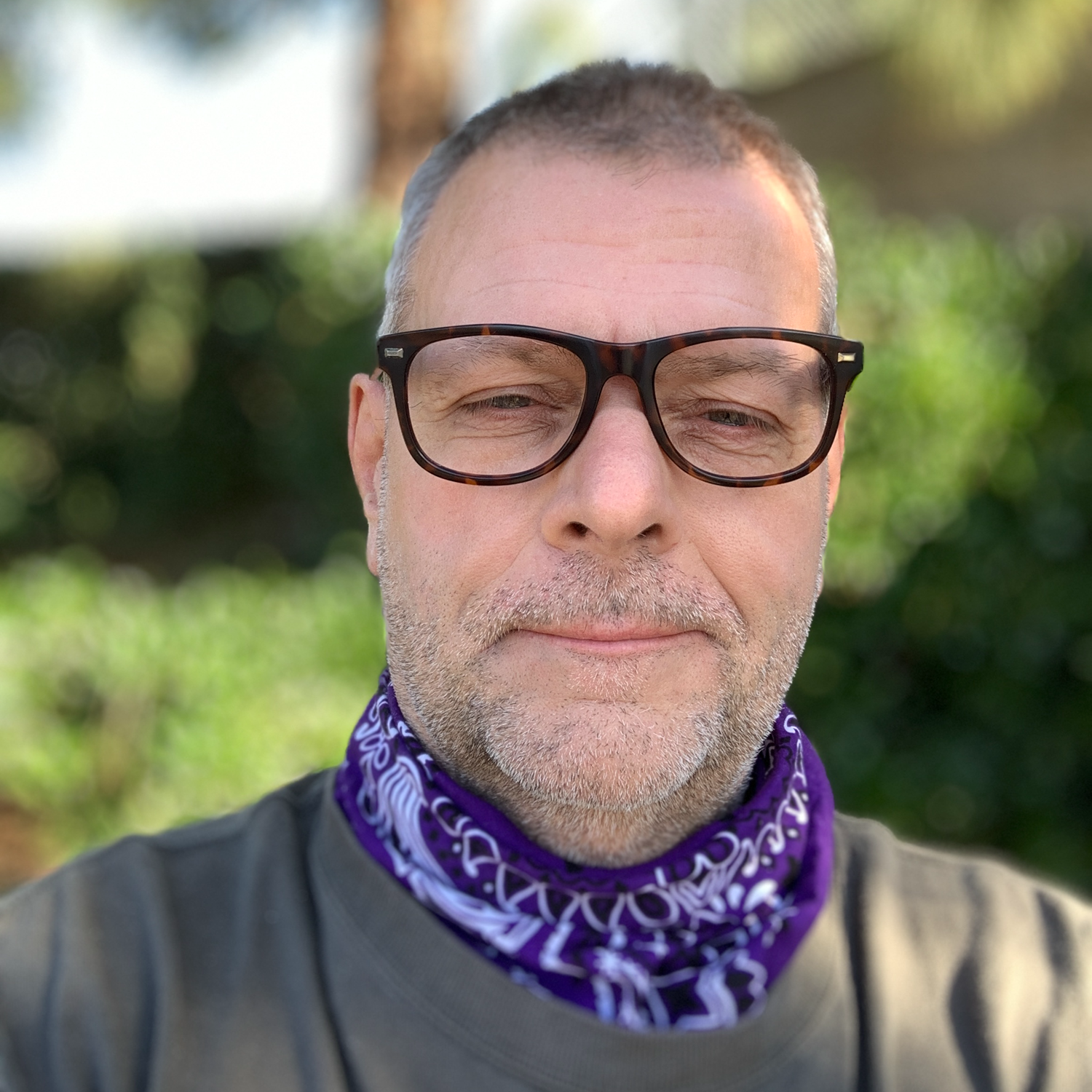
Multimedia Artist
I am an Austrian-Californian Multimedia Artist. I became a creativity-awareness educator through my experience-based, outside-the-box upbringing that I was forced into, through my neurodiversity.
I am totally self-taught, author of 5 books, podcaster, speaker, guide, former Newport Beach, CA Arts Commissioner, and co-produced with Robert Evans. Fluent in German and English.
My ability is that I can see hidden contexts, which allows me to resolve paradoxes, and together we arrive at awareness solutions in leadership, hospitality, customer service, communication, success vs. fulfillment, and obviously any form of creativity and culture.